
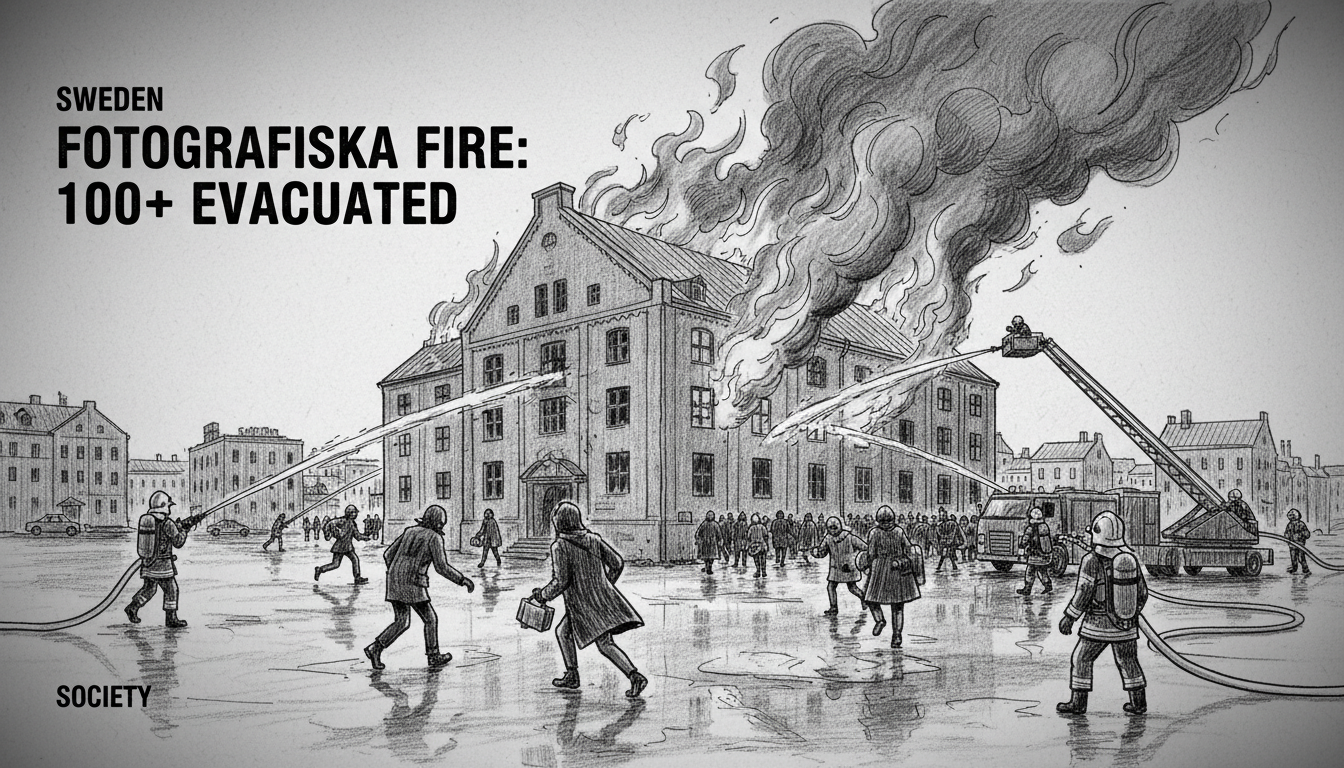
Sweden's Fotografiska museum fire forced over 100 visitors and staff to evacuate from the iconic Stockholm cultural venue on Stadsgårdskajen. Flames licked at the historic building's roof as rescue services scrambled to the scene. 'We just arrived. Initially, we got reports that the roof was on fire. It seems like cables are burning,' said a command operator with the rescue service in a statement. The air filled with the scent of smoke and the urgency of shouted orders, turning a typical evening of art appreciation into a sudden emergency.
Chaos on the Waterfront
Police and rescue services mobilized multiple units to handle the evacuation. The museum, usually buzzing with life, emptied rapidly. Visitors clutching coats and bags mingled with staff members on the quay, their faces etched with concern under the flashing blue lights. This wasn't just any building; it was a cornerstone of Stockholm's modern cultural identity. The incident immediately rippled through the city's social channels, with worried posts from locals and tourists alike. For a place that celebrates visual storytelling, the night offered a stark, unwelcome narrative of its own.
A Cultural Powerhouse in Peril
Fotografiska is no minor gallery. Founded in 2010 by brothers Jan and Per Broman, it has become a global brand with outposts in Tallinn, New York, and Berlin. The Stockholm location, however, is the heart. Housed in a beautifully renovated customs warehouse from 1906, it draws roughly 500,000 people annually. It's a place where Stockholmers meet for exhibitions and a late-night fika, where international tourists get a dose of cutting-edge photography. The building itself, on the edge of the Södermalm district, is a piece of living history. A fire here threatens not just walls but a vibrant community space.
Historical Roots and Modern Risks
The irony is palpable. A building that survived over a century as a customs house now faces a modern threat like an electrical fire. Experts point to the unique challenges of protecting historical structures. 'Converting old industrial spaces for public use is a trend we love in the Nordics,' says Lars Bengtsson, a Stockholm-based architectural historian I spoke to. 'But it requires constant vigilance. These buildings were not designed for today's electrical loads and visitor numbers. Fire safety upgrades are critical, yet they must balance preservation with protection.' The incident shines a light on the ongoing task of keeping Sweden's cultural heritage safe for everyone.
The Human Element of the Evacuation
Behind the statistic of 'over 100 people' are personal stories. Imagine the couple on a date night, interrupted. The student studying the work of a master photographer. The museum staff who know every corner of the building. While no injuries have been reported, the psychological impact of such a sudden event is real. 'We were just in the middle of discussing an exhibit when the alarms went off,' said Anna, a local teacher I met near the cordon. 'It's frightening, but everyone was calm. There's a sense of collective responsibility here.' This Swedish value of calm cooperation—samarbete—was evident in the orderly evacuation.
What This Means for Stockholm's Cultural Pulse
Fotografiska is more than a museum; it's an event hub. Its closure, even temporary, leaves a gap. It hosts around four major exhibitions yearly, plus countless talks, workshops, and its famous restaurant with panoramic views. This comes at a time when Stockholm's cultural calendar is bustling. The immediate question is about damage. Was it confined to cabling on the roof, or did it affect exhibition spaces? The museum's response will be crucial for its reputation. In a city proud of its cultural offerings, this fire is a reminder of fragility.
Analysis: Resilience in the Face of Crisis
Sweden has a strong framework for cultural institution safety. Authorities will likely conduct a thorough investigation. The focus will be on learning from this event to prevent future incidents. For Fotografiska, the brand built on visual integrity now faces a test of operational resilience. Insurance and restoration processes for historical buildings are complex and lengthy. Meanwhile, the cultural community in Stockholm is tight-knit. Other venues may step up to host displaced events or offer support. This sense of solidarity is a hallmark of Swedish society.
Looking Forward: Recovery and Reflection
As the smoke clears, the work begins. Assessing the damage, supporting evacuated individuals, and planning the path to reopening. Fotografiska has weathered challenges before, including the pandemic, by innovating. This might be a moment to reinforce safety while reaffirming its role as a cultural beacon. For now, Stadsgårdskajen is quieter than usual. The fire trucks will leave, but the memory will linger. It prompts a broader reflection: how do we best protect the spaces that define our shared cultural life? The answer, as always in Sweden, will involve careful planning, open dialogue, and a deep commitment to preserving the stories within our walls.