
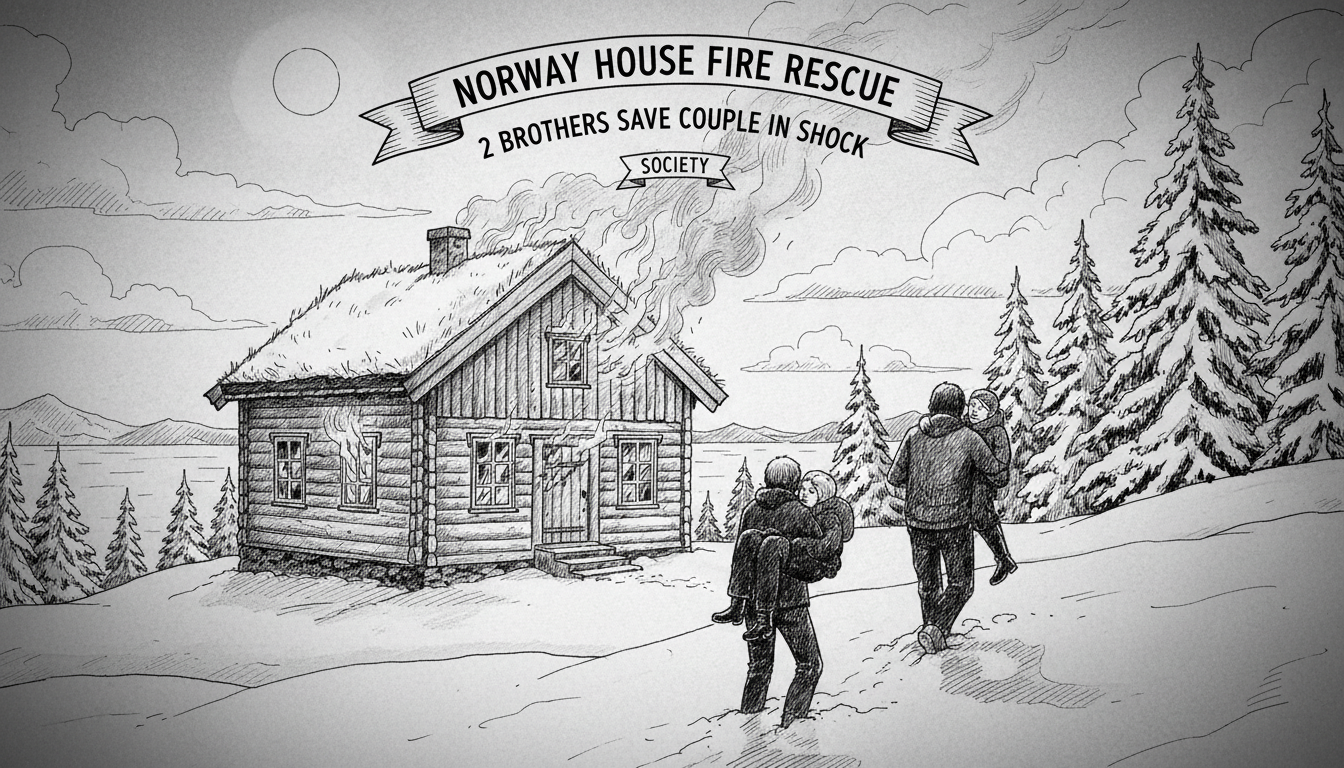
Norway's quiet Saturday afternoon in Surnadal shattered with a frantic rescue as two brothers pulled a shocked couple from their burning home. Filip and Simeon Hoset, on a routine grocery run, became lifesavers when they spotted flames engulfing a house in the residential area. Their swift intervention prevented a tragedy, overcoming the occupants' initial reluctance to leave. This dramatic event underscores a critical and often underestimated fire safety challenge: the human instinct to hesitate during a crisis.
From Errand to Emergency
The Hoset brothers were visiting their parents for the Christmas holidays, expecting a peaceful break in the Nordmøre district. That calm vanished when they saw smoke and fire at a nearby property. Without hesitation, they drove to the house and entered. Inside, they found residents Knut Westlund and Ellen Jorid Mo in a state of profound shock. 'They did not want to leave the house, they were completely shocked. They did not understand the seriousness,' Filip Hoset stated. As a trained nurse, Hoset recognized the immediate danger of smoke inhalation. He was prepared to physically remove them if necessary. 'Had they not followed along then, I would have dragged them out of the house.' The couple, particularly Mo who had just stepped out of the shower, were focused on retrieving belongings. The brothers stopped them, wrapped them in jackets and a blanket, and rushed them to a neighboring house before alerting the fire service.
The Psychology of Fire and the Fight for Survival
Fire safety experts point to this incident as a textbook example of a common, deadly phenomenon. In the initial moments of a fire, disorientation and denial can paralyze even the most rational individuals. 'People often underestimate the speed of a fire and overestimate their time to react,' explains a senior consultant with the Norwegian Fire Protection Association. 'Smoke is the greatest killer, not flames. It creates confusion, reduces visibility, and contains toxic gases that impair judgment within breaths.' The expert emphasized that the brothers' decisive action directly counteracted this dangerous delay. Attempting to gather possessions, as Westlund and Mo initially did, is a frequent and fatal mistake. A full fire development can occur in as little as three to five minutes in a modern home filled with synthetic materials. The Surnadal fire reportedly intensified rapidly, with flames soon visible through the roof from a distance.
Community Response and Containment
The blaze quickly escalated, drawing a multi-station response from the Møre og Romsdal county fire service. The intensity forced the temporary closure of the nearby county road, a disruptive but necessary measure for responder safety. Neighbors watched in alarm, fearing the fire would spread to adjacent homes or the surrounding forest. 'My God, this can't end well, I thought,' one neighbor recounted, describing the sight of flames consuming the roof. Despite the dramatic visuals, the response was effective. Firefighters gained control, and crucially, no injuries were reported. The physical structure was heavily damaged, but the human cost was averted. The rescued couple found immediate refuge with family in a neighboring house, beginning the difficult process of coping with their loss.
Regional Context and Winter Fire Risks
Surnadal, a municipality of fjords and valleys, is typical of many Norwegian communities where residential areas border forested land. This geographic reality adds a layer of complexity to firefighting, with concerns about woodland ignition during dry periods. While the cause of this fire remains under investigation, the winter season presents specific heightened risks across Norway. Increased use of electrical heaters, wood-burning stoves, and festive lighting places additional strain on home electrical systems. The Norwegian Directorate for Civil Protection (DSB) annually issues reminders about chimney cleaning, heater safety distances, and having working smoke alarms. Statistics show that most fatal fires in Norway occur in homes, often at night or during moments of inattention. This incident, occurring in the afternoon, highlights that danger can strike at any time.
The Unlikely Heroes and a Grateful Community
For Filip and Simeon Hoset, their holiday visit transformed into an act of profound community service. They credit their lack of 'action paralysis' for the positive outcome. 'It could have become dramatic; it didn't take long before it was fully ablaze,' Filip Hoset reflected. Knut Westlund expressed immense gratitude for the strangers who intervened. 'It is fantastic, I did not know them, they were quick to help. They were a bit strict too and got us out quickly,' he said. He confirmed they had been on their way out but acknowledged the critical hesitation that the brothers overcame. This dynamic—the outsider's clear-headedness versus the occupant's shock—is a common thread in successful rescue narratives. The brothers' background, particularly Filip's medical training, provided them with the confidence to assess risk and act assertively.
Lessons for Home Safety and Preparedness
Beyond the heroism, this fire serves as a crucial reminder for household preparedness. DSB recommends every home have a practiced escape plan that includes two ways out of every room and a designated meeting point outside. The first action upon discovering a fire should be to alert all occupants and exit immediately, closing doors behind to slow the spread. Valuables and possessions are never worth risking a life for. The agency stresses the importance of interconnected smoke alarms, which ensure a alarm sounds throughout the home, not just in one corridor. For remote areas like Surnadal, where professional response times may be longer due to distance, these initial minutes of self-response are even more critical. The survival of Westlund and Mo is directly attributable to the brothers' intervention within that narrow, golden window of opportunity.
Looking Ahead: Recovery and Resilience
The road ahead for the displaced couple involves navigating insurance, finding temporary housing, and processing the emotional trauma of losing their home. The community's role now shifts from emergency response to longer-term support. Such events often trigger local reviews of safety information and neighborly check-in systems, especially for elderly or vulnerable residents. The physical scars of the fire on the Surnadal landscape will heal, but the story will linger as a potent case study. It encapsulates the best of community spirit—the willingness to rush toward danger to help a neighbor—while delivering a stark warning about the psychology of survival. As Norway continues to balance its rustic, often isolated housing traditions with modern safety demands, the message from this Saturday afternoon is unambiguous: seconds count, and hesitation can be fatal. Will your family know what to do when the alarm sounds?