
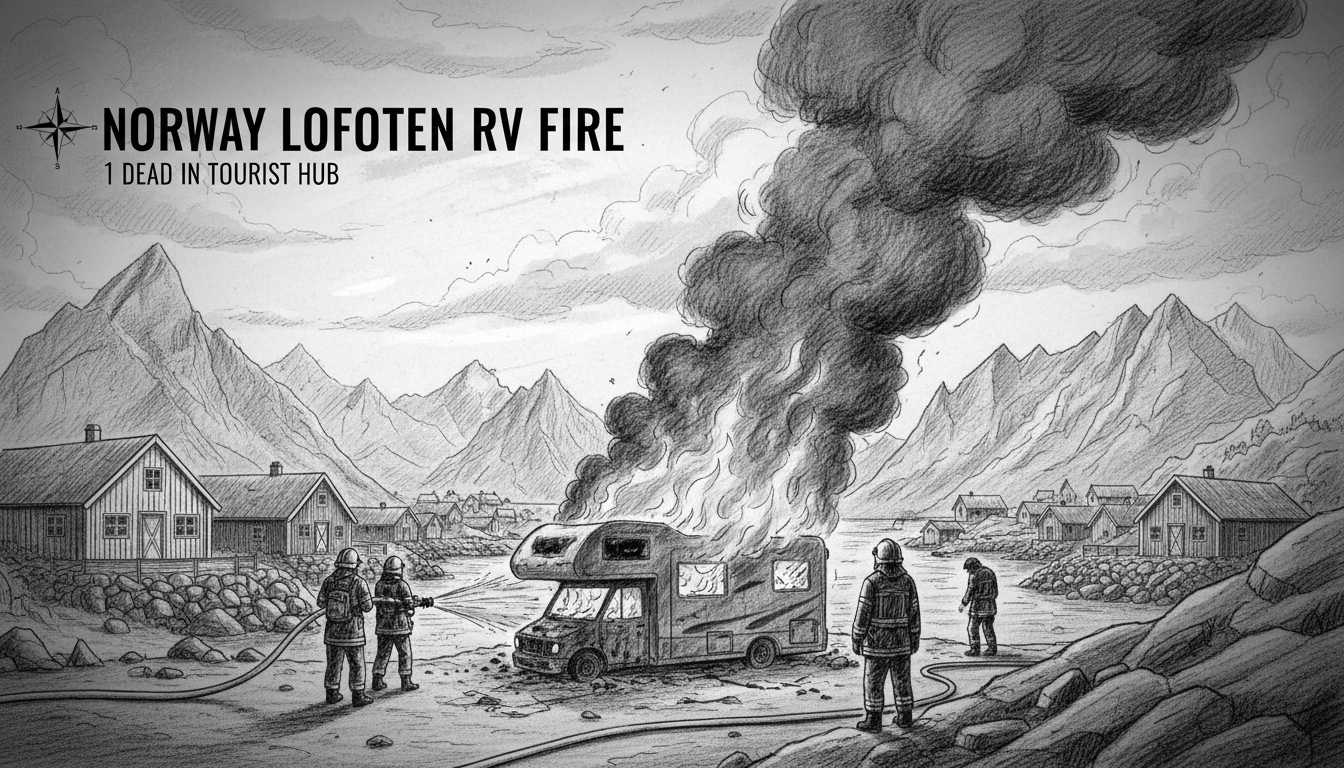
Norway's Lofoten islands attract over 1 million visitors annually, but a recreational vehicle fire Monday morning turned a scenic escape into a tragedy. Police confirmed one person was found dead after an RV burned completely down in Nordland county. The incident underscores the hidden risks of remote travel in Norway's Arctic regions.
A Tragic Discovery in Arctic Paradise
Emergency services received the fire report at 9:25 AM on Monday. Responders arrived to find the RV fully engulfed, leaving little but ashes. Police are now working to identify the deceased individual. This process involves forensic experts examining the scene for any surviving evidence.
The location is a stark contrast to Lofoten's postcard image of towering mountains and fishing villages. Instead, it became a site of sorrow and investigation. Local authorities have cordoned off the area as they begin their work. No further details about the victim's identity or origin have been released.
The Immediate Response and Investigation
Nordland Police District is leading the inquiry into the fire's cause. Initial focus will be on potential ignition sources within the RV. Common culprits in such vehicles include propane systems for cooking, portable heaters, or electrical faults. Norwegian fire investigation teams follow strict protocols to determine origin and cause.
These investigations can take weeks, especially when a vehicle is so thoroughly destroyed. Forensic pathologists will also be involved to confirm the cause of death. Police statements emphasize that next of kin notification is their priority before releasing more information.
Lofoten's Reliance on Recreational Vehicles
Recreational vehicles, known locally as 'bobiler', are a cornerstone of Norwegian tourism. In Lofoten, they provide flexible accommodation across the archipelago's limited hotel infrastructure. Summer months see hundreds of such vehicles navigating narrow roads along fjords and peaks.
This mode of travel offers freedom but comes with unique challenges. Many parking spots are informal, lacking dedicated safety facilities or rapid emergency access. The popularity of RV travel has surged in recent years, with rental companies reporting high demand. This growth has not always been matched by updated safety regulations for remote areas.
Expert Analysis: Fire Risks in Mobile Accommodation
I spoke with Lars Hansen, a former fire safety inspector with the Norwegian Directorate for Civil Protection. He notes that RV fires pose distinct dangers. 'These vehicles combine living quarters with fuel sources and often aging electrical systems,' Hansen explained. 'In remote locations like Lofoten, response times can be longer, and fires spread quickly in confined spaces.'
Hansen points out that Norwegian authorities have guidelines for RV safety, but enforcement is tricky. 'Many tourists are unfamiliar with the specific risks of propane systems in cold climates,' he said. 'Condensation and leaks can occur, especially when vehicles are not properly maintained.'
The investigation will likely examine whether the RV was privately owned or rented. Rental companies in Norway are required to conduct safety checks, but compliance varies. Hansen suggests that this incident might prompt a review of inspection regimes for tourist vehicles.
Broader Implications for Norwegian Tourism
Lofoten's economy depends heavily on tourism, with visitors seeking untouched nature and adventure. This tragedy highlights the balance between accessibility and safety. Local municipalities may face pressure to improve emergency preparedness in popular but isolated camping areas.
Norwegian tourism officials have long promoted 'friluftsliv' or outdoor living. However, incidents like this reveal the need for clearer safety communications to international visitors. Information about weather hazards, fire precautions, and emergency contacts is not always prominently displayed at remote sites.
From a policy perspective, the Storting could consider new regulations for RV parking zones. This might include mandated fire extinguishers, regular safety certifications, or designated areas with better emergency access. Such measures would impact both local infrastructure budgets and tourist experiences.
Safety Standards and Preventative Measures
Current Norwegian law requires RVs to have smoke detectors, but not all are equipped with fire suppression systems. In comparison, some European countries have stricter rules for rental vehicles. Germany, for example, mandates annual safety inspections for all recreational vehicles used commercially.
Following this fire, insurance companies may also adjust their policies for RV rentals in Norway. Higher premiums or additional safety requirements could become common. This would affect the cost and accessibility of this travel mode for tourists.
For travelers, experts recommend several precautions. Always check the condition of heating and cooking equipment before use. Ensure that propane tanks are securely fastened and lines are intact. Keep a fire extinguisher accessible and know how to use it. In remote areas, have a plan for emergency communication, as mobile coverage can be spotty in Norwegian fjords.
A Community in Mourning
While the investigation continues, the local community in Lofoten is grappling with the loss. Such incidents are rare but deeply felt in small, tight-knit populations. Tourism workers and residents alike express sympathy for the victim and their family.
The serene beauty of Lofoten remains, but now with a sobering reminder. As the midnight sun illuminates the landscape, safety in the wilderness must be a shared responsibility. This tragedy may lead to meaningful changes in how Norway protects both its visitors and its reputation as a safe destination.
What lessons will be drawn from this isolated yet profound event? Only time and thorough investigation will tell. For now, the Arctic silence is broken by the echoes of a preventable disaster.