
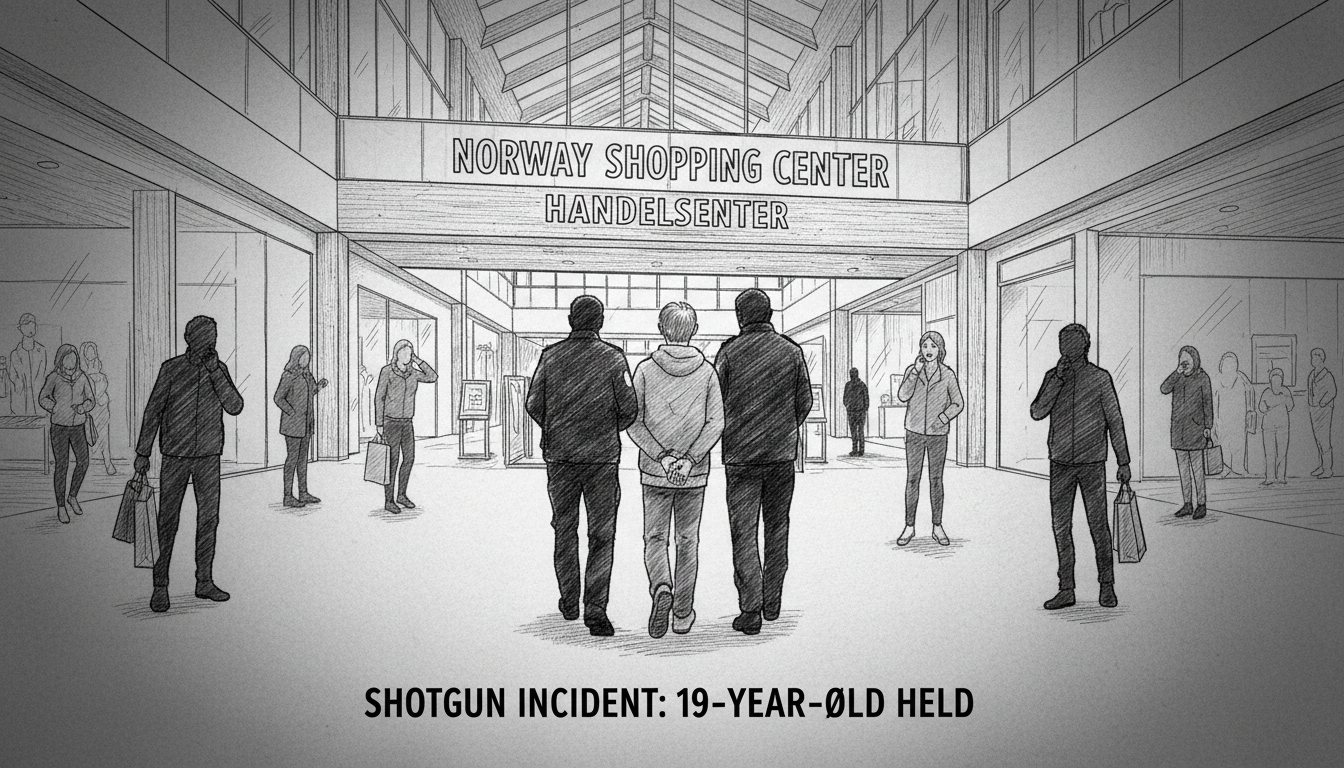
Norway's police detained a 19-year-old man after a shotgun was fired inside Oslo's largest shopping center last Monday. The young man called authorities himself immediately after discharging a single round into the ceiling. No shoppers or staff were injured during the midday incident. The Oslo District Court has now ordered the suspect to be held in custody for four weeks with no right to letters or visits.
The Incident and Immediate Aftermath
Authorities responded rapidly to the scene at the major retail complex following the emergency call. Police apprehended the 19-year-old suspect shortly after the shot was fired. Security protocols were activated, though the center was not fully evacuated. Initial police statements confirmed there was no ongoing threat to the public. The weapon, identified as a shotgun, was secured at the scene.
Investigators are treating the case with utmost seriousness despite the lack of physical injuries. The court's decision for four weeks of pre-trial detention indicates the gravity with which they view the act. The restrictions on communication suggest concerns about evidence preservation or potential influence on the investigation. Police have not released a possible motive, stating the inquiry is in its early stages.
Court Findings and Psychological Assessment
The Oslo District Court issued a detailed custody ruling. In their assessment, the 19-year-old man does not present symptoms of psychosis or a severe psychiatric disorder. This preliminary finding is based on initial evaluations conducted after his arrest. However, the court explicitly stated that a closer, more comprehensive psychological examination is necessary.
This distinction is crucial in Norwegian legal and health frameworks. It suggests the court recognizes a need to understand the man's mental state beyond acute crisis. Behavior leading to such a public, alarming act requires deep analysis, even if it doesn't fit classic definitions of severe illness. The ruling paves the way for forensic psychiatric evaluation during his detention period.
Norway's Context of Gun Control and Public Safety
This event stands out in a nation known for stringent firearm regulations and low violent crime rates. Norway requires licenses for all gun ownership. Applicants must prove a valid need, pass a background check, and complete mandatory safety training. Shotguns, like the one used in this incident, fall under these strict controls. Their use is primarily permitted for hunting or sport shooting under regulated conditions.
Incidents of gun violence in public spaces are exceptionally rare in Norway. The country still carries the collective memory of the 2011 terror attacks, which led to even tighter security and preparedness protocols. Public areas, including shopping centers, have developed detailed response plans for critical situations. The swift and contained resolution of this event partly reflects those established procedures.
The Question of Prevention and Mental Health Services
The suspect's own call to police adds a complex layer to the case. It introduces the possibility of a cry for help rather than an intent to harm others. This action aligns with what the court described as an "impulse act" in its ruling. Experts in forensic psychology often stress that such incidents can signal untreated mental distress, even outside of psychosis.
Norway boasts a robust, publicly funded mental healthcare system. Access, however, can involve waiting times for non-emergency services. Experts argue that prevention hinges on early intervention and accessible support for young adults facing psychological struggles. The gap between experiencing distress and receiving effective help is a critical focus area for public health officials. This case will likely renew discussions about outreach and early warning systems.
Legal Proceedings and Next Steps
The suspect faces formal charges expected to be filed by police in the coming weeks. Firing a weapon in a public place is a serious criminal offense under Norwegian law. Potential charges could relate to endangerment of public safety or unlawful use of a firearm. The sentence, if convicted, would consider all factors, including intent, psychological state, and the absence of physical harm.
The four-week detention allows police to complete their investigation uninterrupted. It also ensures the suspect remains available for the required psychiatric assessment. The court will review the custody decision before its expiration. Any extension would require a new hearing and justification. The suspect's defense lawyer will have the opportunity to argue against continued detention at that stage.
A Community's Response and Broader Implications
While the incident ended without injury, it has undoubtedly stirred concern. Shopping centers symbolize everyday public life and commercial activity. A violation of that space's safety resonates deeply. Retail managers and security firms will review this event to identify any lessons for threat detection and crisis management.
For the public, the episode is a stark reminder that no society is immune to isolated acts of violence. Norway's high trust in institutions and its comprehensive social safety net are foundational to its security. This trust is now being tested by a confusing act from a young adult. The coming weeks will focus on understanding his reasons while reassuring citizens about their ongoing safety.
The final analysis from this event may not center on crime statistics, but on systemic questions. How can societies better identify and support individuals on the verge of desperate actions? What role do communities play in recognizing distress? Norway's path forward will involve its legal system, its healthcare providers, and its collective commitment to maintaining both safety and compassion. The answers found here will contribute to an ongoing, difficult global conversation.