
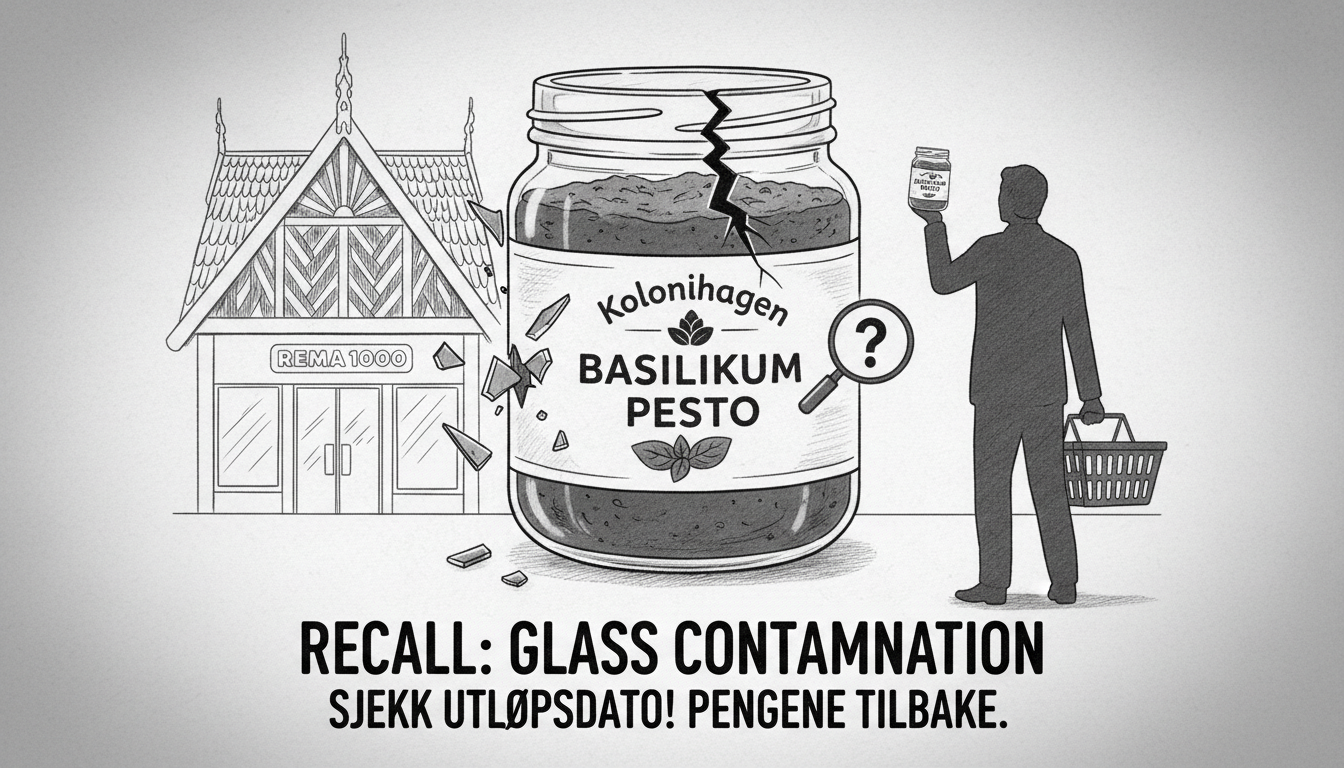
Rema 1000 has urgently recalled Kolonihagen basil pesto products after discovering potential glass contamination. The recall affects 130g jars of both regular and organic basil pesto with specific expiration dates. Consumers should immediately check their pantries for affected products.
The supermarket chain announced the recall through an official press release. They identified July 25, 2027 as the relevant expiration date for contaminated batches. The company is removing all affected products from store shelves nationwide.
Norwegian authorities are monitoring the situation closely. This marks the second pesto recall from the same producer in recent days. Both products share similar packaging and manufacturing processes.
Consumers who purchased the recalled pesto should dispose of it immediately. They can return empty containers to any Rema 1000 location for full refunds. The supermarket has established special return procedures for this contamination incident.
Online grocer Oda has notified customers directly about the recall. They sent text messages warning about the potential glass hazard. This demonstrates how Norwegian retailers use multiple channels for consumer safety alerts.
Food safety recalls in Norway typically follow strict protocols. The Norwegian Food Safety Authority (Mattilsynet) oversees such incidents. They work with retailers to ensure proper public notification and product removal.
This incident highlights the importance of robust food safety systems. While rare, contamination cases can occur even in countries with high safety standards like Norway. The quick response shows the effectiveness of Norway's food monitoring systems.
Norwegian consumers generally trust their food safety infrastructure. This recall tests that confidence but also demonstrates the system working as intended. Rapid identification and public notification prevent potential health incidents.
The recall affects products across multiple retail channels. Both physical stores and online platforms are involved. This comprehensive approach ensures maximum consumer protection.
Food contamination scares can impact consumer behavior temporarily. However, Norway's transparent handling of such incidents typically maintains public trust. The country's food safety record remains among the world's best.
What happens next? The producer must identify the contamination source and implement corrective measures. Norwegian authorities will likely conduct additional inspections. Consumers should expect temporary shortages of these popular pesto products.