
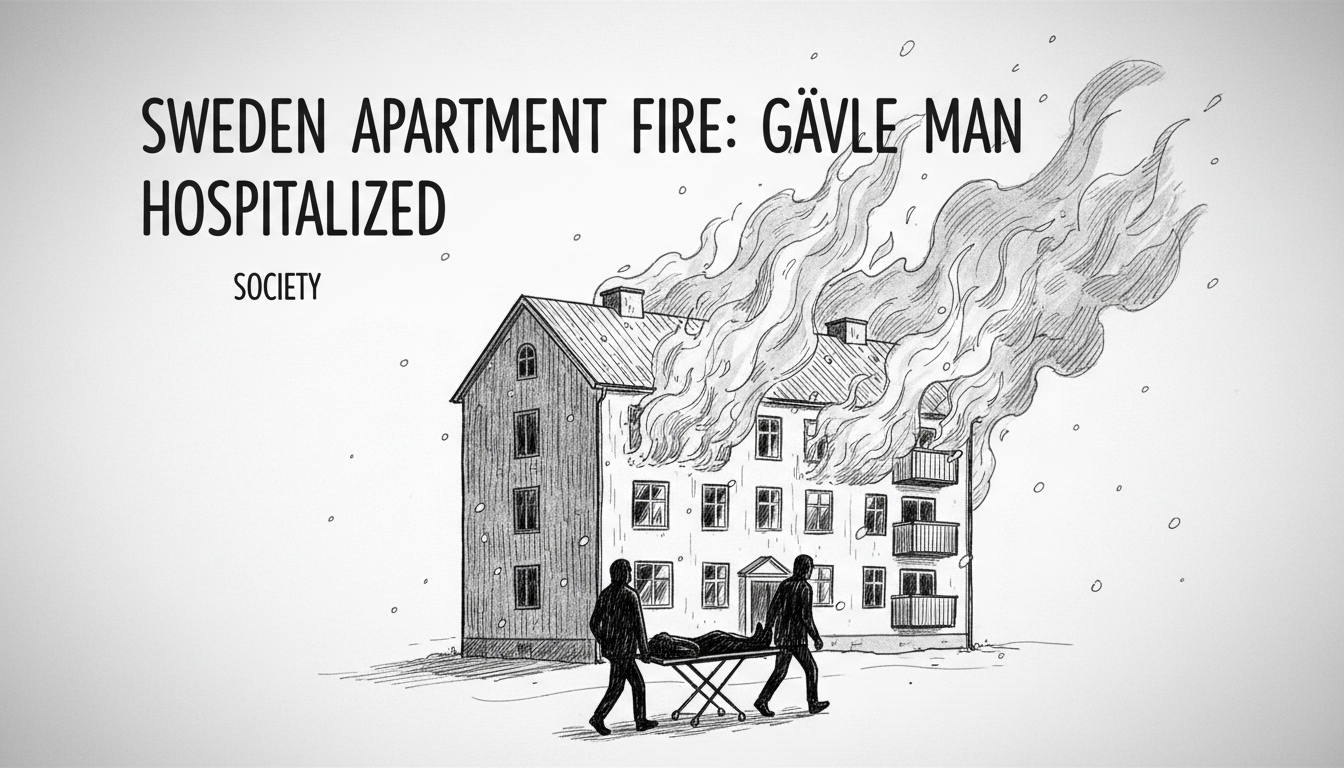
Sweden emergency services responded to an apartment fire in Gävle early this morning. A man in his 60s was hospitalized with injuries after residents were heard shouting and fire alarms blared in the residential building. The incident, which began on a balcony, highlights ongoing concerns about residential fire safety in Swedish cities.
Flames lit up the pre-dawn darkness in a Gävle neighborhood. Residents woke to the sharp smell of smoke and the piercing sound of alarms. From one apartment, neighbors reported loud shouts for help. When police arrived, they found the apartment's occupants desperately trying to extinguish a fire raging on their balcony. The quick escalation from a balcony blaze to a full emergency call shows how fast domestic fires can spread. A man, aged in his sixties, was later taken to hospital by ambulance. His current condition remains unknown, adding a layer of anxiety for the community.
A City Awakened by Emergency
Gävle, the coastal capital of Gävleborg County, is more famous for its giant straw Christmas goat than for nighttime emergencies. This morning's events shattered the ordinary calm. The specific neighborhood has not been disclosed, but such incidents resonate deeply in Sweden's tightly-knit residential areas. Apartment living is common here, creating a shared responsibility for safety. A fire in one home is a threat to many. The sound of sirens cutting through the quiet morning is a stark reminder of that vulnerability. For the neighbors who called for help, it was a frightening start to the day.
The Persistent Challenge of Fire Safety
This fire is not an isolated case. Residential building fires are a recurring concern across Sweden, particularly during the colder months. As temperatures drop, the use of heating appliances, electrical systems, and sometimes even open flames increases. Balconies, like the one where this fire started, often become storage areas or casual smoking spots, both potential risk factors. Swedish building codes are famously strict, with a strong emphasis on fire-resistant materials and clear evacuation plans. Yet, human error, faulty appliances, or simple accidents can bypass the best regulations. Every incident prompts the same urgent questions from fire safety experts and residents alike: How did this happen? And how can we stop it from happening again?
“The first minutes are absolutely critical in a residential fire,” says a fire safety consultant familiar with Swedish protocols, who asked not to be named as the investigation is ongoing. “Working smoke detectors are the most important warning system. They give people the precious time they need to get out and call for help. This incident, with reports of both alarms and shouting, shows that early detection occurred, which is positive. But the injuries show the extreme danger fire presents, even when you think you have it contained to a small area like a balcony.”
Investigation and Community Impact
Authorities will now begin a thorough investigation. Their focus will be on determining the exact cause of the blaze. Was it a discarded cigarette, an electrical fault from outdoor lighting or furniture, or something else entirely? They will also assess whether all fire safety protocols in the building were up to code. This process is standard but carries weight. Its findings can lead to updated safety recommendations for buildings nationwide. For the other residents in the apartment block, the day will involve cleaning up smoke damage, assessing structural safety, and dealing with the psychological shock. An event like this shakes the sense of security within one's own home.
Sweden's approach to fire prevention is proactive, with public awareness campaigns run by the Swedish Civil Contingencies Agency (MSB). They emphasize the basics: test smoke detectors monthly, never leave cooking unattended, be cautious with candles and open flames, and ensure heating sources are clear of flammable materials. On balconies, they advise keeping the area tidy, avoiding storage of flammable liquids, and ensuring any electrical outlets used for decorative lighting are in good condition. These rules seem simple, but their importance is tragically underscored by fires like the one in Gävle.
Looking Beyond the Smoke
The human story here extends beyond the injured man. It includes the neighbors who raised the alarm, the emergency responders who worked quickly to secure the scene, and the building's landlord who must now ensure the property is safe. It also touches on a broader Swedish cultural value: the concept of trygghet. This word translates roughly to ‘security’ or ‘safety’, but it means more. It’s the feeling of being protected and secure in your community and your home. A fire violently punctures that trygghet. Restoring it takes more than just repairing walls; it requires rebuilding trust in the safety of one's own four walls.
As Gävle moves past this morning's alarm, the incident serves as a sobering reminder for all of Sweden. Our homes are our sanctuaries. Yet, they require constant vigilance to remain safe. The coming days will reveal more about the cause of this specific fire. But the lesson for everyone is clear and immediate. Check your smoke detector. Review your escape route. Talk to your family about what to do if the alarm sounds. In a country that values safety and security above all, the most important work often happens before the first siren ever wails.