
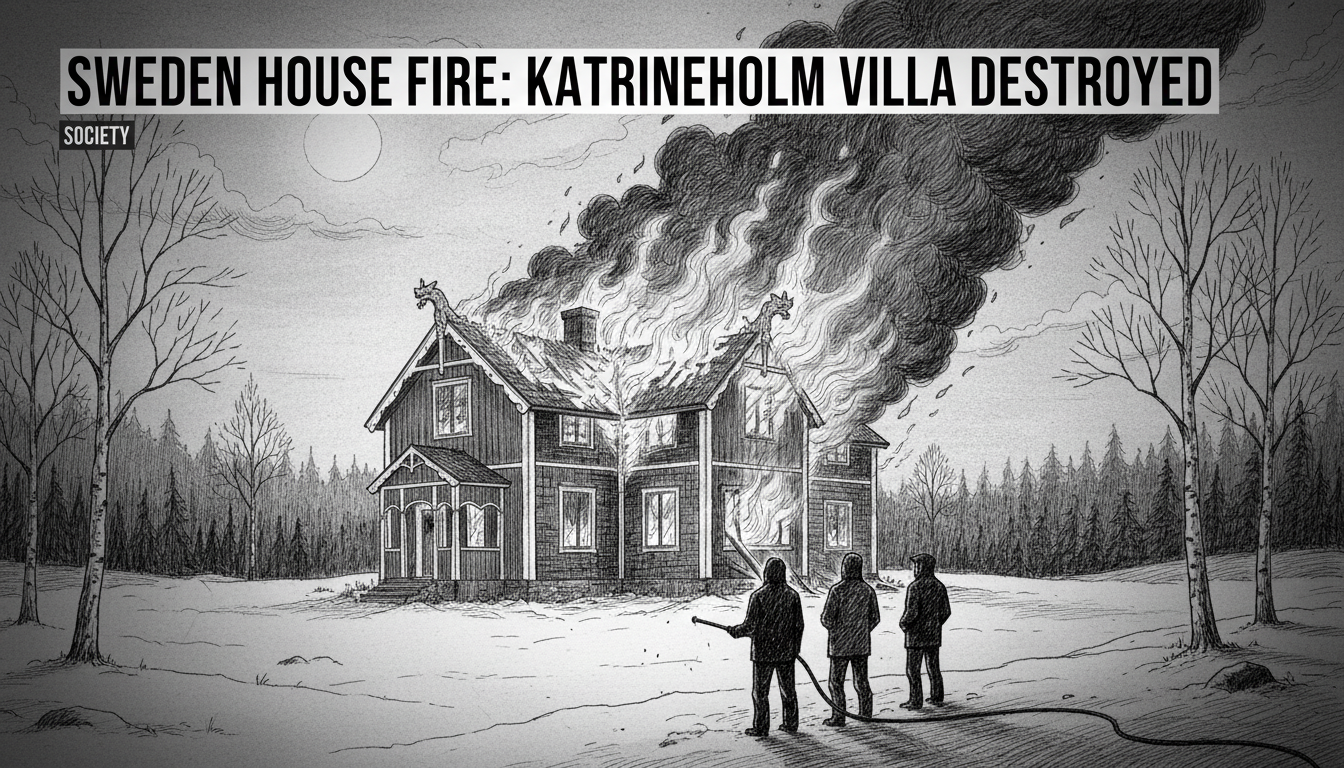
Sweden's municipal rescue services were called to a devastating house fire in Katrineholm at 3:27 AM. The villa was completely engulfed in flames, creating a thick plume of smoke that spread across the neighborhood. Firefighters worked through the night to contain the blaze and prevent it from spreading to nearby homes. The incident highlights the ever-present risk of residential fires, even in a country with strong safety regulations.
A Night of Flames and Smoke
The alarm came in the dead of night. Emergency services in the Södermanland region received the call at 3:27 AM. A villa in the quiet community of Katrineholm was on fire. Crews arrived to find the structure fully involved. Their primary mission shifted from saving the burning home to protecting the surrounding area. They successfully stopped the fire's spread, but the villa itself was a total loss. The incident caused significant smoke development, a common and dangerous aspect of house fires that can affect air quality for blocks.
This single event is part of a larger national picture. In 2022 alone, Sweden's fire and rescue services responded to approximately 45,000 call-outs. Residential fires make up a substantial portion of these incidents. Each one represents a personal tragedy, a loss of home, memories, and security. While Sweden's building codes for new constructions are among the strictest in the world, focusing heavily on fire-resistant materials and compartmentalization, older homes like many villas may not meet these updated standards.
The Human Cost Behind the Statistics
Behind the official report of a 'villa övertänd'—a villa fully ablaze—lies a profound human story. A home is more than timber and brick. It is a repository of family history, personal belongings, and a sense of safety. For the residents of the Katrineholm house, the aftermath begins now. They face the daunting tasks of dealing with insurance, finding temporary housing, and rebuilding their lives from the ashes. The psychological impact of such a sudden, violent loss is immense and often overlooked in the immediate news cycle.
Local communities in towns like Katrineholm often rally around affected families. This informal support network is a cornerstone of Swedish society. Neighbors offer spare rooms, schools provide stability for children, and local organizations collect donations. The response to a house fire reveals the tight-knit fabric of smaller Swedish cities, where people are not just anonymous faces.
Prevention and Investigation: What Happens Next?
With the fire extinguished, the focus turns to cause and prevention. Police investigators will now work to determine the origin of the blaze. Their process is meticulous. They will examine whether the fire was accidental, perhaps caused by an electrical fault, a forgotten candle, or a malfunctioning appliance. They will also look for any indications of arson. Determining the cause is crucial not only for insurance purposes but for public safety, as it can inform future prevention efforts.
Fire safety experts consistently emphasize simple, life-saving measures. "The cornerstone of home fire safety is a working smoke detector," one expert often states. Many older Swedish villas might only have a single detector, whereas current recommendations suggest multiple units, especially outside sleeping areas. Other common advice includes having a fire extinguisher accessible, not overloading electrical sockets, and being cautious with open flames like fireplaces and candles—a particularly relevant warning as darker autumn evenings approach.
A Nation's Relationship with Fire Safety
Swedes have a complex cultural relationship with fire. On one hand, there is a deep-seated appreciation for its warmth and light, embodied in the tradition of 'mys'—coziness—often achieved with candlelight. On the other, there is a profound respect for its destructive power, ingrained through strict public education and rigorous building codes. This balance is tested every time a major house fire occurs. It prompts public discussion about whether safety regulations for existing homes are sufficient and if public awareness is high enough.
For international observers, Sweden's approach to fire safety can seem extreme. The regulations are comprehensive. But as this fire in Katrineholm shows, no system is foolproof. Older housing stock, human error, or unforeseen technical failures can lead to disaster. The country's high number of call-outs—45,000 in a nation of 10 million—indicates that fires are a frequent reality for emergency services, even if major tragedies are relatively rare.
The response system itself, the 'kommunala räddningstjänsten', is a point of local pride. These are not distant, nationalized units but local services integrated into their communities. Their knowledge of local infrastructure and geography, as seen in their effective containment work in Katrineholm, is a key part of Sweden's civil safety net.
Looking Forward from the Ashes
The story of the Katrineholm villa does not end when the last ember cools. It continues in the investigation report, the insurance claims, and the family's recovery. It continues in the conversations neighbors have over coffee, double-checking their own smoke alarms. It continues in the ongoing work of fire prevention advocates who use such incidents to highlight the importance of vigilance.
For a society that values security and stability, a house fire is a violent rupture. It is a reminder of vulnerability. Yet, the response also showcases community resilience. The immediate action of the rescue services, the forthcoming support from the community, and the systematic investigation all represent a society mobilizing to manage a crisis and learn from it. The final question is one we all must consider: in our own homes, are we doing enough to prevent the unthinkable, or are we relying on luck and the swift response of others?