
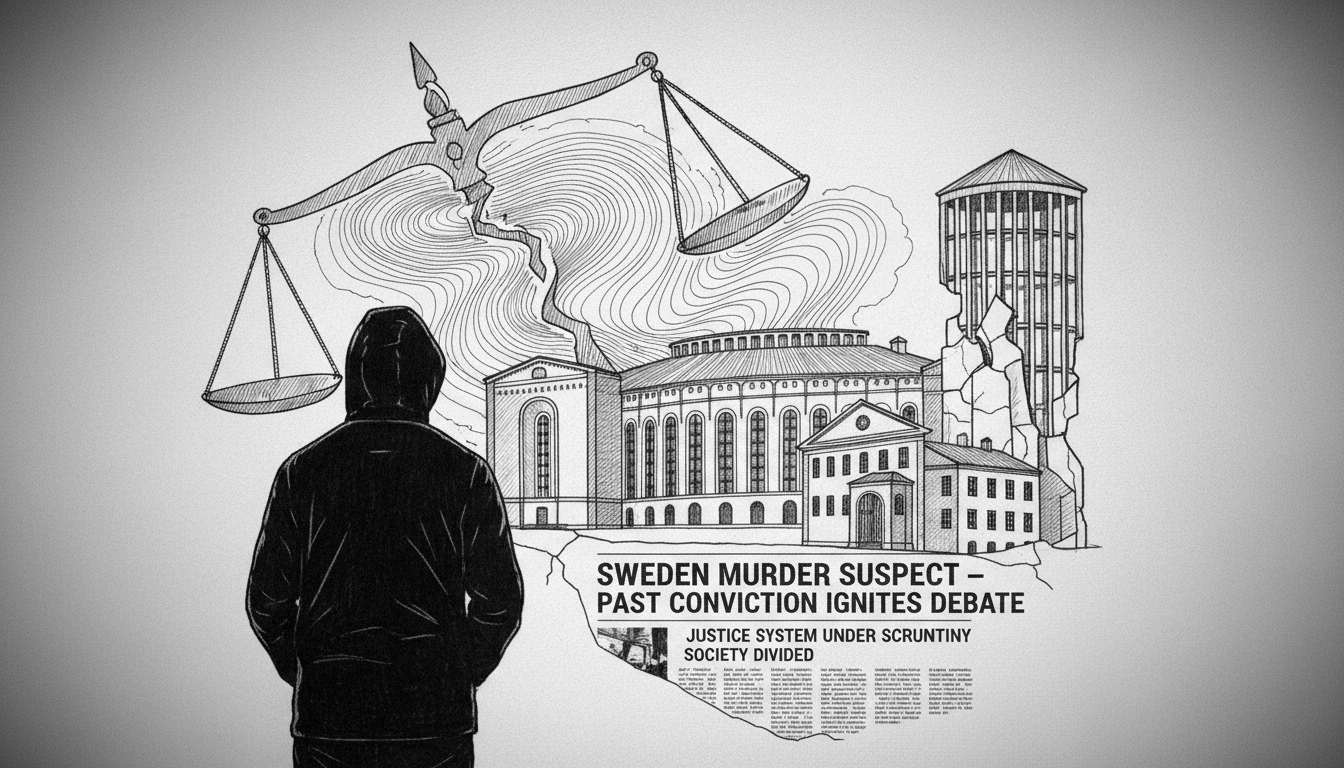
Sweden's justice system faces renewed scrutiny after a 26-year-old man was detained for the murder of a young woman in Rönninge. The suspect had a prior conviction for a crime that indicated he was a danger to others. This detail, emerging from a detention hearing, has ignited a fierce political and public debate about sentencing, rehabilitation, and public safety in a nation proud of its humane penal approach.
Prosecutors secured the suspect's detention on Tuesday, citing a high risk of recidivism, flight risk, and potential evidence tampering. While formal charges are pending, the case's outline is tragically familiar. A life cut short. A community in shock. And a legal record that shows warning signs were already there.
"Every time a case like this hits the news, the same questions roar back," says Lars Trägårdh, a Stockholm-based historian who studies Swedish social trust. "Can a system built on forgiveness and reintegration protect its citizens from those who pose a clear danger? The public's patience is being tested."
A System Under the Microscope
The Swedish prison system is fundamentally designed for rehabilitation, not pure punishment. Sentences are relatively short by international standards. The focus is on education, therapy, and preparing inmates for a crime-free life upon release. This model has long been a point of national pride, reflecting broader social values of equality and second chances.
But statistics show persistent challenges. According to the Swedish National Council for Crime Prevention, about 35% of people released from prison are reconvicted of a new crime within three years. For certain types of violent offenses, the rates are even more concerning to the public. Meanwhile, reports of serious crimes like rape increased by 9% from 2022 to 2023.
These numbers form the backdrop to a growing sense of anxiety, particularly in suburban areas like Rönninge, located in Salem municipality south of Stockholm. Conversations in local cafes and on community social media pages often turn to safety and a perceived lack of consequences for repeat offenders.
"We read about prior convictions, about known risks, and then something terrible happens," says Anette, a mother of two living in a nearby suburb. She asked not to use her full name. "It feels like the safety of us, the regular people, is not the top priority. The system seems to care more about the criminal's future than our present."
The Balance Between Mercy and Safety
Legal experts are quick to point out the complexity of predicting human behavior. A prior conviction does not automatically mean someone will commit murder. Judges must weigh each case on its individual merits, bound by sentencing guidelines and the principle of proportionality.
"The law requires that the punishment fit the specific crime committed, not a future crime we fear might happen," explains Professor Johanna Schiratzki, a criminal law expert. "Pre-trial detention, as in this case, is one tool for immediate risk management. But designing sentencing laws to incarcerate people preemptively for what they might do is a dangerous path that conflicts with foundational legal principles."
Others argue the system is too rigid and fails to adequately account for patterns of escalating violence. Some politicians, particularly from the Moderate Party and Sweden Democrats, are calling for mandatory minimum sentences for serious violent crimes and stricter rules for repeat offenders. They argue that the right to rehabilitation cannot override the citizen's right to security.
"When a person has already demonstrated a clear threat to others, the sentence must first serve to protect society," said Tobias Andersson, a member of parliament, in a recent debate. "That protection must be measured in years, not just therapy sessions."
The Human Cost and the Search for Solutions
Lost in the political rhetoric are the victims and their families. The young woman killed in Rönninge becomes a statistic in a broader debate, but her death is a singular, devastating tragedy. Community grief is now mixed with anger and a demand for accountability that stretches beyond the individual suspect to the system itself.
Criminologists like Sven Granath suggest the debate is too narrowly focused on prison sentences. "Longer sentences might satisfy a need for justice in the short term," he says. "But if an individual returns to society angrier, more traumatized, and without any skills or support, we have not solved anything. We have just postponed the problem. The investment must start much earlier—in schools, social services, and mental health care—to prevent the first crime from happening."
This perspective highlights a central Swedish dilemma: the conflict between a deep-seated belief in social engineering for the good and a rising demand for immediate safety and retribution. The model requires time, resources, and social cohesion to work. In an era of strained resources and growing inequality, that foundation is showing cracks.
A Defining Moment for Swedish Values?
The Rönninge case is not an isolated incident. It follows other high-profile crimes where perpetrators had known histories. Each one chips away at public confidence. The upcoming trial will dissect the specific events of the murder. But the parallel trial of Sweden's justice philosophy is already underway in media studios, parliamentary committees, and living rooms across the country.
Can Sweden maintain its rehabilitative ideal while convincing its citizens they are safe? The answer will require more than adjusting sentencing guidelines. It demands an honest conversation about what rehabilitation truly means, when it fails, and what society owes to those who have never broken the law.
As the investigation continues, a community mourns. And a nation watches, wondering if this case will be the one that finally tips the scale.