
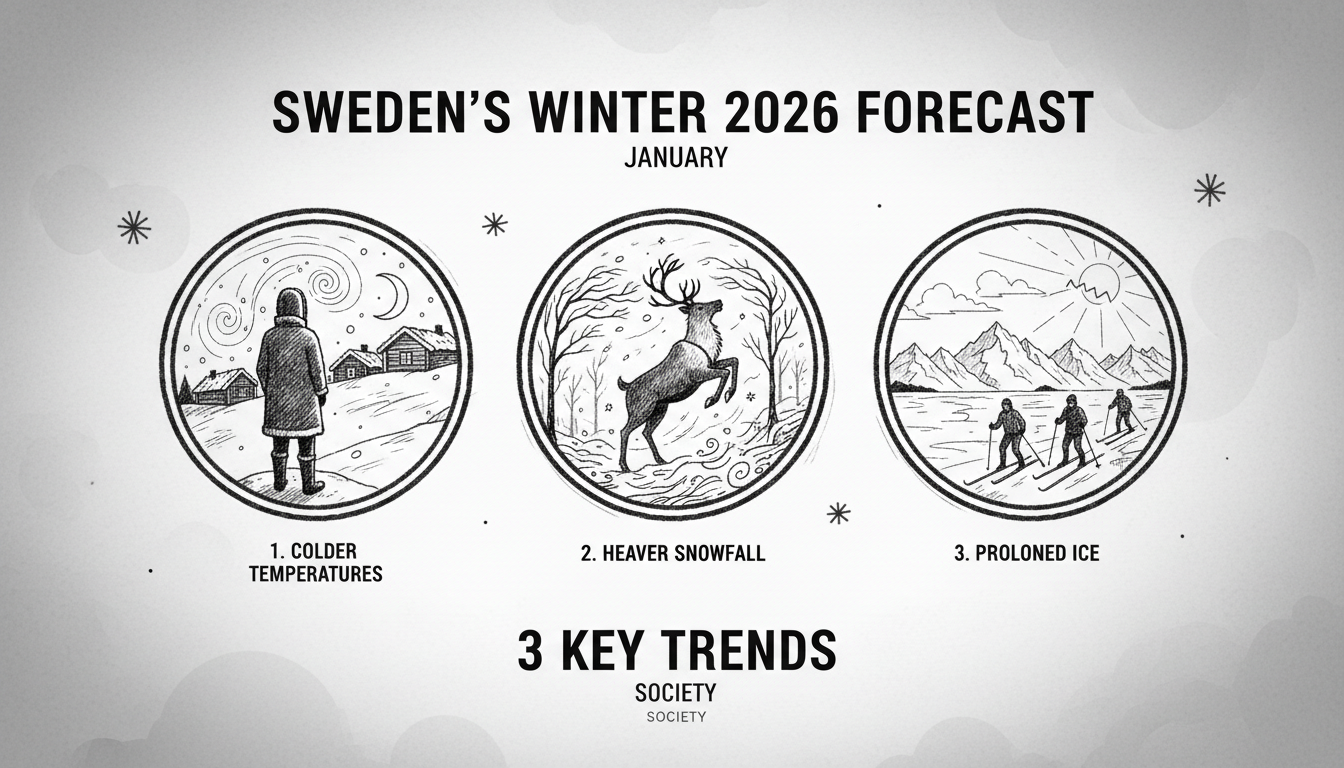
Sweden's winter weather forecast for January 2026 is a topic of intense local interest as the country braces for its coldest season. In Stockholm's Södermalm district, café conversations are already turning from fika to frost. People are checking long-range models, wondering if this will be the year for a perfect cross-country ski season or another unpredictable, slushy winter. The anticipation isn't just about planning weekend trips to Åre; it's woven into the fabric of Swedish life, from heating bills to holiday travel.
The Science Behind the Seasonal Crystal Ball
Meteorologists are preparing to release their seasonal outlooks, but they start with a significant caveat. Predicting specific conditions for a single month over a year in advance is an immense challenge. "We can identify broader trends and probabilities, but the exact dance of high and low-pressure systems over Scandinavia in January 2026 is still a mystery," explained a climatologist at a leading Swedish institute. The forecast relies on analyzing ocean temperature patterns, like those in the North Atlantic, and large-scale climate oscillations. The key takeaway for Swedes is that these long-range outlooks provide a likelihood, not a guarantee. They offer a glimpse of whether the odds favor a colder, snowier January or a milder, wetter one compared to the long-term average.
This scientific process is crucial for a nation where winter is not a passing season but a dominant force. The average January temperatures in Stockholm historically hover between -3°C and -1°C, but as any Stockholmer knows, reality can be far different. The city has seen January days as warm as 14.2°C and, in the northern reaches of the country, as chilling as -49°C. The forecast aims to narrow that vast range of possibilities.
Reading Between the Forecast Lines: What to Probabilistically Expect
Based on current climate trends and historical data, experts can outline probable scenarios for January 2026. Southern and central Sweden, including cities like Gothenburg and Stockholm, will likely see average temperatures close to or slightly above historical norms. This doesn't rule out cold snaps or significant snow, but it suggests a winter where periods of frost may be interspersed with rain and thaw. The iconic image of a frozen Stockholm archipelago is becoming less of a certainty and more of a cherished occurrence.
In stark contrast, Northern Sweden and Swedish Lapland are almost certain to experience a proper, deep winter. Average temperatures here are expected to remain well below freezing, often plunging below -15°C. This region is the reliable heart of the Swedish winter, where snow cover is dependable and the sun barely crests the horizon. For the tourism industry in Kiruna or Jukkasjärvi, this predictability is vital. It's where the classic Swedish winter experience—dog sledding, northern lights tours, and ice hotels—is guaranteed.
Precipitation is the wildcard. Will it fall as snow or rain? The forecast will indicate the probability of snow-heavy periods versus wetter systems. Southern coastal areas face the highest chance of winter rain and sleet, while inland and northern areas are far more likely to see consistent snowfall. The average sunshine duration in Stockholm in January is a mere 20-30 hours, a statistic that feels painfully accurate to anyone who has lived through the dark mörkertid.
Beyond the Thermometer: Cultural and Practical Preparedness
The true value of the January 2026 forecast lies not in a precise temperature number, but in its power to shape preparation. Swedes have a deep cultural relationship with winter, encapsulated in the concept of mys—the cozy response to the cold and dark. The forecast informs this ritual. Will this be a year for intensive outdoor friluftsliv (open-air life), or one for hunkering down with extra candles and wool socks?
Practical life adjusts to the predicted trends. Municipalities in the north will prepare their fleets of snowplows with confidence. In the south, city planners might stockpile more road salt, anticipating freeze-thaw cycles. For families, it influences decisions: is it worth investing in new cross-country skis, or should they plan a winter city break to Berlin instead? The famed Vasaloppet ski race monitors these forecasts years in advance, as snow conditions are everything.
"We don't just look at the temperature," says Lars, a hardware store owner in Vasastan. "People come in asking different questions based on the winter outlook. A forecast for a cold, dry winter means selling more insulation and weather stripping. A forecast for a wet, unstable winter means more ice melts, waterproof gear, and moisture absorbers. We listen to the meteorologists as carefully as our customers."
The Unavoidable Shadow: Climate Change's Role
No discussion of a future Swedish winter is complete without acknowledging the changing climate. Experts consistently note the increasing volatility of winter weather. The boundary between cold continental air and mild Atlantic air is shifting, leading to more frequent and intense winter storms, especially in southern Sweden. Periods of extreme cold can still occur, but they may be followed by rapid and unseasonal thaws.
This means the classic, stable, snow-covered Swedish winter is becoming more of a northern phenomenon. The south experiences more "rollercoaster" winters. This has tangible impacts, from challenging the operations of smaller ski resorts in Dalarna to affecting winter crop survival. The forecast for January 2026 will inherently reflect this new reality of heightened unpredictability. It is less about predicting a stable state and more about assessing the risk of various extreme events—heavy snowfall, ice storms, or winter rainfall.
Your Winter 2026: How to Use the Forecast
So, how should a resident or visitor use this forecast when it is released? First, see it as a framework, not a day-by-day guide. It tells you what to probably pack. A trend toward mildness in Stockholm suggests layering is key—a warm jacket, but also a waterproof shell. A trend toward cold and snow in the north demands serious thermal wear.
Second, let it guide your activity planning. A promising snow forecast for central Sweden is a green light to book that classic ski cabin in Sälen. A mild, wet forecast for the south might make a cultural city break in Malmö or Gothenburg, with its excellent museums and indoor markets, more appealing.
Finally, remember that the most accurate information will come from the short-term forecasts in the weeks and days leading up to January 2026. The seasonal outlook sets the stage, but the daily forecast directs the play. It is the tool that will tell you if you need studded tires for your drive to work or if the ice on Lake Mälaren is safe for skating.
As we look ahead, the question remains: will January 2026 deliver the postcard-perfect winter so deeply rooted in the Swedish soul, or will it be another chapter in the story of a climate in transition? The forecast will give us our first clue, and the entire nation, from Trelleborg to Kiruna, will be reading it closely, ready to adapt, prepare, and find their mys regardless of what the sky delivers.