
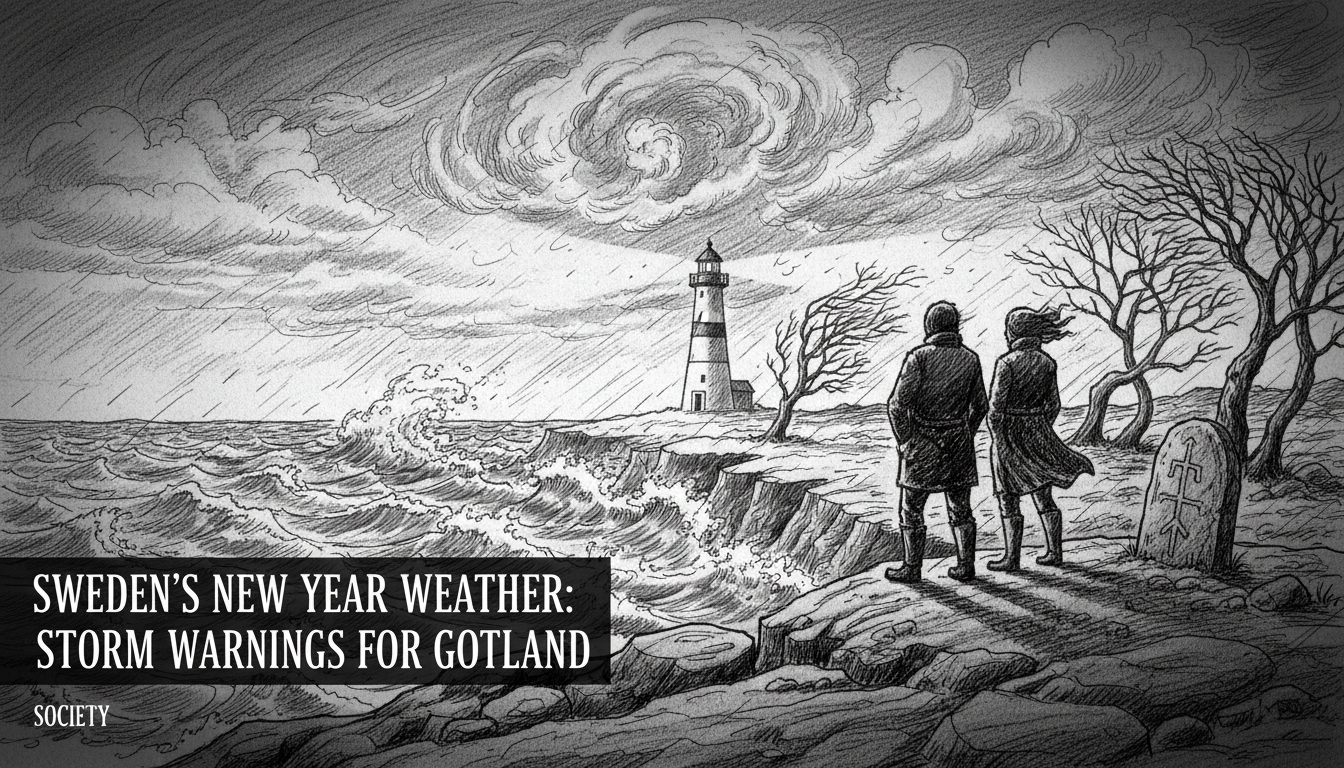
Sweden's New Year celebrations could be disrupted by stormy weather, with meteorologists warning of potential trouble. The Swedish Meteorological and Hydrological Institute (SMHI) has issued an orange warning for the island of Gotland, where ferry traffic is already facing cancellations and delays. Meteorologist Therese Fougman describes the forecast with a characteristically Swedish understatement. "It looks like it could be nasty weather again at the start of the year," she said. "It's unclear if it will be that troublesome for us on the mainland." This warning sets the stage for a potentially chaotic transition into 2025, affecting travel plans and holiday festivities across the Baltic region.
For Swedes, weather is more than small talk. It dictates daily life, from cycling in Stockholm to planning the crucial midsummer celebrations. A major storm at New Year's carries a particular weight. It can strand travelers, cancel long-awaited family gatherings, and turn fireworks displays into soggy, wind-whipped affairs. The orange warning for Gotland, active until Tuesday evening, signals a significant risk of disruption. Orange is the middle level in SMHI's three-tiered system, indicating conditions that could pose a real danger to the public and cause substantial damage.
A Nation Accustomed to Winter's Whims
Swedes possess a resilient, almost philosophical relationship with their climate. The dark, cold winters are met with candles, fika, and the determination to carry on outdoors. Storms, while inconvenient, are part of the annual rhythm. "We are used to preparing," says Lars Bengtsson, a Stockholm resident stocking up on groceries at a Hötorget market. "But when it hits the holidays, it's different. People are moving across the country to see family. A warning like this makes everyone check their apps a little more often." This societal preparedness is rooted in both tradition and modern infrastructure. From the widespread use of studded winter tires to municipal snow-clearing armies, Sweden is built for harsh conditions. Yet, an island like Gotland remains uniquely vulnerable to the whims of the Baltic Sea.
The Gotland Gateway Grinds to a Halt
The immediate impact of the developing storm is most acute on Gotland. Ferry operator Destination Gotland has already announced cancellations and warnings for passengers traveling to and from the mainland ports of Nynäshamn and Oskarshamn. For an island community of 60,000, these ferries are not just tourist transports but vital lifelines for goods, medicine, and residents. An orange warning effectively severs that connection, isolating the island. "It's always stressful," admits Elin Karlsson, a shop owner in Visby. "We get deliveries delayed, and tourists get stuck. You just have to batten down the hatches, light a fire, and wait it out. It's part of island life." The medieval city of Visby, a UNESCO World Heritage site, is used to storms battering its ancient walls, but the economic ripple effect on hospitality and retail during a key holiday period is significant.
The Science Behind the Warning
Therese Fougman's cautionary note about uncertainty is standard in meteorological circles, but it speaks to a specific challenge in forecasting Baltic weather. The relatively shallow, brackish sea can generate intense, localized low-pressure systems that are difficult to model precisely days in advance. An SMHI orange warning is not issued lightly. It is based on specific thresholds for wind speed, precipitation, and wave height that indicate a high probability of damage and danger. "The warnings on Gotland apply until Tuesday evening," Fougman confirmed. "After that, it looks calmer." This window of uncertainty—from now until Tuesday—is what keeps emergency services on alert and families debating whether to risk the drive to their holiday cottages.
For SMHI, communication is key. The agency has worked to make its warnings clearer and more actionable for the public. An orange warning means the public should reconsider any unnecessary travel, secure outdoor objects, and stay informed. It triggers specific protocols for transport authorities, power companies, and rescue services. This system, refined over years, aims to prevent the kind of chaos seen in past storms that caught the nation off guard.
New Year's Plans Hang in the Balance
Across Sweden, the weather forecast is now a central topic for New Year's Eve planning. In Stockholm, the iconic open-air celebrations at Skansen, featuring the annual national reading of the poem "Ring Out, Wild Bells," could be moved or altered if high winds materialize. Restaurants with coveted booking slots for nyårsmiddag (New Year's dinner) might see cancellations if travel becomes hazardous. The tradition of watching the British comedy sketch "Dinner for One" before midnight may be enjoyed by more people hunkered down at home, rather than venturing out to parties. "Our nyår is about hope and new beginnings," says cultural historian Maja Pettersson. "A storm can feel symbolic—like nature itself is clearing out the old year with great force. It disrupts our plans, but it also forces a kind of cozy intimacy, a focus on the immediate circle around you."
This contrast between festive intention and meteorological reality is quintessentially Swedish. The holiday is built around specific rituals: the champagne toast at midnight, the watching of the Vienna New Year's Concert on television, the first outdoor walk of the new year. A storm inserts a variable of wild, untamed nature into this carefully ordered celebration. It is a reminder that for all of Sweden's modernity and control, the natural world remains a powerful, defining force.
Looking Beyond the Storm
While Gotland bears the brunt of the initial warning, meteorologists are watching how the system develops over the mainland. Fougman's comment about uncertainty "for us" refers to the possibility of strong winds and heavy snow affecting central and southern Sweden. The days after New Year's are a major travel period as people return from holiday visits. Disruption to road and rail networks could extend the holiday hangover well into the first week of January. The Swedish Transport Administration is already advising drivers to check conditions and be prepared for delays. For international visitors, especially those unused to Nordic winters, the warnings serve as a crucial alert to dress appropriately and avoid unnecessary risks.
As the countdown to midnight on December 31st begins, Swedes will be watching the sky as closely as the clock. The SMHI app will be refreshed alongside champagne glasses. The potential for "busväder"—a wonderfully Swedish term implying mischievous, troublesome weather—adds an edge of drama to the transition into 2025. It tests the national ethos of lagom (moderation, balance) against nature's capacity for excess. In the end, whether the storm arrives with full fury or passes as a blustery whisper, the response will be the same: pragmatic preparation, a touch of humor, and the deep-seated understanding that in Sweden, you never take the weather for granted. The true Swedish New Year's tradition may just be the ability to adapt your celebration to whatever the sky decides to deliver.