
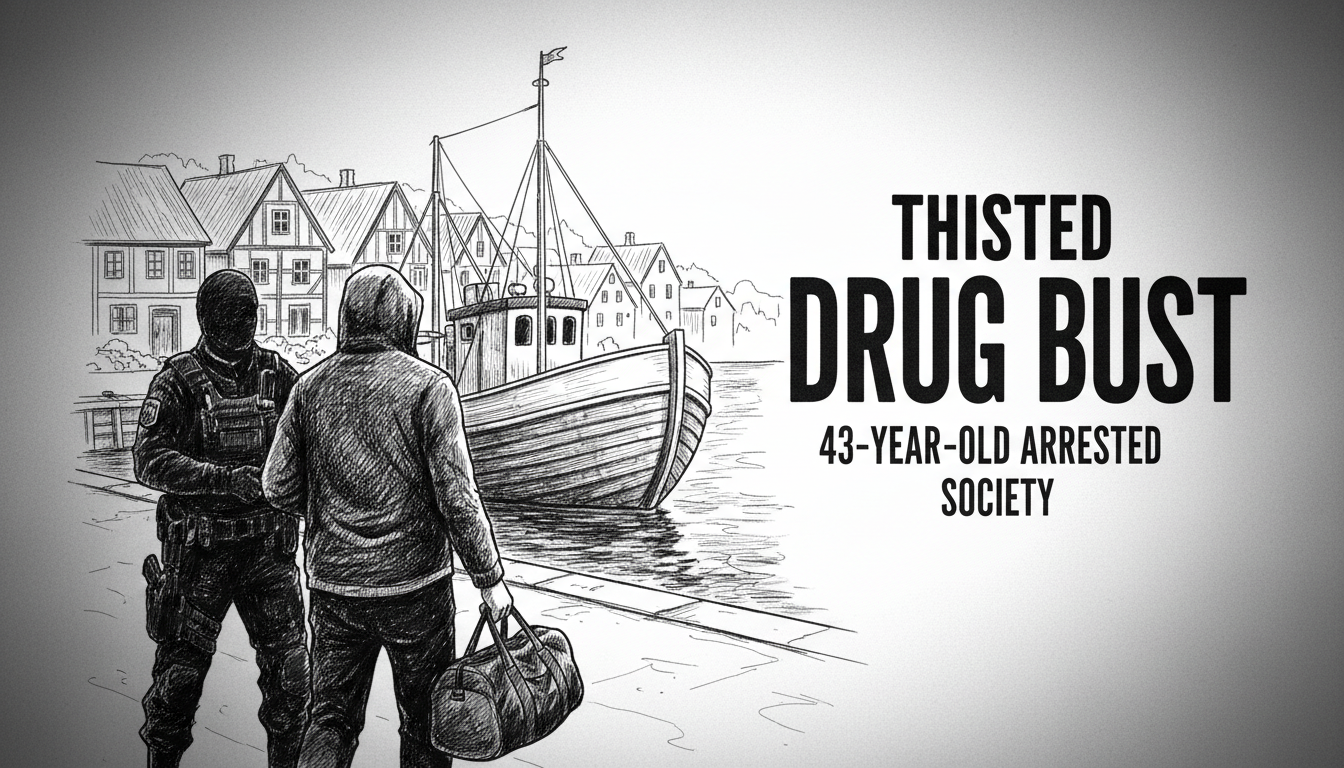
Danish police in Thisted made a significant arrest this week, uncovering drugs, weapons, and cash from a 43-year-old non-local driver. This single incident near the town's harbor provides a sharp snapshot of the crime challenges facing communities across Denmark, even outside major metropolitan areas.
On Wednesday afternoon, a patrol from the Midt- and Vestjylland Police observed a driver in the harbor area. Officers suspected he 'might not have clean flour in the bag,' as the Danish saying goes. Their intuition was correct. The man first tested positive for cocaine use while driving. A subsequent search of his vehicle revealed pepper spray, knives, and a 'totenschläger'—a type of club or bludgeon.
'We also found a good portion of cash in the car,' said Casper Søe-Christiansen, an investigative consultant with the local Thisted police. 'And since it turned out he had a considerable debt with the Customs and Tax Administration, we helped him pay off a part of that.' The seized cash was used to settle a portion of his outstanding public debt.
A Standard Procedure with Deeper Implications
This arrest follows a standard police procedure known as 'næsekontrol' or 'nose control,' where officers act on reasonable suspicion. The combination of findings, however, points to potential involvement in broader criminal activity. The presence of a bludgeon weapon, illegal drugs, and unexplained cash is a triad that rarely indicates isolated behavior.
Denmark maintains some of Europe's strictest drug and weapon laws. Simple possession of cocaine can lead to a fine or up to two years in prison. Possession of illegal weapons like a totenschläger carries similar penalties. The immediate financial intervention by police is also standard. Danish authorities can confiscate cash to settle outstanding public debts, a powerful tool against profit-driven crime.
The Local Impact in a Global Context
Thisted, a municipality in North Jutland with around 43,000 residents, is not typically a hotspot for international headlines. This arrest highlights a key reality in Danish society news: criminal activity is not confined to Copenhagen or Aarhus. It permeates harbor towns and rural communities, often linked to networks that span regions.
'When we see this profile—drugs, weapons, cash, and debt—it's rarely just about personal use,' says a Copenhagen-based criminologist who advises several municipalities. 'It suggests a role in distribution or other organized activity. The harbor location is also notable, as these areas can be hubs for moving goods.'
Integration and social policy experts often note that crime clusters can emerge in areas facing social challenges. While the suspect's origin was not local, his presence in Thisted underscores how criminal operations target various locations. Effective policing requires both local vigilance and national coordination.
Denmark's Broader Fight Against Organized Crime
This arrest occurs within a hardened national stance on narcotics and weapons. Danish drug seizure statistics have risen steadily, with police intercepting over 50% more cocaine in recent years. The national strategy involves disrupting supply chains and targeting lower-level operatives who form the network's backbone.
Weapons like the totenschläger are a growing concern. Classified as illegal weapons, they are often associated with gang violence and intimidation. Their discovery in a vehicle, alongside pepper spray and knives, indicates preparedness for confrontation. This aligns with a trend where even peripheral criminal actors are increasingly armed.
'The welfare system relies on safety and legal compliance,' notes a social policy researcher. 'When cash is tied to crime instead of taxable employment, it undermines the social contract. Police using that cash to pay a tax debt is a symbolic and practical reinforcement of that contract.'
The Human Story Behind the Headline
Beyond the legal violations lies a human story with familiar contours. A 43-year-old man with substantial debt, allegedly turning to illegal activity. This pattern is observed in Danish social centers and integration programs nationwide. While not excusing criminal behavior, community leaders stress the need for early intervention.
'Prevention is always cheaper than prosecution,' says a manager of a social integration project in Vestjylland. 'Debt, isolation, and substance abuse can form a vicious cycle. Our focus is on reaching people before they see crime as the only solution.' Municipalities offer debt counseling and substance abuse programs, but engagement remains a challenge.
The Danish welfare system is designed as a safety net, yet some individuals slip through. The suspect's non-local status raises questions about mobility and rootlessness, factors that can complicate social service intervention. Effective policy must balance firm law enforcement with accessible support pathways.
What the Thisted Case Reveals
The harbor arrest is a microcosm of contemporary Danish law enforcement. It demonstrates proactive policing based on observation. It shows the intersection of drug, weapon, and financial crimes. Finally, it highlights the systemic tools, like debt confiscation, used to uphold societal rules.
For residents of Thisted, the incident is a reminder that no community is immune. It reinforces the importance of local police presence and community cooperation. For policymakers, it underscores the need for integrated strategies that address crime's economic drivers.
As the 43-year-old suspect faces charges, the broader questions linger. How many similar operations are active in quiet harbor towns? Can social policy effectively intercept those on the periphery of crime? The Thisted police 'nose' was right this time, but society relies on more than just good instincts.