
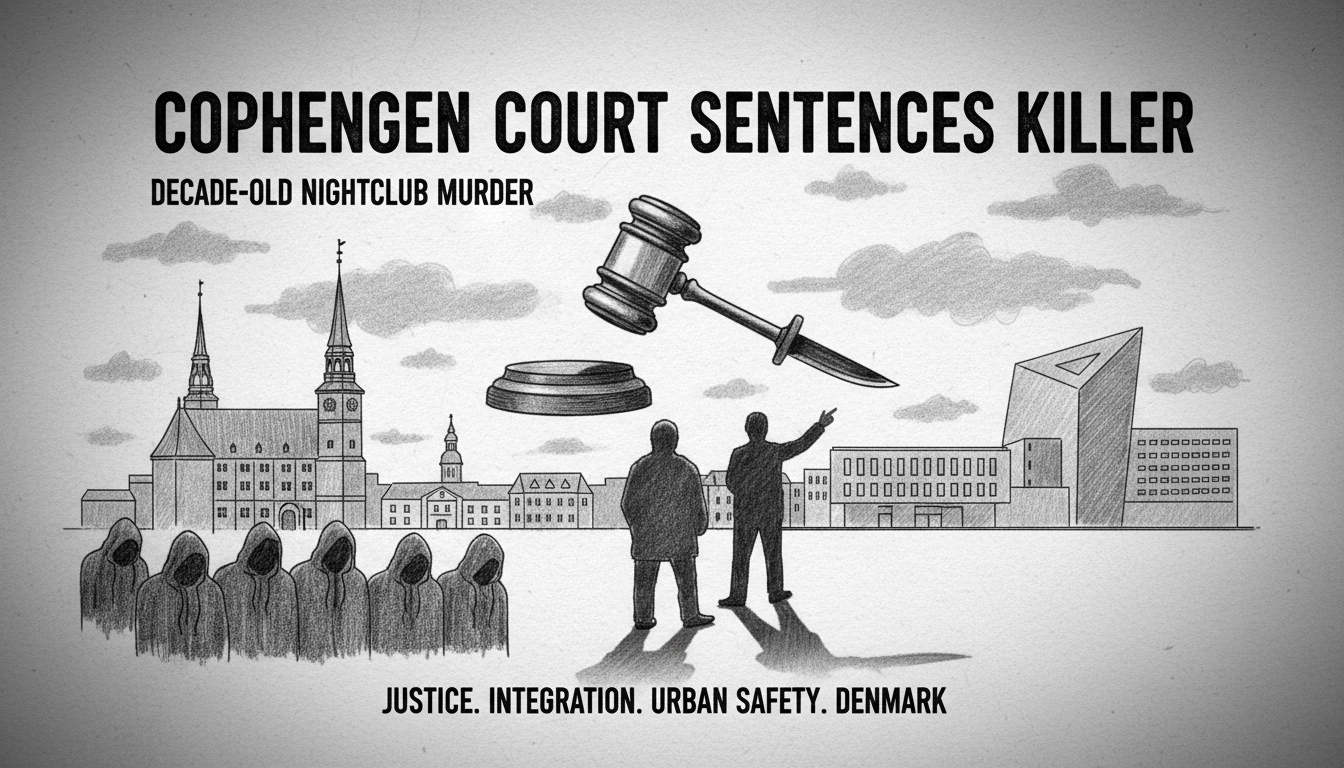
A Copenhagen court has sentenced a man to 12 years in prison for the fatal stabbing of a young law student at a nightclub over a decade ago. The case highlights complex issues within Denmark's justice and integration systems. The convicted man, Omer Hassan Sheik Muse, was found guilty of killing 21-year-old Jonas Thomsen Sekyere at the Bakken nightclub in the city's Kødbyen district. The attack occurred in the early morning hours and was described by the court as an 'unmotivated and particularly ruthless act'.
Jonas Thomsen Sekyere was a promising law student who had written publicly about his identity as the son of a Danish mother and a Ghanaian father. His death sparked demonstrations against knife violence in Copenhagen's nightlife. Friends remembered him as a 'bright human being' whose life was cut short by senseless violence. The tragedy unfolded in a popular entertainment area that has seen ongoing efforts to improve safety.
The legal proceedings spanned continents and years. After the killing, Muse fled to Somaliland and Ethiopia. He was eventually tried and convicted in Somaliland, serving nearly six years in an African prison before being extradited to Denmark. The Copenhagen City Court deducted those 2,156 days from his 12-year sentence. This reduction reflects standard Danish legal practice regarding time served abroad, though Danish authorities did not formally recognize the foreign verdict.
His defense lawyer, Michael Juul Eriksen, stated his client has now served just over seven years of the sentence. Muse could potentially be released in about ten months if calculations account for the deducted time. He has appealed the conviction, maintaining he should be acquitted of murder while acknowledging he caused death through violence. The court refused his request for release pending the appeal hearing.
This case touches several sensitive aspects of Danish society news. It involves a Somali-born perpetrator and a victim with a mixed Danish-Ghanaian background, occurring in a city neighborhood known for its diverse population. Copenhagen integration efforts often focus on preventing social exclusion that can contribute to violence. The legal complexity of international detention and extradition also shows how Denmark's justice system navigates global mobility.
Community responses to such tragedies typically involve both grief and calls for policy action. After Sekyere's death, friends published tributes describing how he bridged different worlds through his writing and personality. His funeral at Vor Frue Kirke was attended by hundreds. These human stories exist alongside ongoing debates about Denmark immigration policy and crime prevention.
The Danish welfare system traditionally emphasizes rehabilitation, but cases of extreme violence test public confidence. Municipal social centers in Copenhagen and other cities work to address root causes through youth programs and community engagement. Statistics on integration show varying outcomes for different immigrant groups, with education being a key factor for successful inclusion.
Denmark social policy seeks to balance justice for victims with principles of rehabilitation. This case demonstrates how that balance is calculated in concrete terms, with years deducted and sentences appealed. The final outcome will depend on higher court rulings, while a family and community continue mourning a life lost too soon. The story reminds us that legal verdicts provide closure for some questions but not for all human pain.
As a reporter covering Danish society, I see how such cases become reference points in larger conversations. They influence public perception of safety in urban spaces and the effectiveness of social contracts. The search for meaning in senseless acts continues long after courtrooms empty. What remains is the memory of a young man described by those who knew him as a light that was extinguished, and a system grappling with how to deliver justice across borders and years.