
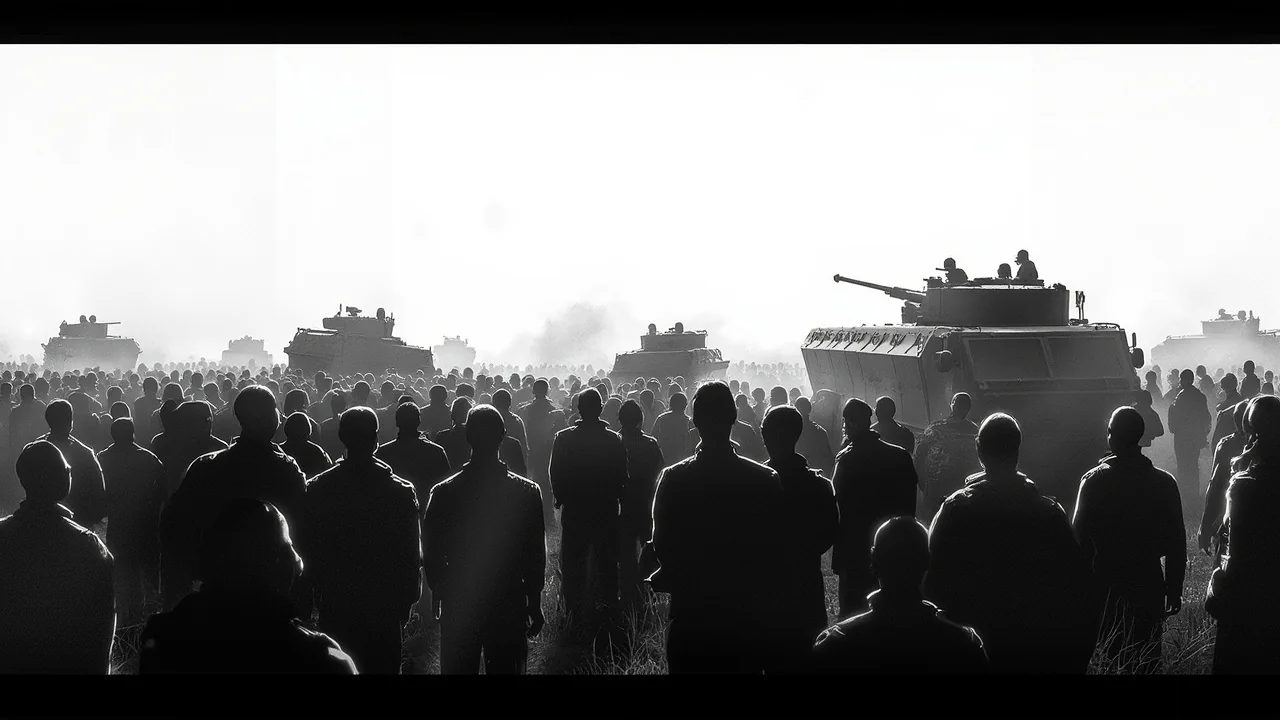
Denmark's military is accelerating a major fortification of the Baltic island of Bornholm with unprecedented speed. The Danish Defence has begun deploying the first of 129 new armored personnel carriers to the island, part of a rapid build-up establishing a new regiment with a projected four-digit troop strength. This 1.9 billion kroner hardware delivery, completed in just nine months, signals a sharp strategic pivot for a nation long comfortable in NATO's rear.
A Strategic Island on the Front Line
Almegårds Barracks in Rønne, Bornholm, is now the epicenter of Denmark's most significant military expansion in decades. The newly formed Bornholms Regiment is slated to comprise six companies, creating a force likely exceeding 1,000 personnel. Their explicit mission is to defend the island and guard the maritime gateway to Denmark's inner waters. Bornholm's location, isolated in the Baltic Sea east of mainland Denmark and closer to Poland and Sweden than to Copenhagen, makes it a strategic linchpin and a potential soft target.
“We have a desire to strengthen combat power in Denmark and right now especially on Bornholm,” said Peter Boysen, Chief of the Army Command, who visited the island to inspect the new vehicles. The decision to send the first batch of Finnish-made Patria armored vehicles to Bornholm underscores its unique and vulnerable position in current security calculations.
The Hardware of Deterrence
The delivery of the Patria 6x6 armored modular vehicles represents a quantum leap in capability for the island's defenders. These machines provide crucial protection, mobility, and firepower for infantry units. The breathtaking procurement timeline—from order to operational delivery in under a year—breaks with traditional defence acquisition bureaucracy, reflecting a new sense of urgency.
Bornholm's mayor, Frederik Tolstrup, welcomed the swift reinforcement. “We are quite far out in the Baltic Sea and are not sheltered by Sweden in the same way as the rest of Denmark,” he noted. “Now these Patrias have come relatively quickly, so I am glad that the Danish state has stepped up and is thinking a bit more like they do in Sweden and Finland.” His comment references the long-standing total defence concepts of Denmark's Nordic neighbors, which have gained renewed relevance.
From Peace Dividend to Frontline Posture
This build-up marks a dramatic reversal for Bornholm's military presence. The announcement last year that the existing 3rd Reconnaissance Battalion would be withdrawn by the end of 2025 and replaced by a new infantry battalion under the Bornholms Regiment initially sparked mixed reactions. Some islanders feared a reduction in permanent, professional forces. The current plans, however, suggest a larger, more heavily equipped contingent focused on territorial defence.
The shift is unequivocally directed eastward. While not explicitly named in every official statement, the threat assessment driving this expansion is clearly shaped by Russia's aggression in Ukraine and its increased militarization of the Baltic region, including Kaliningrad. Bornholm sits directly between the Danish straits and the potential flashpoints of the Eastern Baltic.
“We have chosen that Bornholm should get the first Patrias, and that will mean a great deal,” stated Boysen. “We are increasing combat power substantially, building up companies that will be equipped with these Patrias, and that means we strengthen security on Bornholm in terms of mobility, protection, and weaponry.”
The Human and Strategic Calculus
The fortification of Bornholm is more than a logistical exercise; it is a statement of national and alliance resolve. Stationing a robust, mobile force on the island complicates any adversary's calculus in the Baltic Sea. It turns Bornholm from a potential hostage into a defended fortress that can control sea lanes and contribute to regional denial strategies alongside NATO allies.
This move also aligns Denmark more closely with the security postures of Finland and Sweden, both now NATO members. The concept of “total defence,” integrating military, civil, and economic resilience, is receiving fresh attention in Copenhagen. Bornholm, with its distinct geography and community, could become a test case for this broader approach, where local authorities, infrastructure, and the population are woven into defence planning.
The speed of the deployment is itself a strategic message. It demonstrates that the Danish defence establishment can move quickly to address emerging threats, a capability as important as the hardware itself. The promise from the Defence Ministry is that this time, things will be done fast. The nine-month vehicle procurement proves that promise is currently being kept.
A New Chapter for a Historic Garrison
Bornholm has a deep history with the Danish military, but the coming years will define a new chapter. The establishment of a full regiment, outfitted with some of the army's newest and most capable vehicles, signifies a permanent, elevated level of military importance. It brings not just security implications but also economic and social impacts for the island, through sustained defence spending and the presence of soldiers and their families.
The sight of new armored vehicles rolling off transports in the winter snow at Almegårds Barracks is a powerful, tangible symbol of a changed world. For Denmark, a nation that significantly drew down its military after the Cold War, the “full speed ahead” reinforcement of Bornholm is one of the clearest indicators that the era of the peace dividend is over. The Baltic Sea is now a NATO frontline, and Denmark is moving decisively to guard its most exposed gate.