
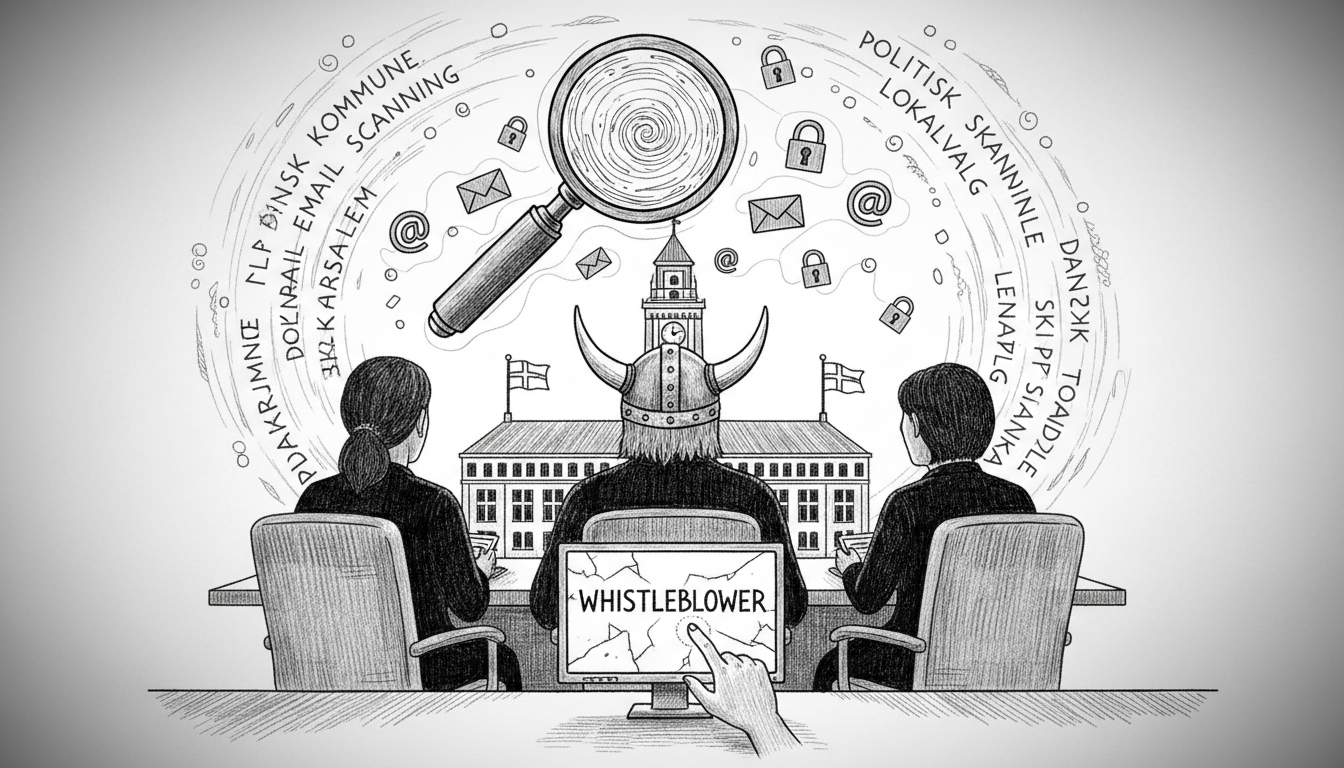
A major political scandal has erupted in Rudersdal Municipality just one week before local elections. The controversy centers on the municipal administration's unauthorized scanning of council members' emails to identify who leaked a confidential report to media.
The scandal began when a whistleblower came forward in late October, revealing that municipal officials had accessed council members' official email accounts. They were searching for the source who shared a sensitive report about a misconduct case at Søholmskolen school. The report contained confidential information about sexual abuse allegations against a former employee, though police eventually dropped the charges.
Days after contacting the whistleblower system, the anonymous source emailed all council members about the administration's actions. Documentation shows the administration searched emails sent between municipal employees and politicians containing the term TV2.dk.
Legal experts immediately condemned the email scanning as illegal. Frederik Waage, administrative law professor at University of Southern Denmark, called the administration's actions deeply problematic. They were acting as police and conducting independent investigations without proper authority, he stated.
Nicolaj Sivan Holst, criminal law professor at Aarhus University, emphasized that accessing others' emails without permission violates hacking laws. He declined to comment on guilt in the police case but noted the clear legal boundaries.
The municipality's own deputy mayor, Jens Kloppenborg, filed the police report. He believes the administration violated laws protecting communication confidentiality.
Email records reveal a dramatic sequence of events. On January 17, after media published details from the confidential report, municipal director Birgitte Lundgren emailed the IT chief requesting examination of 32 people's sent and deleted emails, including the entire municipal council.
The IT chief responded they would start immediately. But just ninety minutes later, Lundgren sent a counter-order acknowledging they lacked legal authority to examine council members' mailboxes. The municipality then reported the leak to police.
Two days later, Lundgren asked all council members for consent to examine their emails and share results with police. Liberal politician Malene Barkhus consented but emphasized this was only for police investigation, not municipal access.
On January 24, the administration emailed North Zealand Police about searching emails containing TV2.dk sent between January 8-17. They identified four relevant emails from Barkhus and suggested she leaked the report.
Crucially, the municipality only obtained court permission to access Barkhus's emails on February 16, nearly a month after their initial scanning. This means their January searches lacked judicial authorization.
Professor Waage argued that even with police agreement and individual consent, the municipality's actions remained illegal. Police investigations cannot be delegated to municipal administrations, he stated.
Barkhus, though initially suspected, had charges dropped months later. She now hopes accountability will be established. Politicians must be able to communicate with citizens and journalists without administration oversight, she said. The email searching was intimidating, clearly illegal, and punishable.
The administration maintains they never read email contents, only generated lists of communications. But Waage countered that even creating lists of who council members communicate with constitutes illegal surveillance.
The case reveals fundamental power balance issues in Danish local government. Council members typically oversee administrations, but here the administration monitored elected officials. This reversal creates serious democratic concerns about political independence and oversight.
Conservative Mayor Ann Sofie Orth declined interview requests, writing she wasn't informed about email scanning but has full confidence in the administration. She awaits police investigation results calmly.
Municipal Director Lundgren also refused interviews, commenting only that Professor Waage allegedly speaks about matters without concrete knowledge. She cannot discuss the case further since it involves police reports.
The timing, just before elections, raises questions about political motivations. The scandal highlights ongoing tensions between administrative power and political oversight in Danish municipalities. International observers should note this case demonstrates how even in transparent Nordic democracies, institutional boundaries require constant vigilance.
What happens next depends on police findings and electoral consequences. The case may prompt broader discussions about whistleblower protections and administrative overreach in Scandinavian local governments.