
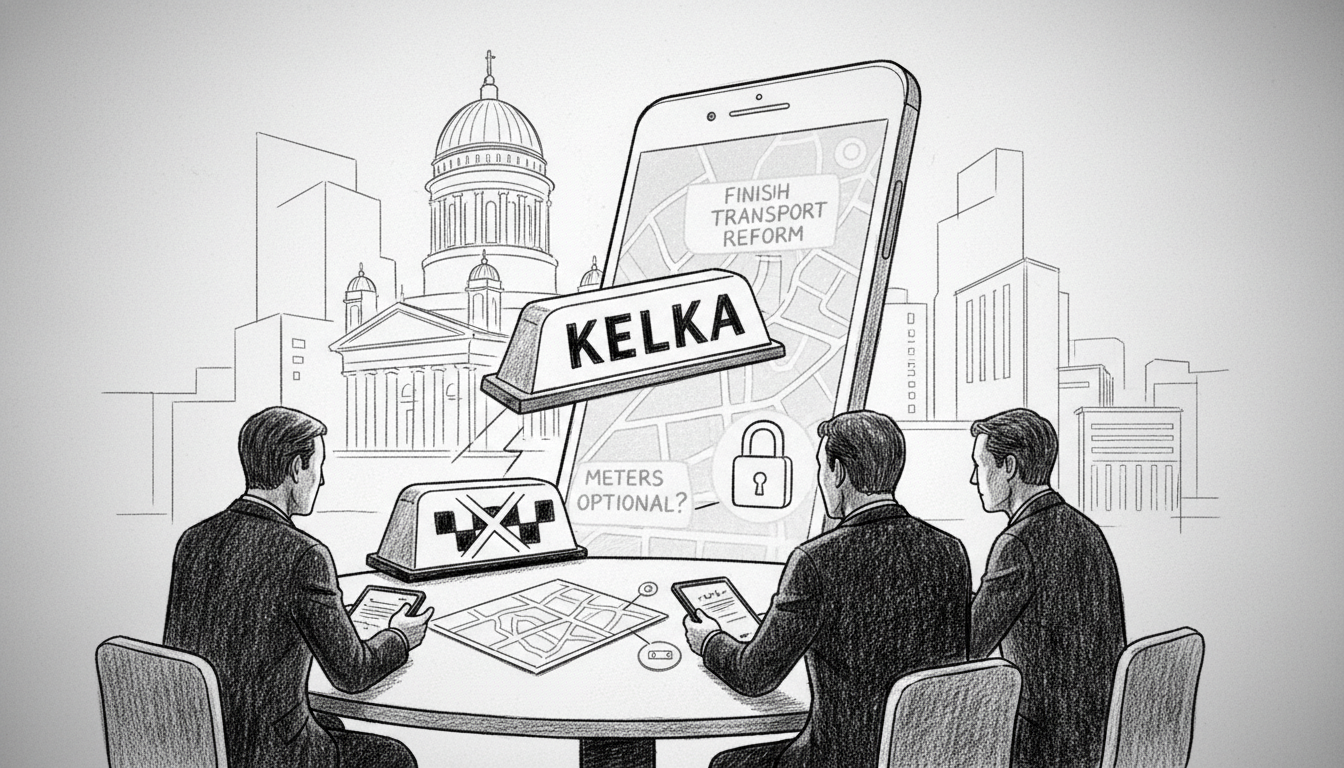
Transport Minister Lulu Ranne believes Finland's government is close to reaching a compromise on taxi reform. She indicated the proposal might proceed without mandatory taxi meters, a key demand from her Finns Party. The minister spoke during a traffic safety forum on Tuesday.
Ranne emphasized that controlling gray market activities remains the primary concern. She stated that alternative measures would be needed if mandatory meters aren't included. These could include increased enforcement and more roadside inspections to ensure tax compliance.
When asked if reform could proceed without meter requirements, Ranne responded that other methods must address unlicensed operations. She stressed the need to remove bad actors from the industry and secure tax revenues.
The mandatory meter issue represents the biggest disagreement within Finland's coalition government. The Finns Party supports requiring meters in all taxis, while the leading Coalition Party opposes this for app-based services that don't use traditional taxi stands.
Government negotiations have continued for months. A version reflecting Ranne's preferences underwent consultation in spring but lacked political agreement among coalition parties.
Finland's government now aims to present a unified proposal this fall, with December targeted in the legislative schedule. The minister expressed confidence that a compromise is near, though she noted this depends on finding alternative ways to address gray market concerns if meters aren't mandated.
The taxi reform seeks to improve driver professionalism, enhance oversight, and prevent abuses. Proposed changes include stricter licensing requirements, mandatory 21-hour training for new drivers, and tighter exam supervision. Certain criminal offenses would also disqualify applicants from receiving licenses.
This represents Finland's latest attempt to modernize its taxi industry following 2018 reforms that deregulated the market. The current government faces pressure to balance innovation with proper oversight in the evolving transportation sector.