
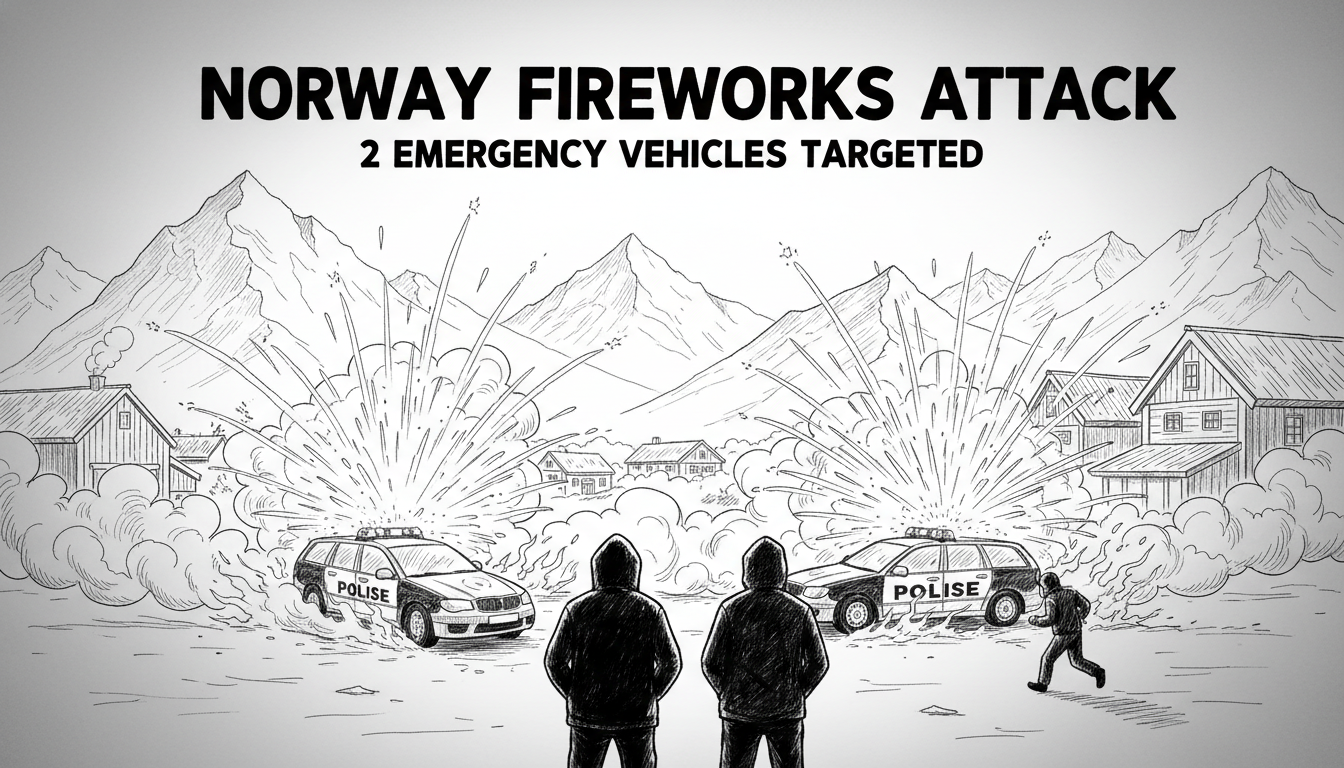
Norway's police are reviewing viral footage showing emergency vehicles targeted with commercial fireworks on a southern island. The incident on Flekkerøy, near Kristiansand, involved a police car and a fire truck being struck by pyrotechnic projectiles.
Station Chief Anders Hareide Holt of the Kristiansand Police issued a swift condemnation. "This is unacceptable behavior," he said in a statement, highlighting the serious risk to first responders. While no formal case has been opened, authorities confirmed they are examining the video evidence that has circulated widely on social media.
A Dangerous Escalation on Flekkerøy
The event marks a significant and worrying escalation in the misuse of fireworks. In Norway, fireworks are primarily associated with peaceful New Year's Eve celebrations, not confrontations with authority. Targeting emergency service personnel, whose vehicles are marked and identifiable, crosses a clear line. It moves from mere nuisance or illegal use into the territory of obstructing and endangering public servants.
Flekkerøy is a populated island district connected to Kristiansand by a subsea tunnel. Incidents here directly impact local community safety and strain municipal resources. The attack occurred against a backdrop of ongoing national debate about firework regulations. Many Norwegian municipalities have tightened rules in recent years, citing noise pollution, pet safety, and injuries.
The Legal Framework and Potential Charges
Norwegian law regulates fireworks through the Fireworks Regulations (Fyrverkeriforskriften). General sale is restricted to December 27-31, and use is typically permitted until 2 AM on January 1. However, local authorities can impose stricter bans. Using fireworks in a way that endangers life, health, or property can lead to severe penalties.
Legal experts suggest charges could range from violations of the Fireworks Act to more serious allegations of endangering public safety or assault against a public official. "Directing fireworks at a vehicle is inherently dangerous," said a legal analyst familiar with Norwegian public order statutes. "When that vehicle is a police or fire truck, it aggravates the offense considerably. It shows a clear intent to intimidate or harm those performing a critical public duty."
The fact that the police have not immediately opened a formal case suggests a careful evidentiary process. They will likely seek to identify individuals from the video and determine the exact sequence of events before proceeding with specific charges.
The Strain on Emergency Services
This incident underscores the volatile situations Norwegian police and fire crews can face. First responders approaching a scene involving fireworks already assume elevated risk. Adding deliberate targeting transforms a call into a potential ambush, delaying emergency response and putting other citizens at risk.
"Our vehicles are not armored," a veteran fire service officer noted, speaking on condition of anonymity. "A firework projectile can crack a windshield, startle a driver, or cause an accident. It diverts our focus from helping people to protecting ourselves." The psychological impact on crews is also a concern, potentially making them more hesitant in future, time-sensitive scenarios.
Broader Context: Norway's Fireworks Debate
The Flekkerøy event will fuel arguments from those advocating for a comprehensive ban on public firework sales. Prohibition advocates argue that the dangers and disturbances outweigh traditional benefits. They point to annual reports of injuries, terrifying episodes for wildlife and pets, and the burden on hospital emergency rooms every New Year.
Opponents of a full ban defend the cultural tradition of personal fireworks as a cherished part of Norwegian holiday celebration. They emphasize personal responsibility and support stricter enforcement of existing laws against misuse, rather than denying the responsible majority.
The current government has taken a measured approach, allowing municipalities to set their own stricter rules. This decentralized model means regulations can vary significantly from one town to the next, a system some critics call confusing. The incident in Kristiansand may prompt its local council to review its own municipal ordinances ahead of the next festive season.
Analysis: A Test of Enforcement and Norms
As police investigate, the case becomes a test of societal norms and enforcement resolve. A strong, publicized response from the Kristiansand Police may deter future imitation. A perceived weak response could embolden others.
The viral nature of the video complicates matters. It simultaneously provides evidence and glorifies the act for some viewers. Authorities must balance transparent condemnation with avoiding giving the perpetrators the notoriety they may seek.
Norway maintains a generally high level of public trust in its police force. Acts of direct confrontation, while rare, are treated with utmost seriousness to preserve that fundamental social contract. The station chief's immediate public statement was a necessary step in reinforcing that boundary.
What Comes Next for Kristiansand
The immediate path involves forensic review of the video, identification of suspects, and a decision on charges. The Kristiansand Police Department will likely coordinate with the Fire and Rescue Service to assess any damage to the vehicles and review safety protocols for similar incidents.
Longer term, the city's politicians will face renewed pressure to clarify and potentially harden local fireworks bylaws. Community safety meetings on Flekkerøy and in wider Kristiansand are probable. The goal will be to prevent a one-off reckless act from defining future celebrations or eroding the respectful relationship between citizens and emergency services.
This single night on Flekkerøy has illuminated a dark corner of potential misuse. How Kristiansand's authorities and community respond will signal whether Norway's famous civic balance can withstand the flash and bang of a few dangerous individuals. The tradition of lighting up the winter sky with fireworks is now shadowed by a question: can the enjoyment of the many be protected from the dangerous actions of a few?