
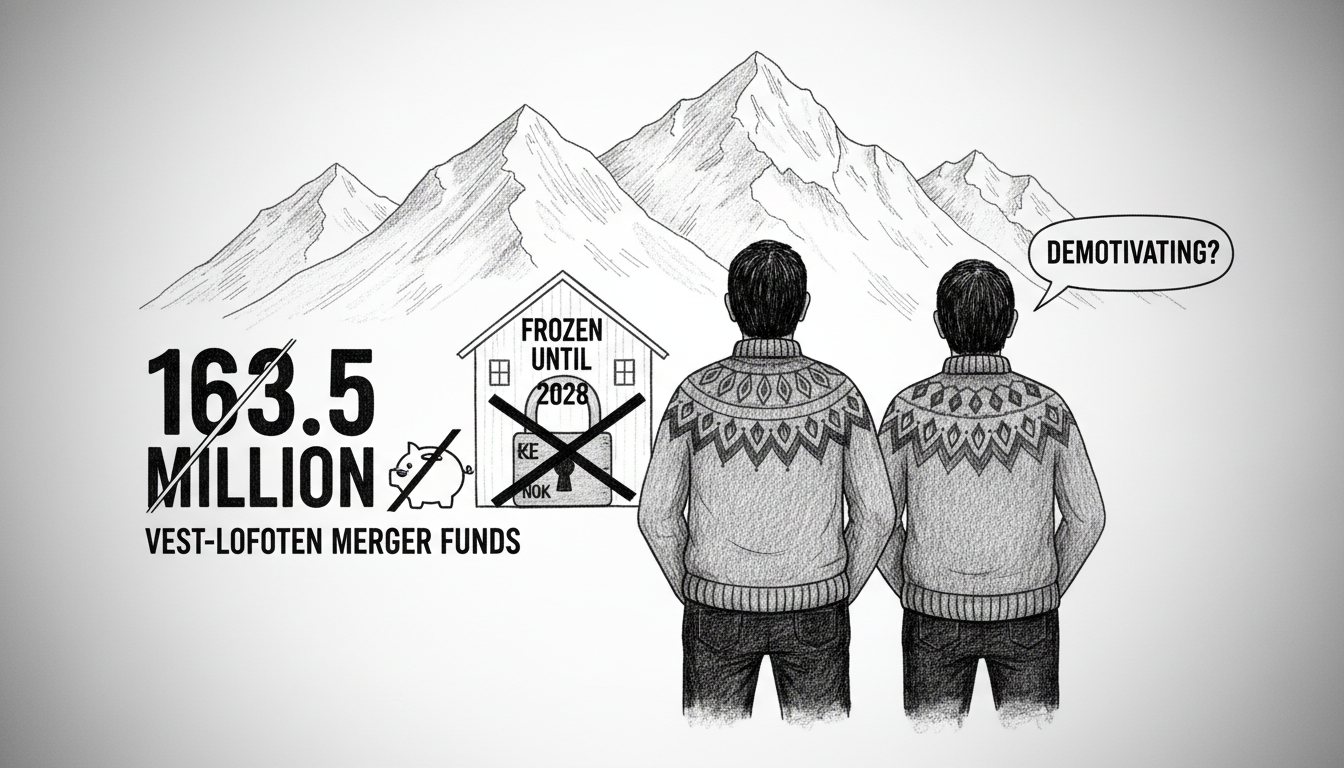
Local politicians in Norway's Lofoten islands express frustration over frozen merger funds. Moskenes and Vestvågøy municipalities will receive 163.5 million kroner for their consolidation into Vest-Lofoten municipality. But the money remains inaccessible until January 2028. The delay creates financial strain and questions about government trust.
Moskenes Mayor Hanna Sverdrup voices disappointment about the arrangement. She feels the national government shows distrust toward municipal leadership. The community has dedicated substantial resources to the merger process. Now they face unnecessary interest payments on existing debt.
Vestvågøy Mayor Johnny Finstad shares similar concerns. He argues the funds should immediately address Moskenes' deficit. Instead, both municipalities must wait years while interest costs accumulate. The current arrangement means Moskenes incurs an additional 20 million kroner deficit.
The merger represents a strategic move for these popular tourist destinations. Moskenes has struggled financially despite heavy visitor traffic. The consolidation promises long-term stability but creates short-term challenges. Local leaders question why funds cannot be used now to reduce debt.
National officials maintain clear communication about payment terms. The Municipal and District Minister emphasizes existing policies. The government doesn't typically cover municipal overspending. Both municipalities remain independent entities until the 2028 merger.
Financial experts note the interest rate difference creates real costs. Municipal borrowing rates exceed savings account returns. This gap means genuine financial loss for the future combined municipality. The situation represents typical state-local negotiation dynamics.
Norwegian municipal mergers often involve complex financial arrangements. This case highlights tension between local autonomy and central oversight. Local leaders want flexibility while national authorities seek accountability. The outcome will influence future consolidation discussions across Norway.
The two municipalities continue merger preparations despite financial complications. They aim to build a stronger administrative unit for the Lofoten region. The delayed funding tests local patience but doesn't halt progress. The new Vest-Lofoten municipality remains on track for 2028 launch.