
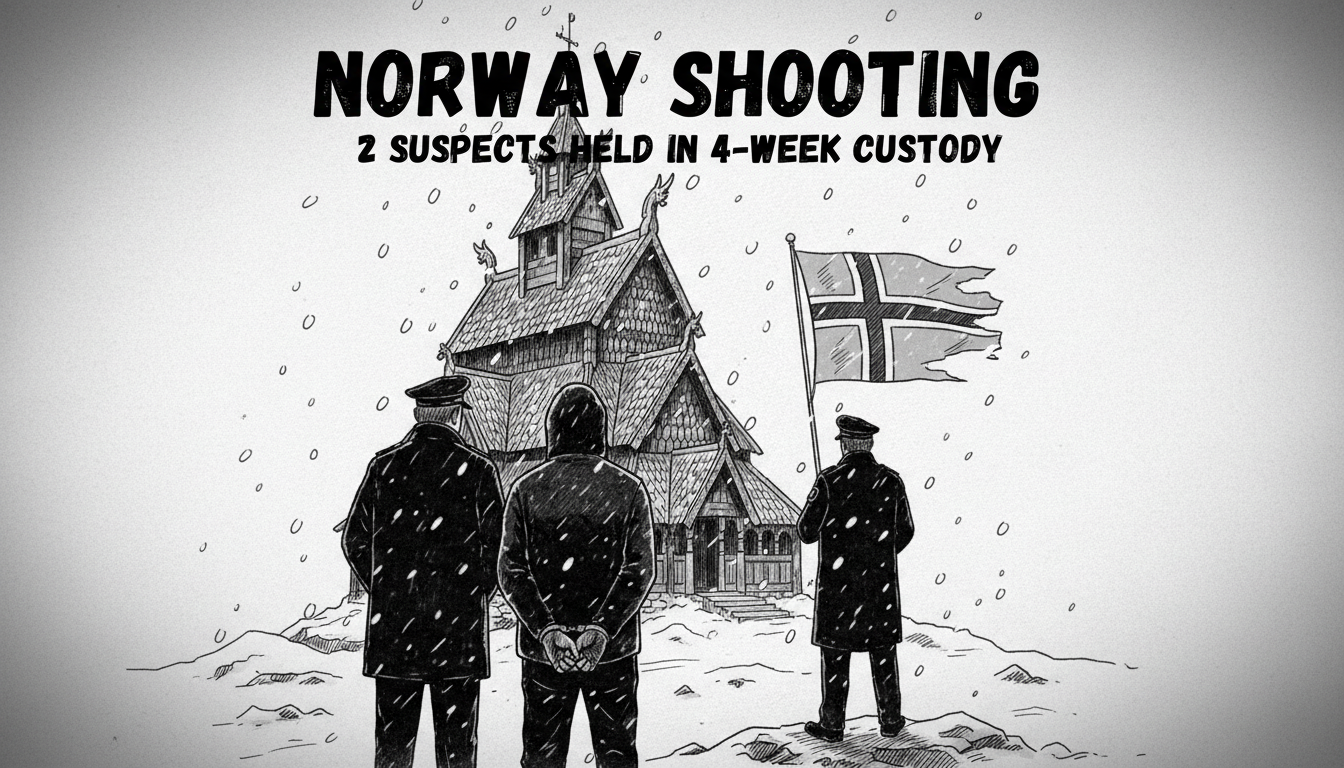
Norway's capital Oslo is grappling with a rare attempted murder case after a shooting in the Linderud district led to two arrests. A man in his 30s and another in his 20s are now in custody for four weeks, charged with complicity in attempted murder. The Oslo District Court ordered the stringent detention measure Sunday and Monday, citing a high risk the suspects would tamper with evidence. Both men will spend two of those four weeks in complete isolation, with all mail and visitations banned.
The court found sufficient grounds to believe the suspects could obstruct the police investigation if released. This led to the imposition of pre-trial detention, known as varetektsfengsling, with strict communication bans. The younger suspect had prior indication he would accept the custody order. Police investigations into the motive and circumstances surrounding the shooting at Linderud are ongoing. Officers are examining whether the incident is linked to broader criminal conflicts in the city.
A Stringent Judicial Response
The decision to impose four weeks of custody, particularly with periods of full isolation, underscores the severity with which the court views the allegations. In the Norwegian legal system, pre-trial detention is a preventive measure, not a punishment. It is used when there is a concrete risk a suspect will flee, re-offend, or interfere with evidence. The prosecution successfully argued the latter concern was paramount in this case. The restrictions on mail and visits are designed to prevent coordination with accomplices outside of jail that could compromise the probe.
“When the court approves such strict conditions, it signals they find the prosecution’s fears of evidence tampering to be credible and substantial,” explained a legal scholar familiar with Norwegian criminal procedure, who spoke on background. “Isolation is a significant step, taken only when other restrictions are deemed insufficient.” The suspects will have their detention reviewed periodically, and their defense counsel can appeal the decision.
Linderud and Oslo's Crime Landscape
The shooting occurred in Linderud, a residential district in Oslo's Groruddalen area. Like several suburbs in major Norwegian cities, Linderud has seen socioeconomic shifts and occasional spikes in crime reports. Overall, Norway maintains one of the lowest violent crime rates in Europe. According to recent data from Statistics Norway, the rate of police-reported violent incidents per 100,000 inhabitants remains a fraction of that seen in many other Western nations. However, isolated serious events, particularly those involving firearms, capture intense public and media attention precisely because they are uncommon.
Oslo Police District has dedicated units focused on gang-related and organized crime, which often underlie the most serious violent acts. “While statistically safe, no major city is immune to conflicts that escalate into violence,” said a criminology researcher at the University of Oslo. “The key indicators to watch are not single events, but trends in gang recruitment, drug market tensions, and access to weapons.” Police have not publicly confirmed if the Linderud shooting is connected to gang activity, but such incidents typically fall under the purview of their organized crime teams.
The Legal Framework of Pre-Trial Detention
The use of varetektsfengsling is governed by strict rules in the Norwegian Criminal Procedure Act. A suspect can be held for up to four weeks at a time before the court must reassess. For very serious charges, like attempted murder, the total pre-trial period can extend for several months, but requires repeated judicial approval. The law mandates that detention should be a last resort, adhering to principles of proportionality and presumption of innocence.
The inclusion of brev- og besøksforbud (letter and visit ban) and isolation are additional, severe limitations on a detainee's rights. These are imposed only when there is a specific, documented risk that communication with the outside world will be used to commit new crimes, help others escape, or destroy evidence. The two-week isolation period ordered for these suspects represents a significant intervention, reserved for cases where investigators believe unfettered communication poses a direct threat to their work.
Analysis: Balancing Security and Principles
This case presents a classic tension in any rule-of-law society: ensuring public safety and a thorough investigation while protecting the fundamental rights of the accused. Norway's system is designed to be cautious, with multiple checks on prosecutorial power. The rapid court hearings for custody, the right to a defense lawyer from the first police interview, and the possibility of appeal all serve as balances.
From a law enforcement perspective, securing a custody order with communication bans at the start of a major investigation is critical. It provides a window to gather forensic evidence, interview witnesses, and map networks without suspects potentially coordinating a cover-up. “The first days and weeks are often decisive in complex violent crime inquiries,” noted a former police superintendent. “Securing the integrity of the evidence chain is the top priority.”
For the public, such incidents test the perception of safety. Norway’s low crime rate is a cornerstone of its national self-image. Events like the Linderud shooting, though rare, can trigger debates about resource allocation for police, social prevention programs in vulnerable neighborhoods, and the illegal weapons trade. Politicians from various parties often call for a dual approach: firm police action combined with long-term social initiatives to address root causes.
Looking Ahead in the Investigation
The Oslo police now enter a intensive evidence-gathering phase. They will be piecing together the timeline of the shooting, forensic ballistics reports, digital footprints, and witness statements. The charges of complicity in attempted murder suggest prosecutors believe both suspects played active roles in the event, not merely as bystanders. The specific nature of their alleged involvement will become clearer as the police submit subsequent reports to the court.
The next major legal milestone will be when the initial four-week custody period nears its end. The prosecution will have to demonstrate to the court that the grounds for detention still exist. Depending on the evidence compiled, they may seek an extension, propose slightly less restrictive conditions, or, in a less likely scenario, drop the charges if evidence is insufficient. The defense attorneys for both men will scrutinize every step of the process, ensuring their clients' rights are upheld during what will be a stressful period of isolation and uncertainty.
This case will unfold within Oslo’s modern courthouse and police headquarters, far from the tranquil fjords that define Norway’s international image. It serves as a reminder that even the most orderly societies must constantly work to maintain their safety and justice systems. The coming weeks will show whether the police can build a solid case that justifies the severe restrictions now placed on two young men, while the city of Oslo hopes such violence remains a profound exception.