
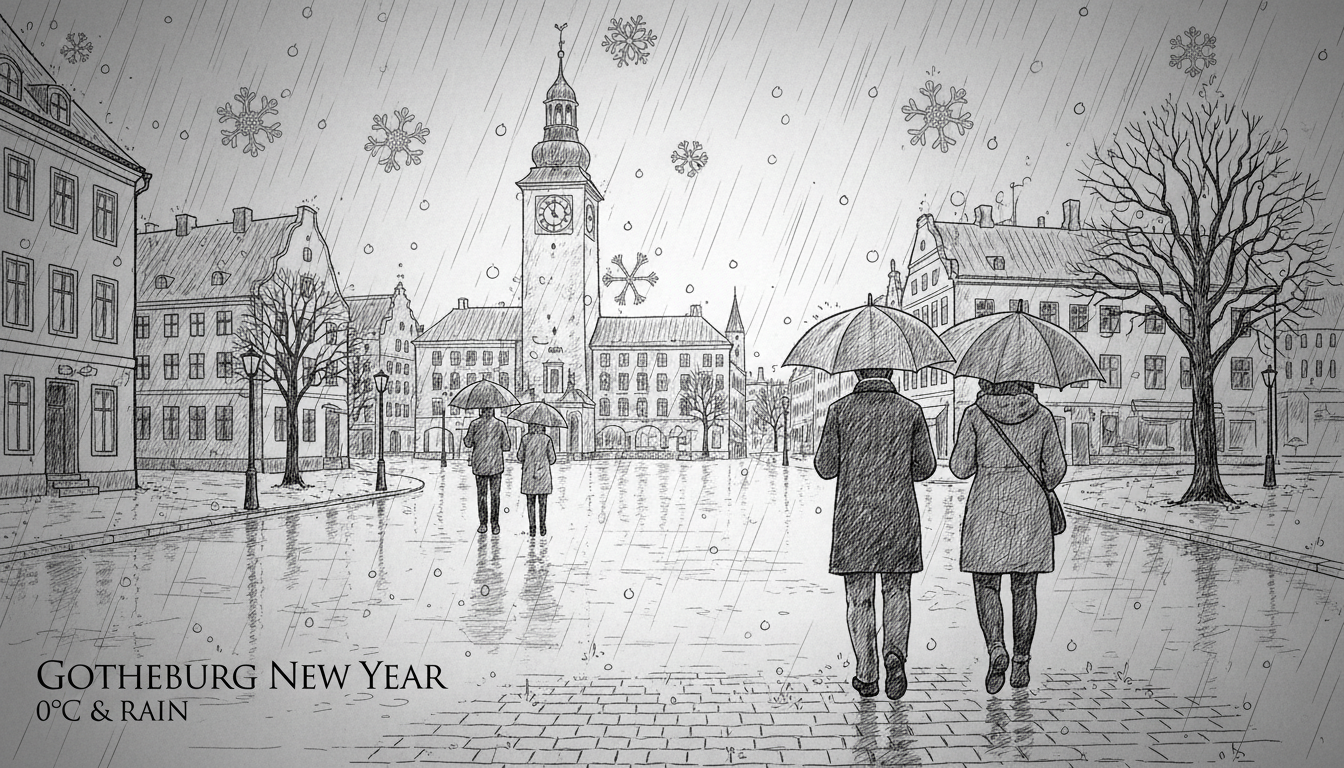
Gothenburg weather for New Year's Eve will be a classic Swedish coastal affair: cloudy, breezy, and hovering around zero degrees. The national weather service, SMHI, forecasts a gray transition into 2025, with rain or sleet likely around midnight, capping off a week that begins with crisp winter sun. For the half-million residents of Sweden's second city, the forecast dictates everything from fireworks plans to the crucial choice between winter boots or party shoes.
"Unfortunately, it could be rain or sleet around midnight," says Henrik Reimer, the meteorologist on duty at SMHI. His forecast sets the scene for thousands of celebrations across the city's archipelago, neighborhoods like Haga and Linnéstaden, and the iconic Götaplatsen square. The day itself starts with sunshine, but clouds are expected to roll in from the North Sea during the afternoon, thickening throughout the evening.
A Week of Two Halves
The final week of the year presents a stark weather contrast. Monday and Tuesday offer the kind of postcard-perfect winter weather Swedes cherish: clear skies, light winds, and frosty nights with temperatures dipping just below freezing. It's ideal for last-minute shopping in the Christmas markets or a brisk walk along the frozen ponds of Slottsskogen park. "It can be a bit breezy today and tomorrow, but otherwise it will be fine winter weather," Reimer confirms. This clear spell provides a beautiful, if brief, interlude before the more tumultuous holiday weather arrives.
By New Year's Eve morning, the sun will still be shining. But the change is imminent. The maritime climate that moderates Gothenburg's winters—keeping them milder than Stockholm's or the far north's—also brings volatility. Atlantic low-pressure systems sweep in quickly, transforming blue skies into a blanket of gray. "If you're lucky, the precipitation will only arrive in the early hours," Reimer notes, advising residents to be prepared for a cloudy and slightly windy evening by the time the clock strikes twelve.
The Cultural Calculus of a Gray Nyår
In Sweden, New Year's Eve, or Nyårsafton, is a major celebration, often involving large outdoor gatherings for fireworks. The weather forecast becomes a central topic of conversation, influencing traditions and plans. A clear, starry night might see families flocking to hilltops like Keillers Park for a panoramic view of the city's displays. A forecast of rain or sleet, however, shifts celebrations to sheltered courtyards, cozy restaurants in the Majorna district, or the warmth of home.
The predicted temperature of around 0°C (32°F) is statistically normal for a Gothenburg December but sits in an awkward meteorological zone. It's the threshold where precipitation could manifest as romantic snowflakes, disappointing rain, or a messy mix of both. This uncertainty is a hallmark of West Swedish winters, where the average January sees precipitation 18 days out of the month. The choice of attire becomes a small but significant cultural ritual—layering is key, and waterproof outer shells often triumph over purely fashionable choices.
Expert Insight on Coastal Unpredictability
Meteorologists emphasize that forecasts for coastal regions like Västra Götaland are always subject to change. "The influence of maritime air masses and our local geography—with the archipelago and rivers—can cause rapid shifts," explains a climatologist familiar with the region. A slight change in wind direction can mean the difference between a dry evening and a damp one. This is why SMHI and other services constantly advise the public to check for the latest updates, especially during the dynamic winter season.
This variability is the defining feature of Gothenburg's climate. The Gulf Stream grants it relatively mild conditions, sparing it from the deep freezes of inland Sweden, but in return, it delivers moisture and cloud cover. The average January temperature hovering around 0°C is a testament to this balance. While the week's beginning promises the crisp, high-pressure winter Swedes love, the year will end with the more typical, low-pressure blanket of the coast.
Preparing for a Damp Celebration
For event planners and city officials, the forecast triggers practical preparations. The iconic fireworks display over the Göta Älv river and the public celebrations at Liseberg amusement park go on regardless, but safety measures adapt. Ground crews prepare for wet surfaces, and organizers monitor wind speeds closely. In homes across the city, the forecast likely means adjusting menus for perhaps a more indoor-focused nyårsfirande, with less emphasis on grilling outdoors (nyårsgrill), a tradition in some households.
The human response to this gray forecast is a mix of pragmatism and defiance. Gothenburgers are used to capricious weather. You will still see crowds lining the harbor, champagne in hand, likely wearing practical boots under their outfits. The Swedish concept of lagom—moderation, not too much, not too little—applies even to weather expectations. A perfectly clear night might feel almost excessive; a bit of rain and wind is simply part of the authentic experience.
Looking Beyond the Holiday
New Year's Day continues the gray theme, offering little reprieve for those hoping for a sunny start to 2025. The weather pattern suggests a persistent cloud cover, a soft reset after the night's festivities. For many, it will be a day for slow walks and cozy recovery, the landscape muted under a typical West Swedish winter sky. This consistency—knowing the weather will likely be soft, damp, and mild—is, in its own way, a comfort.
So, as Gothenburg counts down to midnight, it does so under a familiar blanket. The fireworks will reflect off low clouds, creating a diffuse glow over the city. Champagne flutes might be raised under umbrellas. It won't be a picture-perfect, frosty postcard. Instead, it will be real, authentic, and unmistakably Gothenburg—a celebration marked not by dramatic cold, but by the resilient, layered coziness that defines Swedish winter culture at its wettest and most welcoming. Will the city let a little rain dampen its spirit? The answer, echoing from the cobblestones of Haga to the modern apartments of Frihamnen, is a resounding and cheerful nej.