
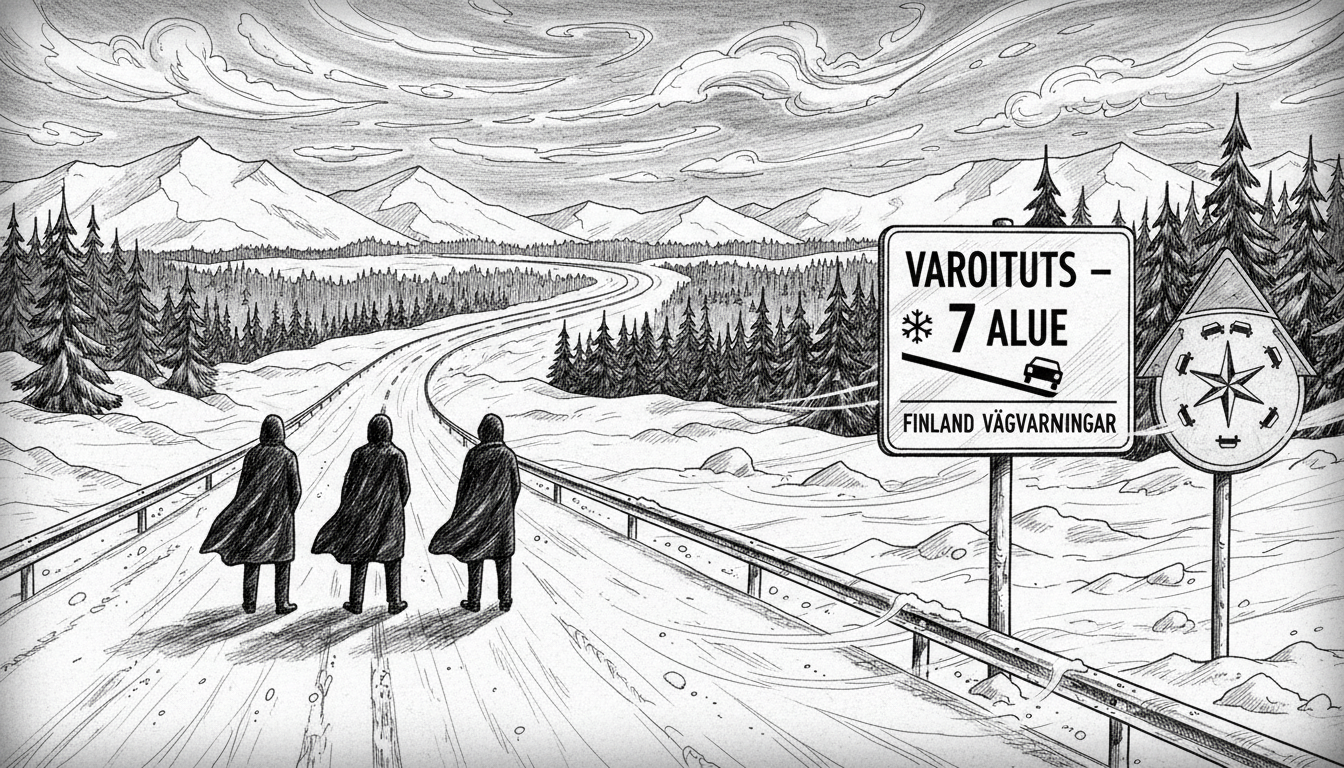
Finland recorded 348 fatal road accidents in 2022, underscoring the urgency of new alerts for hazardous driving conditions across seven eastern and central regions. Fintraffic's Road Traffic Centre and the Finnish Meteorological Institute (Ilmatieteen laitos) have jointly issued warnings for poor driving conditions. The alerts cover Kainuu, Päijät-Häme, Keski-Suomi, Etelä-Savo, Pohjois-Savo, and Pohjois-Karjala. Authorities cite snowfall and slippery road surfaces as the primary causes. These conditions are expected to persist through tomorrow morning, demanding driver vigilance.
Finland's variable climate, especially during seasonal transitions, often leads to such road safety challenges. The Finnish Meteorological Institute plays a key role in monitoring weather patterns and issuing timely warnings. Fintraffic then disseminates this information to manage traffic flow and prevent accidents. This collaboration is a standard protocol in Finland's approach to public safety, but its effectiveness hinges on driver compliance. With winter tires mandatory from December 1 to March 31, adherence to rules is high, yet unexpected weather shifts can catch motorists off guard.
Widespread Alerts Across Key Regions
The warnings specifically target a swath of interior and eastern Finland, areas known for more continental climate effects. Kainuu and Pohjois-Karjala, for instance, often experience heavier snowfall earlier in the season. Keski-Suomi and the Savo regions see significant traffic connecting rural communities to urban centers like Jyväskylä and Kuopio. Poor conditions here can disrupt daily commutes, freight transport, and emergency services. Local authorities in these regions are amplifying the message through social media and road signs. Drivers are advised to check real-time updates from Fintraffic's website before traveling.
Road safety experts emphasize that such warnings are not merely precautionary. "When the Meteorological Institute and Fintraffic issue a joint alert, it means conditions have met specific risk thresholds," said a traffic analyst familiar with Finnish protocols. The economic impact of weather-related delays can be substantial, affecting logistics and productivity. In past incidents, sudden snow squalls have led to multi-vehicle pileups on highways like E75 and E63. This current warning aims to prevent similar occurrences by giving drivers advance notice.
Understanding the Hazards: Snow and Ice
The immediate cause of the poor driving conditions is recent snowfall combined with near-freezing temperatures. This creates compacted snow and ice layers on roadways, reducing tire grip dramatically. Even with winter tires, braking distances can increase by two to ten times on slippery surfaces. The Finnish Meteorological Institute's models predict continued light snow showers overnight, which could worsen the situation. Road maintenance crews are active in these regions, spreading gravel and salt, but coverage may be patchy on less-traveled routes.
Finnish law requires winter tires during the colder months, but experts note that tires alone are insufficient. Drivers must adjust their speed and increase following distances. A common mistake is overconfidence in vehicle capability, leading to loss of control on curves or hills. The regions under warning have diverse topography, including forested areas and lakeside roads where black ice forms easily. Historical data shows that a significant portion of Finland's annual road accidents occur during such weather events in autumn and spring.
Expert Advice for Navigating Dangerous Roads
Road safety organizations stress a multi-faceted approach. First, drivers should consult the Ilmatieteen laitos forecasts and Fintraffic traffic cameras before departing. Second, vehicle preparedness is crucial: check tire tread depth, windshield wipers, and battery health. Third, adapt driving style: reduce speed, avoid sudden maneuvers, and use engine braking on descents. "The goal is to reach your destination safely, not quickly," commented a veteran driving instructor from Helsinki. Public awareness campaigns in Finland often highlight these points, but repetition is necessary as new drivers take to the roads.
From a policy perspective, Finland's investment in weather monitoring and road management is robust. The Eduskunta, Finland's parliament, has consistently funded infrastructure upgrades and safety initiatives. EU directives on road safety also influence national strategies, promoting cross-border cooperation on weather alerts. However, the ultimate responsibility lies with individual motorists. In the warned regions, local police may increase patrols to monitor compliance and assist stranded vehicles. Community networks, especially in rural areas, often share updates on road conditions through apps and groups.
Looking Ahead and Safety Protocols
The warnings are set to remain in effect until tomorrow morning, but conditions could change rapidly. Drivers should plan for extra travel time and consider postponing non-essential trips. For those who must travel, keeping an emergency kit in the car is recommended: blankets, food, water, and a flashlight. Finland's extensive network of service stations and roadside assistance provides a safety net, but response times may be longer during widespread bad weather. The Finnish Transport and Communications Agency, Traficom, regularly reviews accident data to improve warning systems.
As climate patterns shift, Finland faces more unpredictable weather, testing its renowned preparedness. This event serves as a reminder that even in a country adept at handling winter, nature can pose sudden risks. The collaboration between meteorological and traffic agencies shows a proactive approach, but public heed is the final link. Will drivers in the affected regions slow down and stay informed? The answer could mean the difference between a close call and a tragedy on Finland's roads today.