
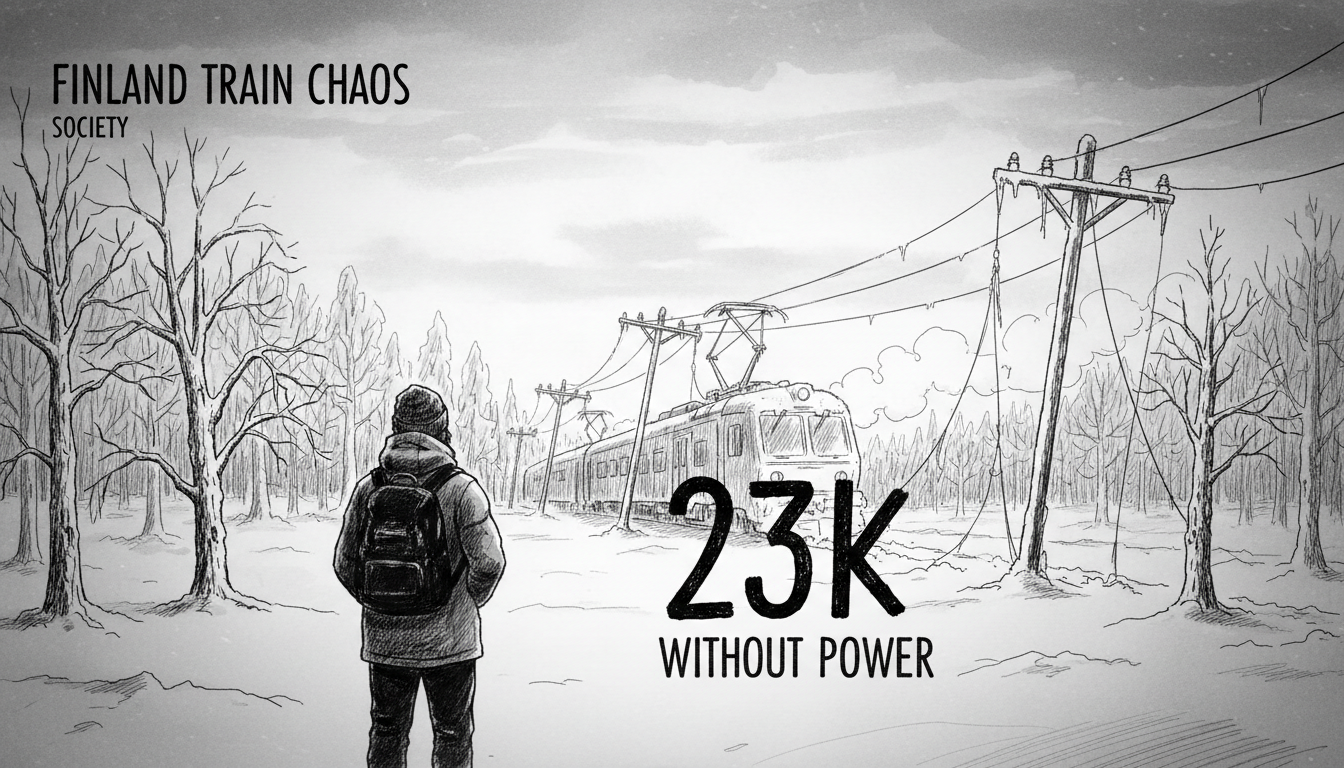
Finland's railway network faces severe disruption with over 23,000 households still without power following the Hannes storm. The storm's damage to rail infrastructure is causing widespread train delays, with services between Kokkola and Oulu experiencing 30-60 minute setbacks into Tuesday. The storm, which swept across the country over the weekend, has exposed vulnerabilities in critical transportation and energy systems. 'For a large part of Western Finland, including the railways, power went out as a result of the storm,' explained Fintraffic's track and situation manager Juha Varis. The compounding effects of power outages and physical damage to lines have created a cascading failure for commuters and freight.
A Week of Delays and Disruption
The operational headaches for state rail operator VR and traffic management agency Fintraffic are manifold. As of Monday evening, around a dozen trains were running behind schedule across the network. Delays varied from 15 minutes to half an hour. The core issue is a damaged power line on the track section between Kokkola and Oulu. Repair work on this critical artery is expected to continue through Tuesday, directly causing the significant delays on that route. However, the problems are not isolated. Earlier on Monday, multiple faults on the main line between Seinäjoki and Oulu forced operators to use only a single track in many locations. This bottleneck created further ripple effects throughout the system.
Anni Romu from VR's communications team described the knock-on impact. 'Track damage causes delays on other sections of the line as well, when trains wait for transferring passengers or equipment from delayed trains,' she stated. This systemic interdependency means a localized fault in Kokkola can delay a commuter service in Helsinki. The official reason often listed for these delays is a 'railway system fault.' Juha Varis clarifies this often relates to disruptions in power supply and the control devices that manage train movements. These technical failures force operators to lower train speeds, use backup power systems, or restrict traffic to a single track.
The Root Cause: A Powerful Autumn Storm
The Hannes storm, a potent autumn weather system, is the clear instigator. Its high winds brought down trees onto power lines and railway tracks, severing the electrical supply that powers Finland's electric trains. Before backup systems could be activated, train traffic ground to a halt or was severely delayed. The restoration of normal service is a two-part process: repairing the damaged overhead lines and ensuring the national power grid can supply sufficient electricity. The energy sector's own map of outages painted a stark picture on Monday evening, showing 23,000 households across 146 municipalities still disconnected.
The region of North Ostrobothnia was particularly hard-hit, with extensive blackouts persisting into Monday afternoon. The Pohjois-Pohjanmaan hyvinvointialue (North Ostrobothnia Welfare Region) warned that for some properties, power might not be restored for several days. This highlights the storm's dual impact on both mobility and daily life, stranding people at home without power and disrupting their ability to travel. The situation underscores Finland's dependence on a continuous and stable electricity supply for its public transportation infrastructure, a vulnerability amplified by extreme weather.
Infrastructure Resilience in the Spotlight
This incident places Finland's infrastructure resilience under immediate scrutiny. While autumn and winter storms are a regular feature of the Nordic climate, their increasing frequency and intensity pose a growing challenge. Experts in transportation policy often stress the need for sustained investment in climate-resilient infrastructure. This includes not only hardening physical assets like tracks and power lines but also improving the digital systems for traffic management and passenger communication. The coordination between Fintraffic, VR, and the energy companies becomes critical during such crises to minimize disruption and provide accurate, real-time information to the public.
The Finnish government, through the Ministry of Transport and Communications, has long-term strategies for transport system development. Events like the Hannes storm provide a real-world stress test for these plans. Key questions emerge about redundancy in power systems along rail corridors, the speed of repair response, and the effectiveness of contingency planning. For a country that prides itself on reliable public services and is investing heavily in rail as a green alternative to road and air travel, maintaining that reputation for punctuality is both an economic and political priority.
Looking Beyond the Immediate Repair Work
Passengers can monitor train movements in real-time using VR's 'Junat kartalla' (Trains on the map) website, a tool that becomes indispensable during widespread disruption. However, the broader lesson extends beyond this week's delays. As Finland continues to debate its climate adaptation strategies and infrastructure budgets, the performance of critical networks during storms will be a key metric. The Hannes storm is a reminder that the country's famous efficiency can be quickly undermined by nature, requiring constant vigilance and investment. The repair crews working through Tuesday aim to restore normal schedules, but the discussion about preparing for the next storm is just beginning. Will Finland's infrastructure investments keep pace with a changing climate, or will delayed trains become a more common feature of future autumns?