
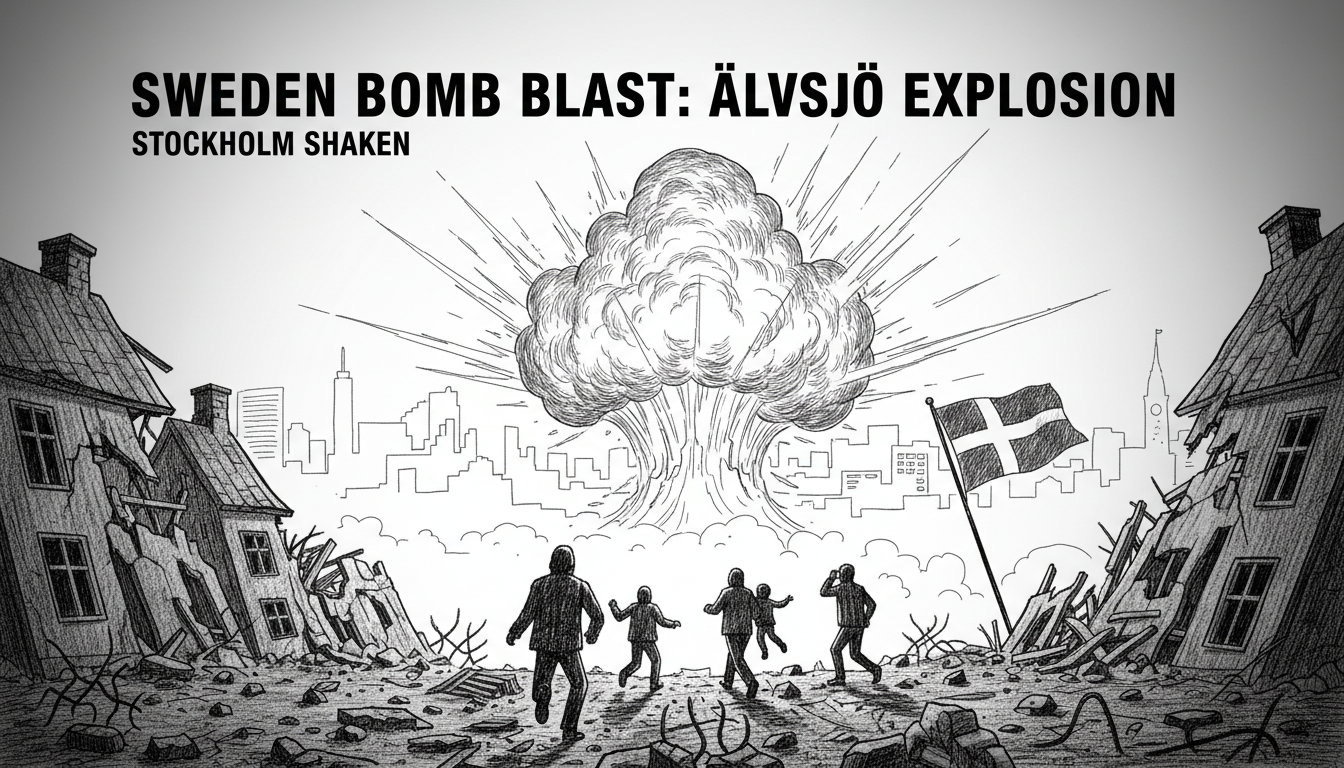
Sweden police are investigating a loud explosion at an apartment building in Älvsjö, southern Stockholm, in the early hours of Monday morning. The blast, caused by what authorities suspect was pyrotechnics, damaged a building facade but injured no one. For residents of the quiet suburb, the 2:30 AM wake-up call was a jarring reminder of a troubling national trend.
"We heard a huge bang, like a thunderclap right outside," said Markus Lindgren, a resident of the affected building on Älvsjövägen. "The whole building shook. My first thought was for my kids. You don't expect this here." Lindgren's sentiment echoes across Stockholm's suburbs, where similar incidents have moved from shocking anomalies to grim headlines. Police spokesperson Jari Kalliorinne confirmed the assessment. "It appears to be some form of pyrotechnics that caused the explosion," Kalliorinne said. The damage was limited to the building's exterior.
A Suburb Awakened by Violence
Älvsjö is better known for its sprawling fairgrounds and commuter train station than for criminal violence. The neighborhood, a mix of post-war apartment blocks, villas, and newer developments, represents the quiet, functional side of Swedish suburban life. Monday's explosion pierced that calm. Crime scene tape cordoned off the entrance as forensic technicians worked in the cold morning dark. Neighbors gathered in dressing gowns, exchanging worried glances over mugs of coffee. For many, the incident felt like an intrusion. "This is a family area," said Elena Petrova, who has lived nearby for fifteen years. "We have schools, playgrounds. This noise, this fear—it doesn't belong here." The fear she mentions is not just of the blast itself, but of what it signifies: a spillover of methods associated with organized crime into ordinary residential streets.
The Pyrotechnics Pipeline
The police's immediate focus on pyrotechnics points to a specific and growing challenge. In Sweden, powerful fireworks and other pyrotechnic materials are relatively easy to obtain illegally, often smuggled in from other European countries. Criminals have learned to repurpose these materials into simple but effective explosive devices. These are rarely intended to cause mass casualties. Instead, experts say they are tools of intimidation, used to threaten rivals, enforce debts, or retaliate in conflicts. "What we are seeing is the militarization of gang conflicts," explains Sven-Åke Berggren, a security analyst and former police officer. "Explosives create fear and send a powerful message. They are a dramatic escalation from fists or even guns. The use of pyrotechnics shows a level of planning and access to resources that is deeply concerning." The blast in Älvsjö fits a pattern of late-night attacks targeting properties, often the homes or family connections of individuals linked to criminal networks.
A Recurring Nightmare for Stockholm
While Älvsjö residents catch their breath, the incident joins a long list. In 2023, Swedish police recorded over 100 explosions and cases of severe detonation damage across the country. Many were concentrated in the Stockholm, Gothenburg, and Malmö regions. Just last month, a similar explosion damaged a restaurant in Botkyrka, another Stockholm suburb. Each event fuels public debate about gang violence, integration, and policing. The Swedish government has responded with tougher laws, increased sentences for weapons crimes, and expanded police powers. Yet the explosions continue. "The police are playing whack-a-mole," says Karin Södergren, a sociologist who studies urban crime. "They can arrest individuals, but the structures remain. These groups recruit young people from marginalized areas. Until you address the root causes—segregation, lack of opportunity, failed integration—the cycle will continue." Her analysis points to the complex social landscape underlying the headlines.
Life in the Aftermath
Back in Älvsjö, the clean-up is straightforward. Repair crews will patch the damaged facade. The police investigation will likely continue for weeks, with officers reviewing CCTV and speaking to witnesses. But the psychological repair is less certain. Trust in the safety of one's own doorstep is hard to rebuild. Community leaders are already organizing meetings to reassure residents. "We must not let fear take hold," said local councilor Amir Farah. "This is one incident. Our community is strong. We work with police and we look out for each other." This community response is a crucial part of the Swedish model, emphasizing cohesion and collective resilience. However, for parents like Markus Lindgren, abstract promises offer little comfort. "I checked on my children three times last night," he admits. "Every little noise made me jump. That's not how we should live. This is Sweden, not a war zone." His words capture the national dissonance: the clash between a self-image of peaceful order and the reality of sporadic, targeted terror.
Searching for Solutions in a Fractured Landscape
The path forward is fraught. Police tactics are evolving to include more surveillance and specialized bomb disposal units. Social programs targeting at-risk youth receive funding. Yet the gap between policy and street-level reality feels vast. The explosives are crude but effective. Their purpose is not just to destroy property, but to erode the very fabric of civil society. When residents are afraid to be in their own homes at night, the criminals have won a small victory. The challenge for Sweden is monumental. It must enforce the law without abandoning its liberal values. It must protect communities without stigmatizing them. It must address deep-seated social fractures while maintaining daily security. The explosion in Älvsjö was a small event with a very loud voice. It echoed through a silent street and now echoes through the national conversation. It asks a difficult question: How does a society founded on trust and openness protect itself from those who weaponize fear? Sweden is still searching for the answer. As the sun rose over the repaired facade in Älvsjö, life returned to normal. But beneath the surface, a tremor of anxiety remained—a silent aftershock of a single, violent bang in the night.