
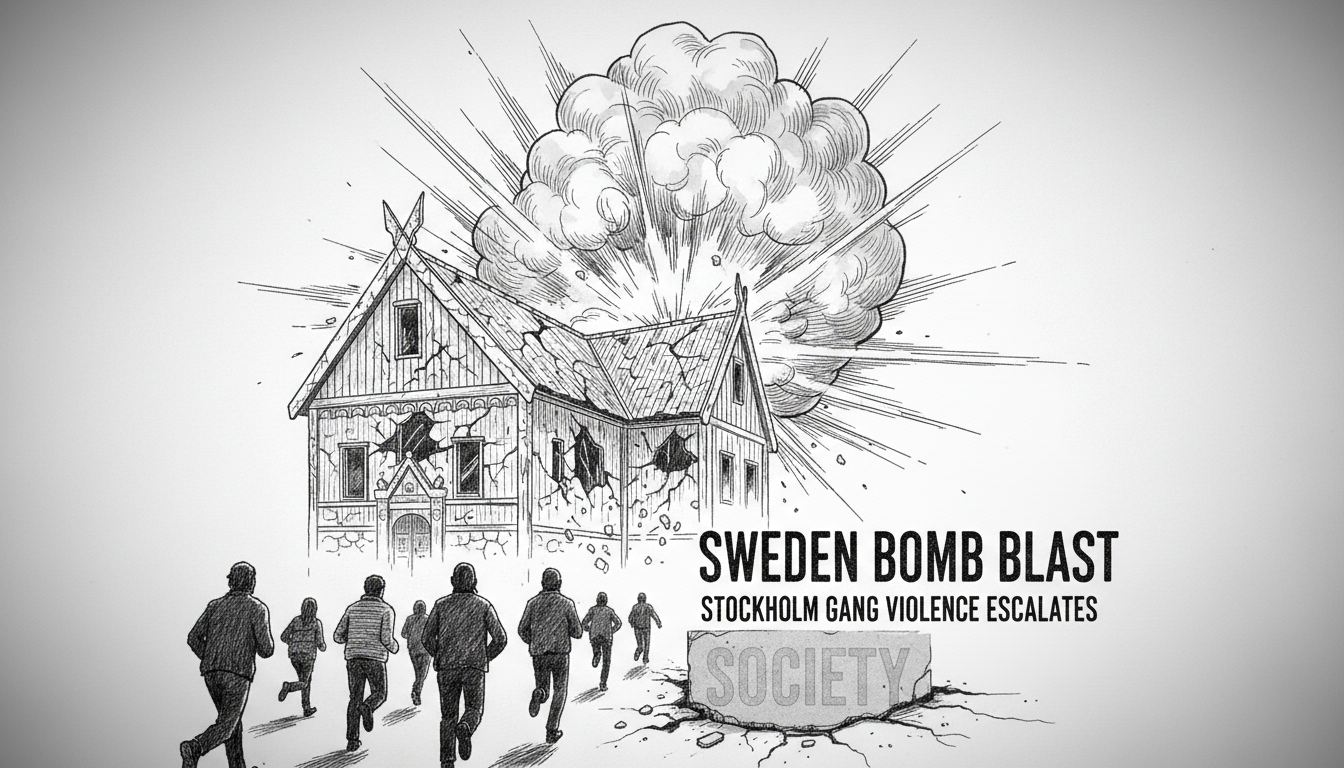
Sweden gang violence has once again shattered the quiet of a Stockholm suburb. An explosion ripped through a residential building in Stureby, southern Stockholm, early this morning. Police, fire services, and ambulances rushed to the scene after SOS Alarm received an emergency call reporting an indoor blast. Images from the location show a shattered window pane, a stark visual reminder of the violence moving into residential neighborhoods. The extent of the damage and any potential injuries remain unknown as authorities secure the area and begin their investigation.
This is not an isolated event. For residents of Stureby, a typically calm area known for its green spaces and family homes, the sound of an explosion is a terrifying intrusion. "You hear about these things in other parts of the city, but not here," said a local resident who wished to remain anonymous, peering out at the police tape from a nearby balcony. "It makes you feel unsafe in your own home. What if it happens again?" The incident underscores a grim trend across Sweden, where explosions have become a recurring tool in criminal conflicts.
A Pattern of Violence in Peaceful Neighborhoods
The Stureby explosion fits a disturbing pattern documented by Swedish police. In recent years, bombings and grenade attacks have shifted from being rare, shocking events to a more frequent occurrence in the criminal landscape. These acts are often linked to gang rivalries, used to intimidate rivals, settle scores, or target properties linked to ongoing feuds. While major cities like Stockholm, Gothenburg, and Malmö have seen the highest numbers, no community feels entirely immune. The choice of a residential area like Stureby sends a clear message: the violence can reach anywhere.
Experts point to a complex web of factors fueling this trend. "We are seeing a professionalization of violent crime," says Sven Granath, a security analyst and former police officer. "Explosives are a weapon of choice because they create maximum impact with minimal risk of direct confrontation for the perpetrators. They instill fear not just in the intended target, but across an entire community." This tactic disrupts the fundamental sense of security that Swedish society is built upon.
The Human Cost Beyond the Blast Zone
The immediate danger of an explosion is clear—fire, shrapnel, and structural collapse. But the impact of such an event in a residential area like Stureby radiates far beyond the damaged property. Neighbors experience trauma, children are frightened, and the social fabric of trust within the community is damaged. Parents question letting their kids play outside. People become suspicious of unfamiliar cars on their street. The Stockholm crime rate, often discussed in statistical terms, translates into daily anxiety for ordinary citizens.
Local community leaders in southern Stockholm districts have been vocal about the need for more than just a police response. "We need a dual approach," explains Mira Hassan, who runs a youth center in a neighboring district. "Strong law enforcement is crucial to stop those who commit these acts. But equally, we need massive investment in prevention—in schools, in social services, in creating real opportunities for young people who might otherwise be lured by these gangs. You cannot arrest your way out of a social problem." This sentiment echoes in the national debate, where discussions about Sweden immigration news and integration often intersect with concerns about gang recruitment in marginalized areas.
How Sweden is Responding to the Threat
In response to the surge in bombings and shootings, Swedish authorities have launched several major initiatives. Police have been granted increased powers and resources. A national bomb squad coordination unit has been strengthened. The government has also introduced tougher penalties for weapons offenses and serious gang-related crime. The goal is to dismantle the networks that plan and execute these attacks.
However, critics argue that the response remains overly focused on enforcement after the fact. "We are good at responding to the blast," says Granath. "We have excellent emergency services. But we are still struggling to prevent the blast from being planned in the first place. That requires intelligence, community cooperation, and addressing the root causes that allow these gangs to operate and recruit." This involves tackling issues like social segregation, unemployment in vulnerable suburbs, and the complex challenges some second- and third-generation immigrants face.
Stockholm's Changing Face of Safety
For international observers and residents alike, these incidents challenge the traditional image of Sweden as a uniquely safe and tranquil society. The Stockholm safety landscape has undeniably become more complex. While violent crime rates in Sweden, when viewed in a broader European context, are not exceptionally high, the nature of the violence—particularly the use of explosives—is deeply alarming and distinctive.
This reality influences everything from real estate prices in affected areas to tourism perceptions. More importantly, it shapes daily life. The Swedish lifestyle, often associated with trust, open public spaces, and a strong social contract, is being tested. Events like the Stureby explosion force a public reckoning with how society can maintain its core values in the face of organized, violent threats.
As the investigation in Stureby continues, the questions outnumber the answers. Was the apartment targeted? Was anyone inside? Who was responsible? The police will work methodically, but the fear lingers long after the debris is cleared. The broken window will be replaced, the façade repaired. Yet for the people living on that street, the memory of the blast and the anxiety it seeded may prove more permanent. The ultimate challenge for Sweden is not just to solve this one crime, but to mend the deeper fractures it exposes. Can a society famed for its consensus and equality find a unified path back to peace, or will the echoes of explosions continue to define its future?