
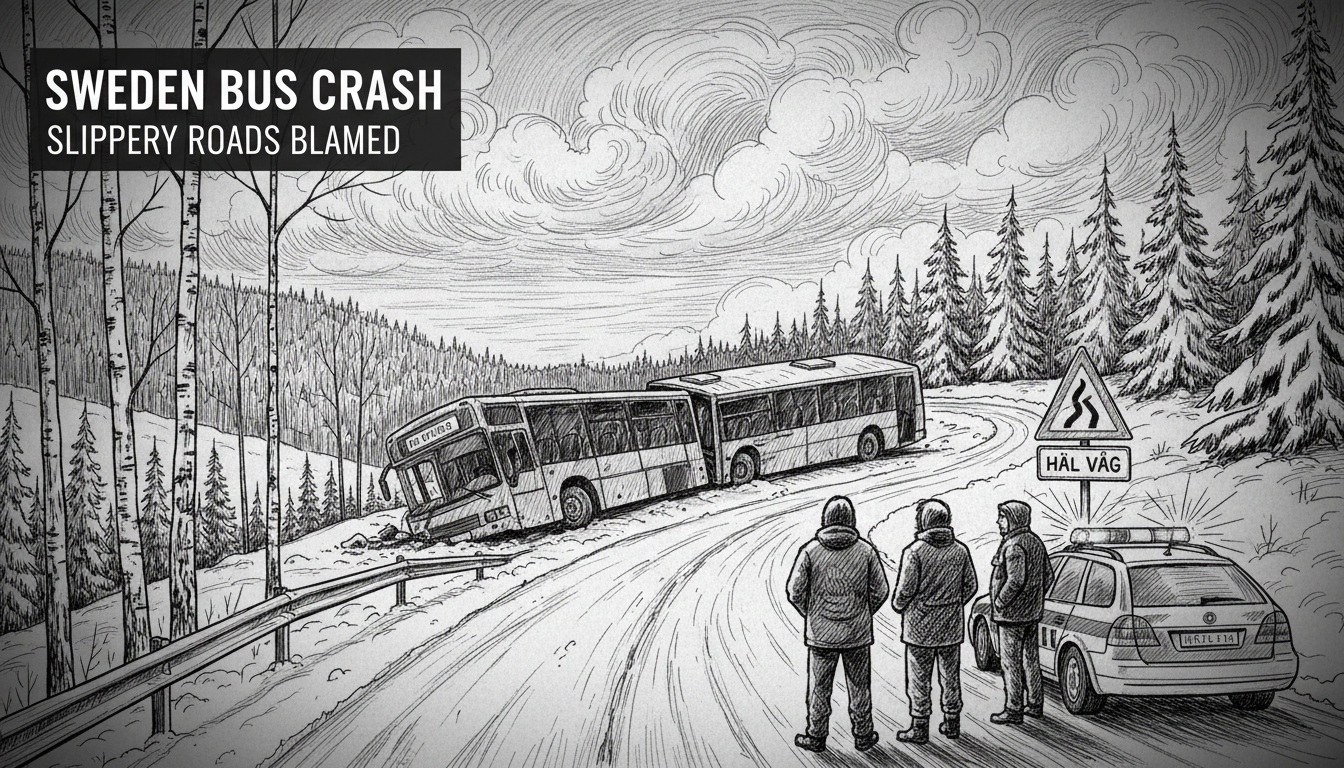
Stockholm public transport faced a harsh winter reminder when an SL bus slid into traffic signs in Barkarby on Sunday morning. No one was hurt, but the incident underscores Sweden's annual battle with icy roads. 'The theory is that it happened because of the slippery conditions,' said SL press spokesperson Carl-Henrik Elfsberg. The collision occurred around 10 AM, leaving the bus's front end damaged but its passengers and driver physically unharmed.
A Sunday Morning Slide
The accident happened in Barkarby, a district in Järfälla municipality northwest of Stockholm. Known for rapid residential and commercial development, the area has seen increased traffic. On this quiet Sunday, the bus veered into the wrong lane. It hit a pedestrian refuge island and several road signs before coming to a stop. Police confirmed the absence of injuries. For the passengers, it was a frightening jolt during a routine journey. Such events, while minor in outcome, send ripples through the dependable network of Stockholm's public transport.
Local resident Anna Lindqvist, who lives near the accident site, described the conditions. 'It was deceptively icy this morning,' she said. 'You look out and think it's just wet, but it's a real ice sheet. The salting trucks had been through, but it freezes again so fast.' This comment highlights a common Stockholm winter dilemma. The line between safe and slippery is remarkably thin.
Winter's Relentless Grip on Transport
This incident is not isolated. Every Swedish winter brings hundreds of minor collisions attributed to halka (slippery conditions). Transportation safety experts point to a multi-layered challenge. Public transport operators like SL must ensure vehicles are fitted with approved winter tires. Drivers need specialized training for icy road handling. Municipalities are responsible for timely plowing, salting, and sanding.
'Accidents like this are a system test,' explains traffic safety analyst Mikael Bergström. 'It involves vehicle readiness, driver skill, and road maintenance. When one part of the chain is weak, the risk increases. For buses, the large mass means stopping distances are much longer on ice, even with good tires.' Bergström emphasizes that speed adaptation is the most critical factor during variable conditions. Drivers must constantly assess the road surface.
SL states its buses are equipped with suitable tires and drivers receive winter training. The authority relies on municipal street maintenance for safe road surfaces. This division of responsibility is standard but requires seamless coordination. A gap in timing between a freeze and a salting run can lead to black ice, the hazard likely present in Barkarby.
Barkarby's Growing Pains
The accident spotlights Barkarby itself. Once a quieter suburb, it's now a hub of construction. New apartment blocks and the massive Barkaby Centrum mall have transformed it. Traffic volume has grown accordingly. 'The infrastructure is playing catch-up,' says local council member Tomas Karlsson. 'We have more people, more buses, more cars. Winter maintenance is a top priority for us, but it's a constant effort across a large area.'
This growth is common in Stockholm's expanding areas. It puts pressure on all services, including transport and road upkeep. For new residents, often unfamiliar with the depths of a Swedish winter, such incidents can be a startling introduction. The expectation of flawless public transport meets the reality of nature's power.
The Passenger Perspective
While the police report no physical injuries, the psychological impact of a sudden collision shouldn't be dismissed. Passengers on public transport place their trust in the system. A slide and crash, however minor, disrupt that trust momentarily. 'It was sudden and loud,' one passenger recounted, wishing to remain anonymous. 'We just slid. Everyone was calm, but you could see the worry. You just don't expect your bus to leave the road.'
SL has procedures for such events, including offering support to passengers and crew. The driver, following protocol, secured the vehicle and attended to passengers. This professional response helped prevent panic. The bus was later towed, and traffic in the area returned to normal. For the passengers, alternative transport was arranged, a small part of the vast SL network's daily operations.
A Seasonal Challenge for Sweden
The Barkarby bus slide is a microcosm of Sweden's winter identity. The nation is famously adept at handling snow and ice, yet it remains a formidable adversary. From individual car owners fitting winter tires by the December 1st deadline to massive municipal snow-clearing budgets, winter readiness is a collective effort. Public transport is the backbone of Stockholm's mobility, especially in winter when many choose to avoid driving.
Its reliability is paramount. Each incident prompts internal reviews at SL. They examine maintenance logs, driver reports, and weather data. The goal is continuous improvement. Could different tires help? Was speed appropriate? Was the route adequately treated? These questions are standard in the pursuit of a perfect safety record in an imperfect climate.
As the winter continues, Stockholm will see more frosts, more snow, and potentially more slippery mornings. The Barkarby incident serves as an annual reminder. It shows that despite Sweden's expertise, winter always demands respect. The successful outcome—no injuries—is a testament to safety designs and protocols. Yet, it also quietly asks the perennial question: are we doing enough to keep our streets safe when the temperature drops?
For now, in Barkarby and across Stockholm, the focus returns to the forecast. Residents will check their own tires. Commuters will glance at the pavement. And municipal workers will prepare their fleets for the next cold night, hoping to keep the city moving safely through the long, dark season until spring finally arrives.