
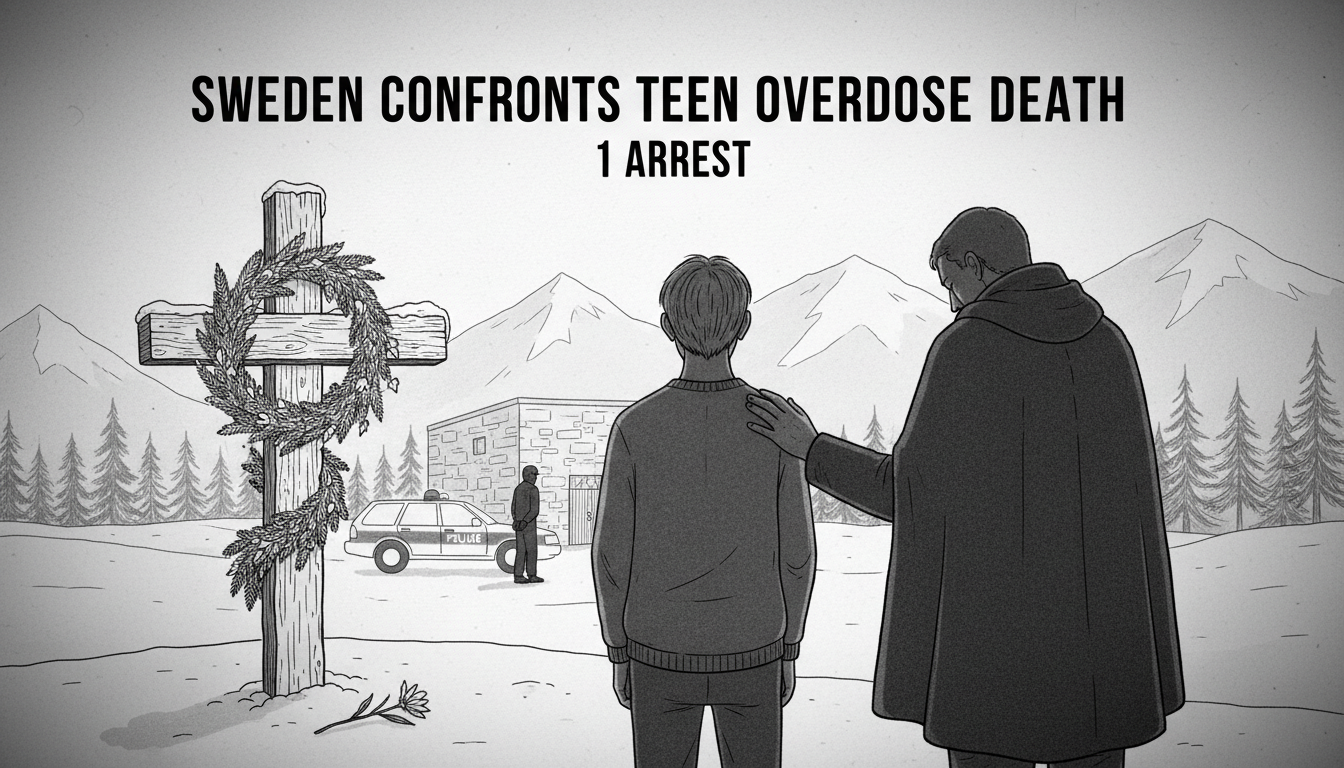
Sweden faces a stark human tragedy with the death of a teenage girl in the northern city of Luleå. The girl, believed to be in her late teens, was found lifeless in a residence last week and could not be revived at the hospital. A man living at the property is now arrested, suspected of narcotics offenses and grossly causing her death. The event sends shockwaves through a community and re-ignites a national debate on drug policy and prevention. “It is a very tragic event where a girl has died. We suspect she died of an overdose and that the detained man, who is well-known in drug-related contexts, supplied her with narcotics,” said prosecutor Jonas Fjellström. The man denies the crime.
A Family's Loss and a City's Grief
While authorities are not releasing the girl's identity, the loss is deeply felt. Luleå, a coastal city of about 80,000 people known for its university and steel industry, is a tight-knit community. A death like this resonates far beyond the immediate neighborhood. It represents a parent’s worst fear and a community’s failure to protect its youth. In Stockholm, similar stories emerge in areas like Rinkeby or Tensta, where community workers often speak of the vulnerable intersection between youthful curiosity, social challenges, and available substances. The Swedish model of society, built on trust and a strong safety net, feels ruptured by such incidents.
The National Numbers Behind the Headline
This single death adds to a sobering national statistic. According to the latest official figures from the National Board of Health and Welfare, 537 people died from drug-related causes in Sweden in 2022. Opioids, including substances like heroin and strong prescription painkillers, are frequently involved in fatal overdoses. Each number is a personal story, a family altered forever. While Sweden's overall drug use rates are lower than the European average, the consequences when things go wrong are severe. The restrictive national policy, often summarized as a 'zero tolerance' approach, focuses heavily on law enforcement and supply reduction. Yet, as this case in Luleå shows, drugs are still present and can be deadly.
A Clash of Policies in the Nordic Model
Sweden's drug policy has long been a topic of debate. On one side are proponents of the traditional approach, emphasizing prevention, strict laws, and societal disapproval. On the other, public health experts and activists call for a greater focus on harm reduction. “A tragic event like this underscores the need for multiple strategies working in concert,” says Karin Edstedt, a Stockholm-based researcher focusing on social policy, who is not directly involved in the case. “Enforcement is one pillar. But equally critical is ensuring young people have access to factual information, non-judgmental support, and that life-saving tools like naloxone—an overdose-reversal medication—are widely available where risks exist.”
In cities like Malmö and Gothenburg, some non-profit groups quietly distribute naloxone, but it is not part of a coordinated national strategy. Critics argue Sweden is slow to adopt practices common in neighboring Norway, where harm reduction is more integrated into official policy. The arrest in Luleå follows a familiar pattern: targeting the supplier. The legal process will now examine the evidence of provision and gross negligence. Yet, for the girl’s family and friends, the outcome of the trial is a separate matter from their irreversible loss.
The Human Cost Beyond the Statistics
Focusing solely on policy debates can obscure the profound human loss. A teenage girl in Luleå is gone. She likely had dreams, friends, and a family now navigating unimaginable grief. Her story is not just a data point for 2025’s eventual mortality statistics. It is a call to action for parents, schools, and local communities across Sweden. In Stockholm, community centers in suburbs like Husby or Hagsätra run youth programs specifically designed to offer alternatives and build resilience. Their workers say engagement and early support are key, long before a young person ever encounters a dangerous substance.
The long, dark winters in northern Sweden can also exacerbate feelings of isolation, some social workers note, making supportive communities even more vital. The man arrested, described as known to police in drug contexts, represents the supply side of a chain that preys on vulnerability. His arrest is a procedural step, but it does not answer the larger question of how to prevent such meetings from happening in the first place.
Looking Forward: Prevention or Punishment?
As Luleå mourns, the national conversation continues. Does Sweden need to recalibrate its balance between punishment and prevention? The upcoming trial will deliver legal accountability. True societal accountability, however, is measured differently. It is measured in the resources put into youth centers, the quality of school-based drug education, the accessibility of mental health support for teenagers, and the willingness to have open, honest conversations about risk and safety. Sweden prides itself on being a progressive, caring society. This tragedy in the north is a test of those values. The memory of one girl in Luleå challenges the nation to look beyond traditional methods and ask, with empathy and urgency, what more can be done to protect its young people. The coming year's policies and community actions will be the real answer.