
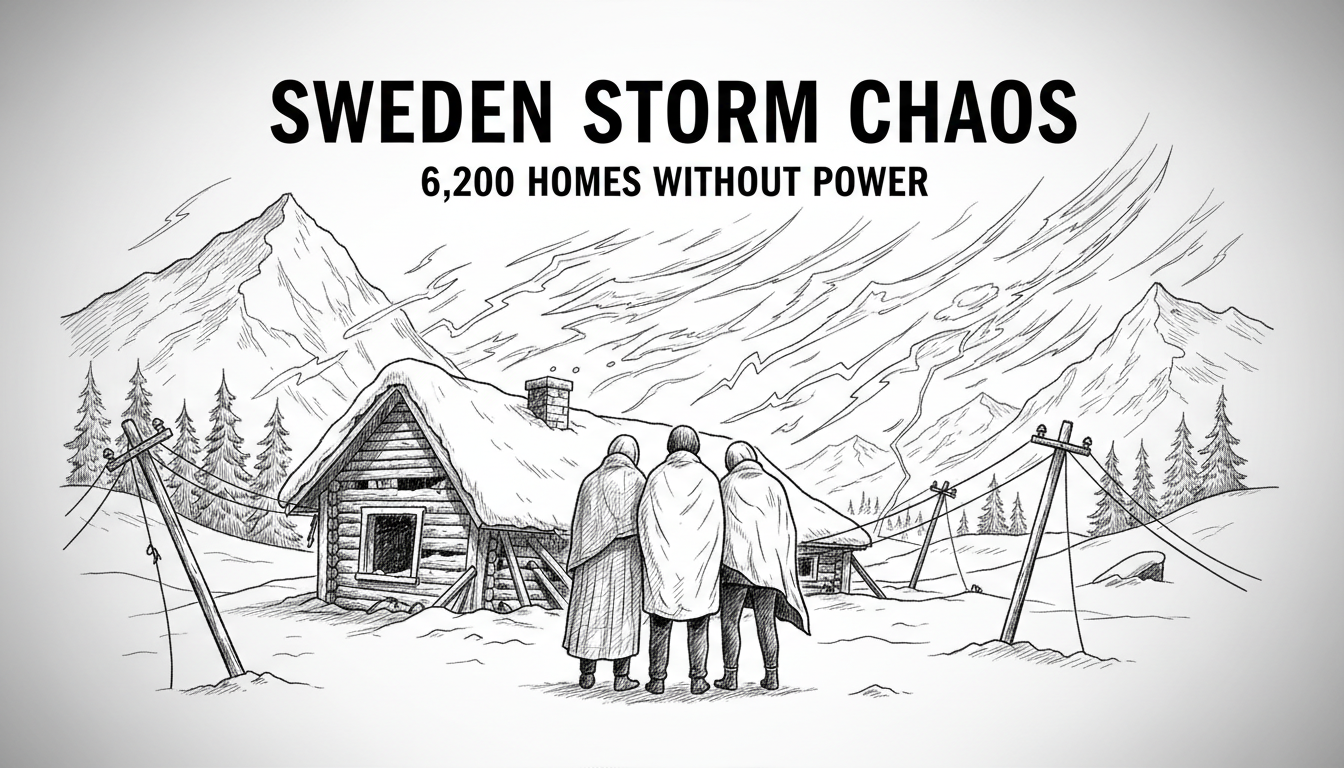
Sweden's Storm Anna has left over 6,200 households without electricity, plunging parts of Gävleborg county into a cold and disruptive darkness. For families like the Erikssons in Bollnäs, the crisis is entering a challenging phase. 'The novelty has worn off,' says Karin Eriksson, a mother of two young children. 'The first night felt like an adventure with candles. Now, we’re just cold, and the kids are restless. We’ve packed our bags for the hotel offer, but it’s stressful not knowing when we can come home.' Her story is repeated in thousands of homes across the region, where the festive glow of the holidays has been replaced by the grim reality of a prolonged power outage.
The disruption stems from Storm Anna, which reached its peak intensity but continues to cause problems following the earlier Christmas holiday storm, Johannes. The Swedish Meteorological and Hydrological Institute (SMHI) maintained an orange warning for heavy snowfall combined with strong winds through Friday morning, hampering repair efforts. Public transport has been severely affected, with bus and train services canceled in many areas, isolating communities further. While the storm's fury may be easing, the aftermath is a test of patience and preparedness for residents and utility companies alike.
A Region Shrouded in Snow and Silence
The hardest-hit area is Gävleborg county, a region accustomed to harsh winters but now grappling with an exceptional situation. The silence in affected villages is punctuated not by the usual hum of appliances but by the distant sound of generators and utility crews. Local community centers in towns like Hudiksvall have opened as warming shelters, offering hot coffee and a place to charge devices—a modern-day lifeline. 'It’s the little things you miss,' notes Lars Bengtsson, a local farmer. 'No morning radio, no way to heat water quickly for coffee. We manage, but it grinds you down. You realize how dependent we are.'
The major electricity grid operators, Vattenfall, Eon, and Ellevio, have all reported customers offline. Their crews are working around the clock, but heavy snow and difficult terrain are slowing progress. In response to the prolonged nature of this outage, both Ellevio and Eon have activated support measures, including offering hotel accommodations for customers who have been without power for an extended period. This is a standard but critical procedure in the Swedish utility playbook for severe weather events.
The Compensation Question and Grid Resilience
For affected customers, the immediate concern is warmth and light, but questions about compensation follow closely. Sweden has regulated compensation for power outages, but the rules are specific. Generally, customers are entitled to compensation only if an outage lasts longer than 12 hours and exceeds a certain threshold per calendar year. The amount is also capped. 'Many people are unaware of the exact terms until they find themselves in this situation,' explains energy policy analyst Mats Johansson. 'The system is designed for fairness, but during a widespread crisis like this, it can feel inadequate to those facing real discomfort and spoilt food.'
This event has reignited a broader discussion about the strength of Sweden's electricity infrastructure. The grid, while generally reliable, is facing new pressures. 'We are seeing a pattern,' says climate researcher Dr. Elin Strand. 'While single storms are not directly attributable to climate change, the increased frequency and intensity of extreme weather events in our region is a trend models have predicted. Our infrastructure was built for a different climate reality.' Experts point to the need for increased investment in grid hardening—burying lines, strengthening pylons, and creating more localized microgrids—to prevent such widespread disruptions in the future.
Community Response in a Time of Crisis
Beyond the official response, the storm has highlighted the Swedish concept of 'dugnad'—communal self-help. Neighbors are checking on each other, especially the elderly. Those with wood-fired stoves or generators are sharing their resources. In Stockholm, a world away from the snow-drifted roads of Gävleborg, the news is met with sympathy and a reminder of the country's stark regional divides. Urban Swedes, largely unaffected, follow the updates while enjoying fully powered homes, a contrast that speaks to both the concentration of population and the vulnerability of vast rural networks.
The situation remains fluid. SMHI had also issued an orange snow warning for southern Gästrikland and northern Uppland, indicating that the weather system was still affecting a significant area. As repair crews press on, the focus for thousands remains on basic needs: heat, information, and a return to normalcy. The storm may have a name, Anna, but for those living through its consequences, it’s simply a demanding test of winter resilience. How Sweden weathers this test, from individual households to national grid planners, will offer lessons for winters to come. Is the famous Swedish preparedness myth or a living reality? Events like Storm Anna provide the answer, one restored power line at a time.