
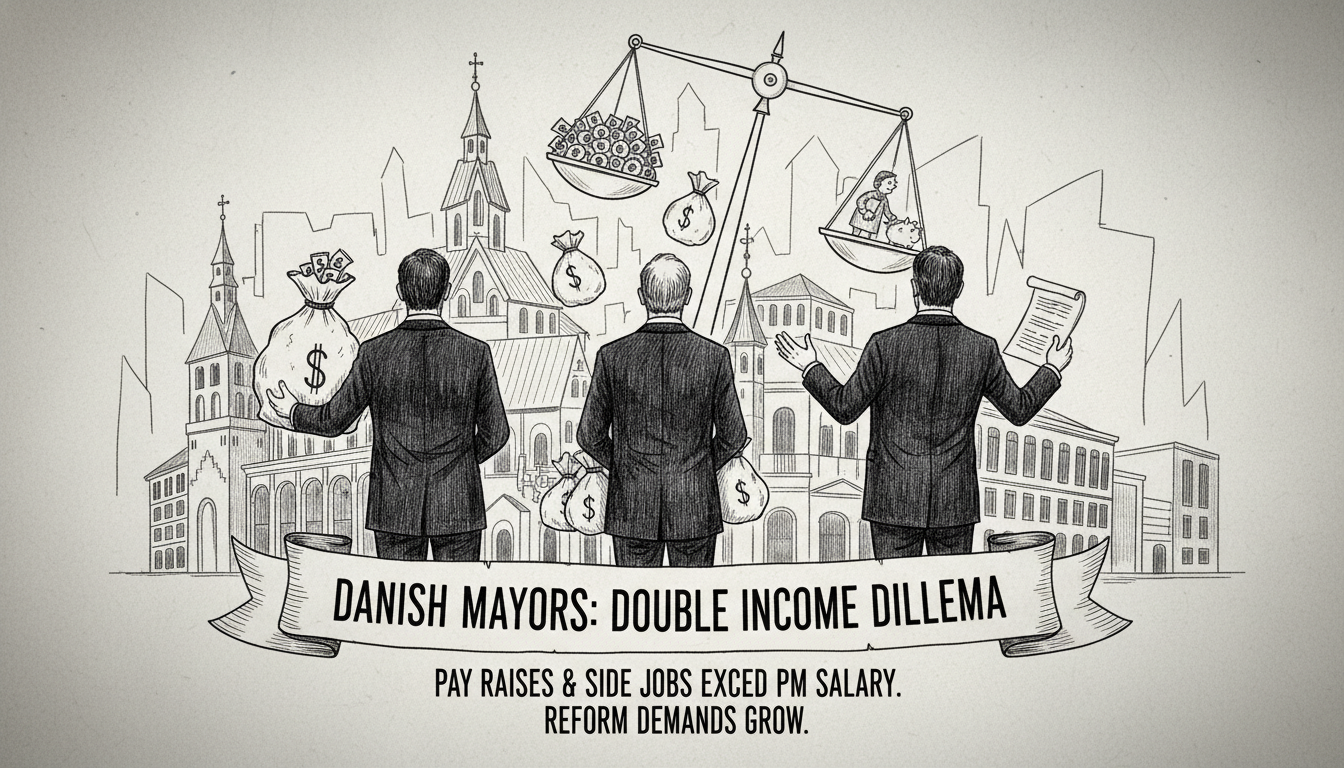
Danish political parties are demanding an end to municipal mayors receiving both substantial salaries and paid side positions. Some mayors now earn more than the country's prime minister through this dual-income system. The controversy emerges during the final stretch of local election campaigns, with multiple parties calling for reform.
SF, Danmarksdemokraterne, and Liberal Alliance argue that mayors should not collect extra payments for board positions in municipal companies and organizations. These side roles often include positions in Kommunernes Landsforening, Denmark's national association of municipalities. Critics contend these additional paid roles essentially form part of their mayoral duties.
Claus Jørgensen, municipal spokesperson for SF, states the current salary levels are already high. He believes extra compensation should benefit municipalities and citizens rather than individual politicians. The debate centers on whether mayors should receive additional payment for work connected to their primary role.
Nearly a decade ago, an expert commission recommended increasing mayor salaries by over 30 percent. The commission also suggested eliminating extra payments for side positions. Parliament approved the salary increases but ignored the recommendation about secondary employment restrictions.
The political agreement raising mayor salaries came from Venstre, Socialdemokratiet, De Radikale, Konservative, and Liberal Alliance. These parties supported substantial pay raises without limiting lucrative side jobs. Current rules allow mayors to maintain both their increased base salary and additional board compensation.
Recent documentation reveals 28 Danish mayors earned over 250,000 kroner extra last year from board positions alone. Two mayors now exceed the prime minister's annual salary of 1.96 million kroner. Martin Damm from Kalundborg and Peter Rahbæk Juel from Odense both receive total compensation exceeding two million kroner.
Dennis Flydtkjær of Danmarksdemokraterne argues that mayors already receive good full-time salaries. He questions why they need extra payment for roles that naturally connect to their primary responsibilities. His party wants Parliament to change the rules preventing multiple payments for essentially the same work.
This debate has surfaced repeatedly in recent years. In 2022, SF proposed deducting board income from mayor salaries when the work directly relates to their official duties. The proposal failed when Venstre, Socialdemokratiet, and Conservatives voted against it.
Carl Andersen of Liberal Alliance acknowledges the contradiction in his party's position. They supported salary increases in 2016 but now want to limit additional earnings. He explains they always preferred implementing all the commission's recommendations, including the restrictions on side income.
Professor Jacob Torfing from Roskilde University has followed this debate since the commission's 2016 report. He believes the proposal to limit paid side jobs failed due to municipal opposition. The association representing municipalities never endorsed the restriction, likely because some mayors wanted to keep their extra earnings.
Mayor salaries vary by municipality size, ranging from 884,895 kroner in smallest towns to 1,384,513 kroner in largest cities. Copenhagen's lord mayor receives 1,551,612 kroner annually. These substantial base salaries make the additional board payments particularly controversial.
The core issue involves defining what constitutes a separate job versus inherent mayoral duties. Board positions in municipal organizations clearly connect to mayoral responsibilities. Critics argue this creates double payment for essentially the same work.
Political observers note the timing of this debate during election season suggests it might gain traction. Public awareness of mayors earning more than the prime minister could pressure parties to implement changes. The outcome depends on whether parties can agree on new compensation rules that balance fair pay with reasonable limits.