
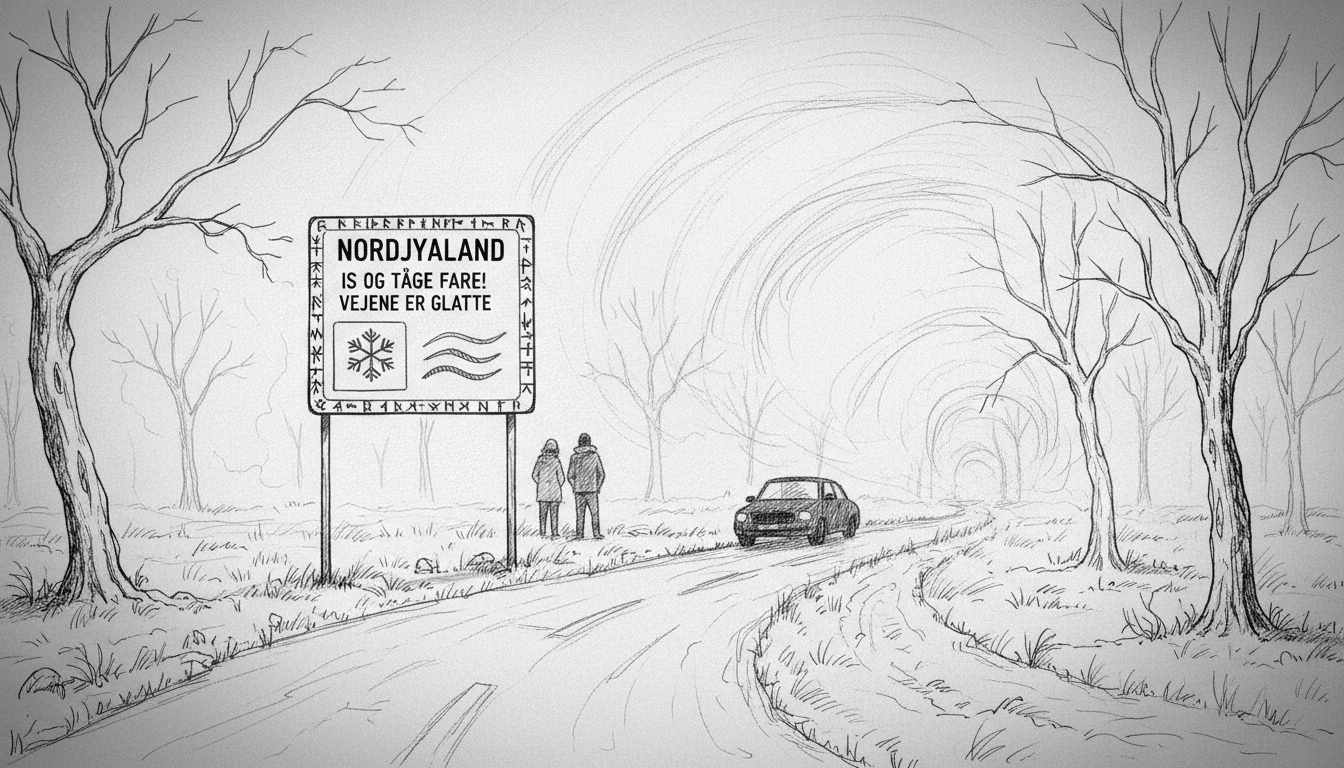
Driving conditions Denmark face a sharp test this Sunday morning. A silent, slick hazard is forming across the highways and byways of North Jutland. The Danish Meteorological Institute (DMI) has issued a specific warning for rime ice, known locally as rimglatte, coupled with patches of dense fog. This combination creates a high-risk scenario for early Sunday traffic, stretching from near Fjerritslev all the way to the northern tip at Skagen.
A Dual Threat on Northern Roads
The warning highlights two distinct but equally dangerous phenomena. Rime ice forms when tiny, supercooled water droplets in fog freeze instantly upon contact with cold road surfaces. Unlike black ice, it can create a visibly rough, crystalline coating that is exceptionally slippery. Concurrently, DMI reports that dense fog has developed in several northern areas. This fog is severe enough to reduce visibility to under 100 meters in places, a critical threshold for road safety.
"These are classic, challenging winter conditions for our region," a DMI meteorologist said in a statement. "The clear, calm night has allowed surfaces to cool rapidly, and moisture in the air is condensing into both fog and ice. Drivers need to adjust their speed and mindset accordingly." The area around Aalborg is expected to be less affected, but caution is advised throughout the northern district.
The Science of the Slippery Surface
Understanding rimglatte is key to respecting the danger. It occurs under precise meteorological conditions. When air temperatures are at or just below freezing, and fog or very moist air is present, the liquid droplets become supercooled. Upon striking a cold road surface or vehicle, they freeze on impact. The resulting ice layer can be patchy and difficult to see, especially in low light or fog.
This differs from frost or black ice. Road maintenance crews are often aware of the risk, but the formation can be rapid and localized. Salt and de-icing agents are less effective at very low temperatures and require time to work. On a quiet Sunday morning, treatment schedules may not align with the sudden onset of hazardous conditions.
Expert Advice for Navigating the Hazard
Road safety experts emphasize a fundamental shift in driving behavior. "The number one rule is to slow down significantly," says Lars Kjeldsen, a senior instructor with the Danish Road Safety Council. "Increase your following distance to at least five or six seconds behind the car in front. This gives you time to react if you encounter an icy patch or the vehicle ahead suddenly brakes."
He also advises using low-beam headlights in fog, as high beams will reflect off the water droplets and reduce visibility further. Gentle maneuvers are crucial. Sudden steering, braking, or acceleration can easily break a tire's grip on rime ice. Authorities recommend postponing non-essential travel until the DMI's forecasted clearance occurs later in the morning.
The Broader Context of Danish Winter Mobility
This localized event points to the broader challenges of maintaining a safe, functional transportation network in Denmark's temperate climate. Winter weather here is often a dance between rain, frost, fog, and occasional snow. Municipalities and the state road authority, Vejdirektoratet, operate extensive monitoring and treatment systems. Yet, hyper-local conditions like coastal fog in North Jutland can outpace these measures.
Investment in better forecasting and responsive treatment is ongoing. However, the ultimate responsibility shares a balance between public systems and individual driver awareness. Incidents caused by weather like this strain emergency services and can lead to significant traffic disruptions. They also raise annual questions about winter tire policies, though studded tires are subject to seasonal regulations in Denmark.
A Community and Commuter Perspective
For residents of North Jutland, such warnings are a familiar, if unwelcome, part of the winter landscape. They affect Sunday churchgoers, shift workers, and commercial transport alike. Local social media community boards often light up with real-time condition reports from drivers, acting as an informal early-warning network. This community vigilance complements official channels.
The incident underscores how Denmark's weather forecast remains an essential tool for daily planning. Reliable, granular data from DMI allows citizens to make informed decisions. It also helps road crews preemptively target known trouble spots, like exposed bridges or low-lying roads where cold air pools.
Looking Ahead: Preparedness in a Changing Climate
While a single frosty morning is not unusual, meteorologists are studying how shifting climate patterns may affect the frequency and intensity of such events. Could warmer seas lead to more frequent fog formation? Will temperature fluctuations increase freeze-thaw cycles that create ice? These are active areas of research with direct implications for future infrastructure and safety planning.
For now, the focus remains on the immediate situation. As the sun rises and temperatures creep upward, the icy grip on North Jutland's roads should loosen. The fog is expected to lift through the morning. But the window of risk serves as an annual reminder. Denmark's advanced society and welfare model still operate at the mercy of fundamental natural forces. Safe passage depends on respecting that dynamic, one cautious kilometer at a time. Will this winter bring more such sharp reminders, and how prepared are we to meet them?