
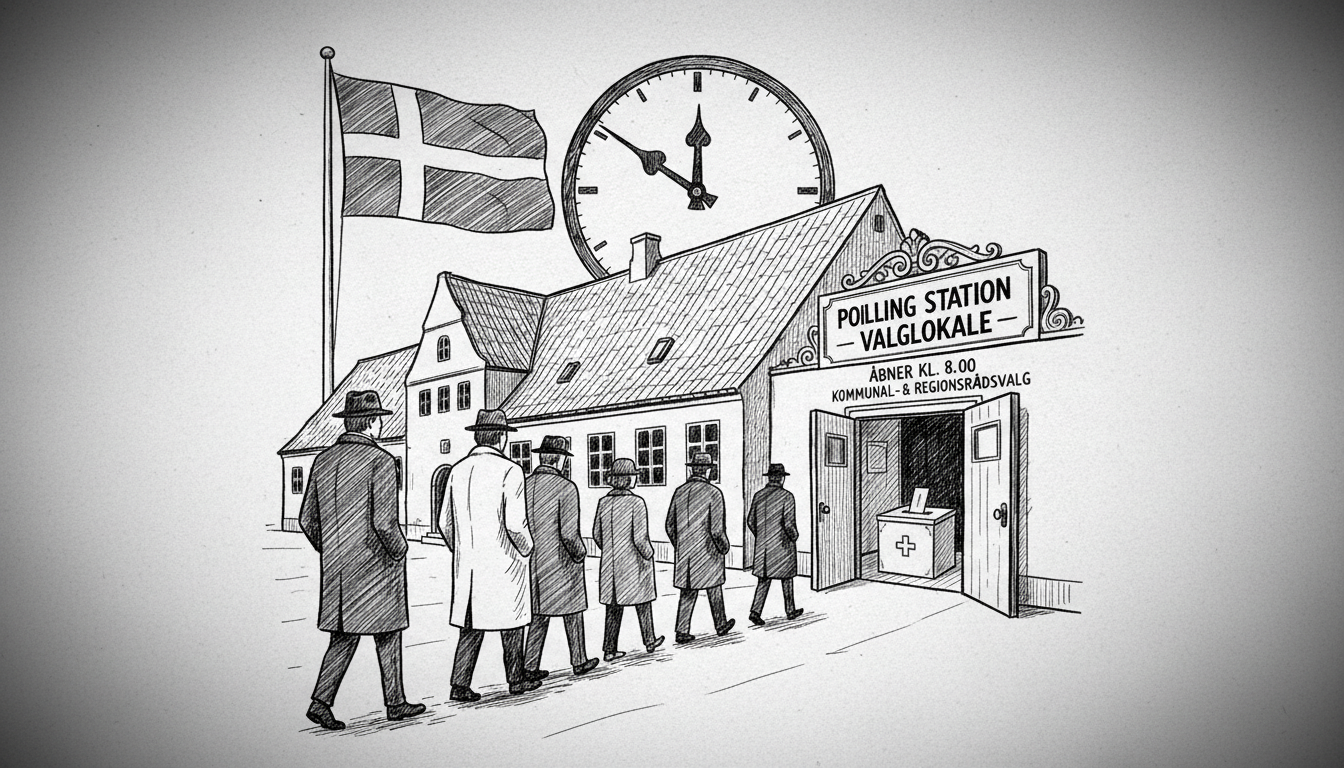
Polling stations across Denmark opened their doors at 8 AM sharp this Tuesday morning for municipal and regional elections. This precise timing reflects legal requirements rather than administrative convenience. Section 52 of Denmark's Local and Regional Election Law mandates these specific operating hours nationwide.
The law states voting begins at 8 AM and continues until 8 PM. Officials must accommodate any voters still waiting in line when polls officially close. Election workers cannot turn away citizens who arrived before the deadline.
Denmark's electoral system demonstrates remarkable attention to geographical diversity. Twenty-seven specific islands receive special consideration under the same legislation. Municipal councils may decide to open polling stations at 9 AM instead of 8 AM on islands including Agersø, Anholt, Fur, and smaller communities like Bjørnø and Hjarnø. This accommodation recognizes the practical challenges of organizing elections across Denmark's archipelago.
Election procedures emphasize transparency and security. Before voting begins, appointed voters must demonstrate that ballot boxes remain empty to all present observers. Workers then immediately lock or seal the containers to prevent tampering.
Section 51 of the election law details additional requirements for polling locations. Municipal councils must provide adequate facilities with sufficient voting booths and ballot boxes. Voting booths guarantee privacy, ensuring no one can observe how citizens mark their ballots. Each location needs separate ballot boxes for municipal council elections and regional council elections.
Polling stations display comprehensive information about all approved candidate lists. Notices show candidate names in their exact ballot order alongside party letters and list designations. Voters also receive information about electoral alliances and list partnerships between parties.
Denmark's meticulous election procedures reflect the country's deep commitment to democratic transparency. The system balances nationwide standardization with local flexibility, particularly for island communities. These elections determine local leadership for the next four years, affecting public services from schools to infrastructure.
International observers might find Denmark's electoral approach notably thorough compared to other democracies. The country maintains high voter participation rates, partly because citizens trust the system's integrity. Today's elections will shape local governance across 98 municipalities and five regions until the next scheduled vote.
Election officials expect final results late Tuesday evening after all ballots are counted. The process typically proceeds smoothly thanks to Denmark's long-established electoral traditions and clear legal framework.