
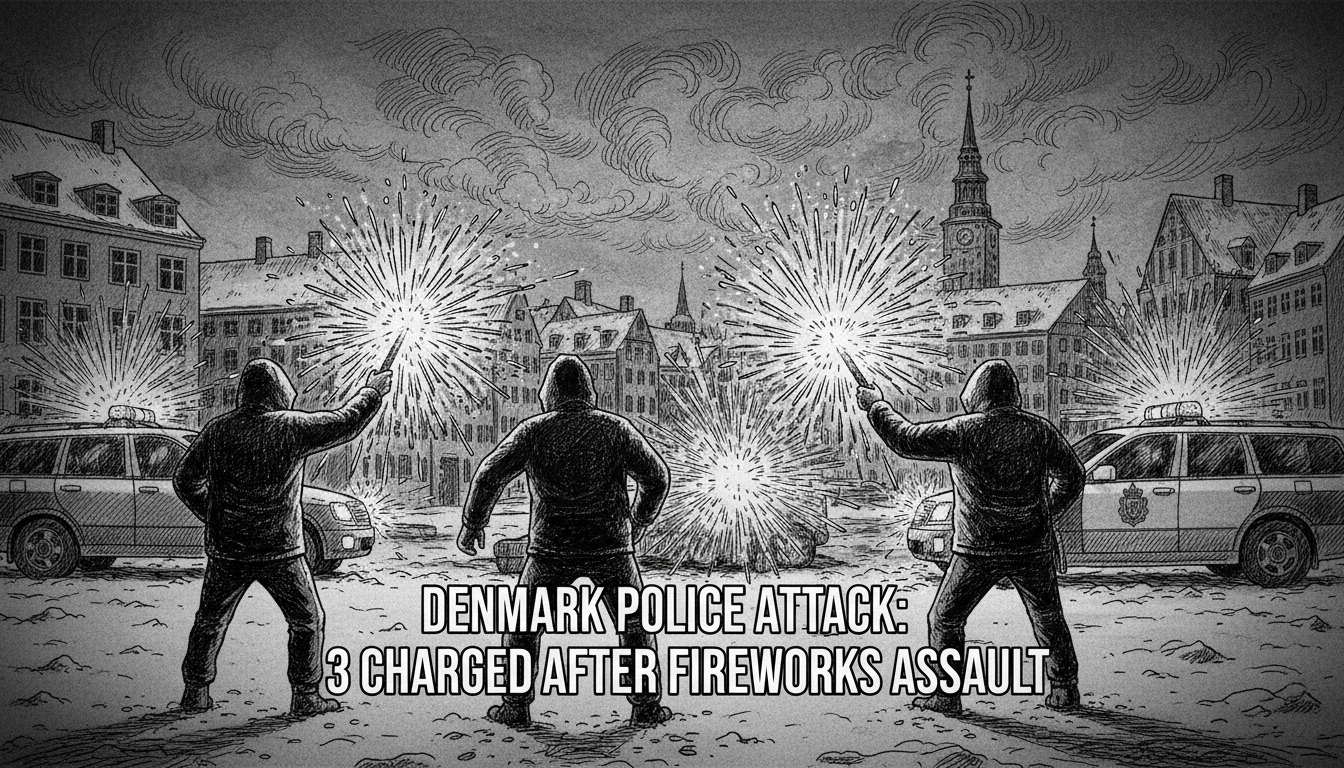
Denmark police officers face a growing challenge of targeted aggression, as evidenced by a shocking weekend attack in Randers. A police officer was targeted with fireworks in the inner courtyard of the Randers Police Station itself at 10:38 PM on Saturday. The explosive device detonated immediately in front of the officer, who was not physically injured. Three young men, aged 18, 22, and 23, were swiftly arrested and now face serious charges under section 119b of the penal code for violence against a public employee. This incident strikes at the heart of civic safety, transforming a police station courtyard from a symbol of security into a crime scene.
An Attack on the Institution Itself
The location of this assault carries profound symbolic weight. An attack within the confines of a police station challenges the very notion of safe havens for those sworn to protect. It represents an escalation from confrontations on the street to a direct incursion upon a state institution's physical space. While the officer escaped physical harm, the psychological impact and the brazen nature of the act send ripples through the law enforcement community. Such events force a difficult public conversation about respect for authority and the safety of public servants across Danish society. The immediate police response, resulting in three arrests within a short timeframe, underscores the seriousness with which the force treats such violations.
Legal Repercussions and Societal Signals
The three accused now confront section 119b of the Danish penal code, a provision designed specifically to protect public officials. Convictions under this statute can lead to significant penalties, reflecting the legal system's priority on safeguarding those in service roles. Legal experts consistently highlight that Danish courts view attacks on police, healthcare workers, and other public employees as severe aggravating circumstances. This legal framework exists not just to punish but to deter, sending a clear societal signal. The choice of weapon—fireworks—also introduces a particular dimension, blurring the lines between celebratory objects and instruments of intimidation and potential harm.
A Broader Context of Authority and Conflict
This event in Randers does not occur in a vacuum. It feeds into ongoing national discussions about police-community relations, especially in urban areas. While Denmark maintains relatively low levels of violence against officers compared to some nations, each incident is meticulously analyzed for patterns. Criminologists often examine such acts as potential indicators of deeper social friction or specific group dynamics challenging state authority. The ages of the accused—all young adults—will likely prompt analysis from social workers and youth counselors about alienation, group behavior, and methods of conflict resolution. The Danish policing model, which emphasizes dialogue and de-escalation, is tested when faced with premeditated attacks of this nature.
The Human Impact Behind the Headline
Beyond the legal charges and institutional analysis lies a simple human story. A police officer, performing their duty, was subjected to a frightening and dangerous act of aggression. The absence of physical injury does not negate the experience of having an explosive device fired at you. It contributes to the cumulative stress faced by law enforcement personnel, a factor that municipal social services and police unions closely monitor. The well-being of first responders is a critical component of a functional welfare state. Communities like Randers, with a population around 60,000, rely on a compact of mutual respect between citizens and their police force. Incidents like this strain that compact.
Navigating Public Discourse and Safety
The attack also touches on broader themes of public space and safety. The use of fireworks, typically associated with celebration, as a tool for harassment or assault complicates regulatory debates. It poses questions about access, control, and intention that municipalities grapple with, especially outside traditional New Year celebrations. Furthermore, the event will inevitably become a point of reference in wider political debates about social order, integration policies, and resource allocation for law enforcement. The challenge for Danish society is to address the specific crime without fueling generalized stereotypes, and to reinforce the rule of law while examining any underlying grievances that may fuel such disrespect for public servants.
Looking Ahead: Justice and Reflection
The judicial process for the three accused will now take its course, determining guilt and any appropriate consequences. For the Randers Police and the community, the path forward involves both practical security reviews and a reaffirmation of their daily mission. Police stations must remain open and accessible centers for public assistance, not fortresses under siege. The true test for Danish societal cohesion lies in the collective response. It hinges on whether this incident becomes a flashpoint for division or a moment for unified condemnation of violence against those who serve. The ultimate goal remains ensuring that those who protect the public can do their jobs without fear of targeted attack, whether on a street corner or in their own courtyard.
The Randers incident, though resolved without physical injury, leaves a mark. It serves as a stark reminder that the symbols and agents of the Danish welfare state are not immune to conflict. As the case moves through the legal system, its echoes will be felt in policy discussions, police training seminars, and community meetings across the country. The hope is that justice administered calmly and fairly will underscore a fundamental Danish principle: that attacks on those who uphold our collective security are an attack on the foundations of society itself.