
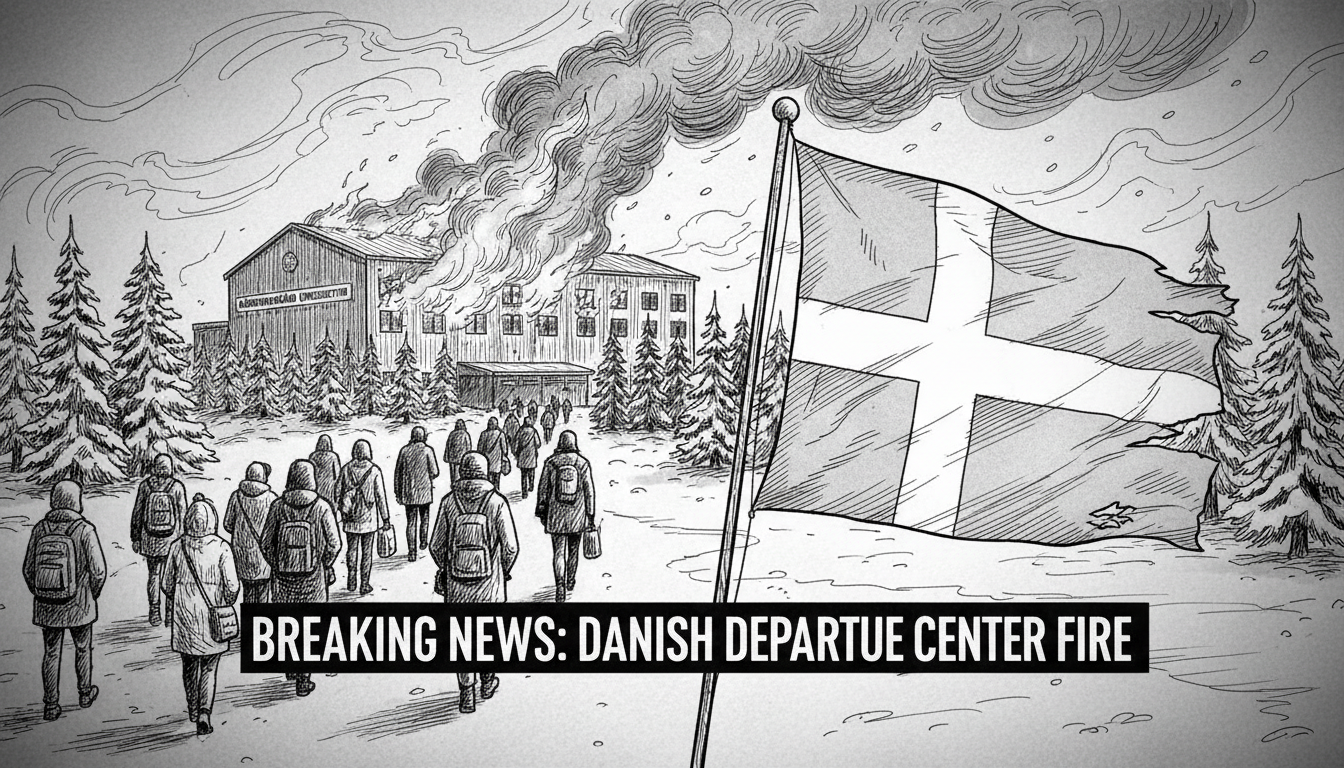
A major fire broke out at Kærshovedgård departure center near Ikast in central Denmark on Tuesday. Police received the emergency call at 11:12 AM local time. The blaze started in one of the facility's buildings and prompted immediate evacuation efforts.
Emergency services including fire departments, rescue teams, and police responded quickly to the incident. Authorities successfully evacuated all residents and staff from the affected area. No injuries were reported among either residents or employees at the facility.
Simon Stage, the police watch commander, confirmed the evacuation. He stated that the fire was contained to one building within the complex. The cause of the fire remains under investigation as of Tuesday afternoon.
Denmark's Prison and Probation Service, which operates the Kærshovedgård facility, announced they had brought the fire under control. The agency previously operated under the name Danish Prison Service. Officials confirmed they are arranging temporary housing for 10 to 15 residents displaced by the fire.
Kærshovedgård departure center houses approximately 235 people southeast of Ikast in Central Denmark Region. The facility accommodates rejected asylum seekers, foreign nationals convicted of crimes facing deportation, and individuals with tolerated stay status in Denmark.
This incident highlights the ongoing challenges in Denmark's immigration detention system. Departure centers like Kærshovedgård have faced criticism from human rights organizations over living conditions and legal procedures. The fire raises questions about safety protocols in facilities housing vulnerable populations.
Denmark maintains strict immigration policies that include departure centers for individuals without legal residence status. The country has pursued what some describe as a zero-asylum policy in recent years. This approach has drawn both domestic support and international criticism.
The timing of this fire comes amid ongoing debates about Denmark's immigration system. The government continues to face pressure from both sides of the political spectrum regarding its handling of migration issues. Temporary relocations following such incidents often strain local resources and create logistical challenges.
Authorities will need to conduct thorough safety inspections before residents can return to the affected building. The investigation into the fire's cause will likely examine electrical systems, potential human factors, and compliance with building safety standards. Such incidents typically prompt reviews of emergency protocols across similar facilities.
What does this mean for Denmark's immigration policy moving forward? The fire at Kærshovedgård may intensify discussions about the conditions in departure centers. It could lead to calls for improved safety measures and potentially influence policy decisions regarding facility management and resident welfare.