
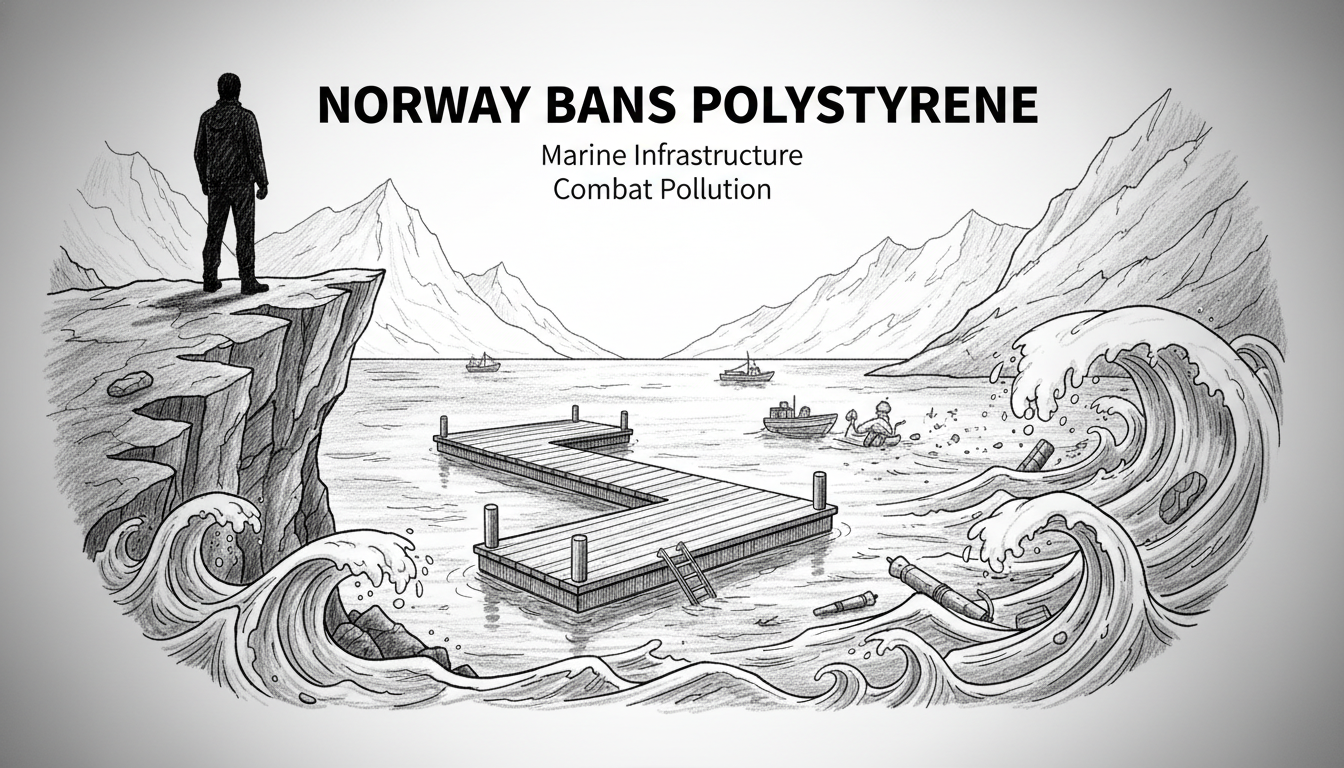
The Norwegian government will phase out expanded polystyrene in floating docks and buoys to address plastic pollution in fjords. Climate and Environment Minister Andreas Bjelland Eriksen announced the policy shift in a formal statement. He emphasized that polystyrene represents a major source of plastic contamination in natural environments. The material breaks down extremely slowly and may contain chemicals harmful to both animal and human health. This regulatory move targets one of the largest sources of polystyrene entering Norwegian marine ecosystems.
Floating docks and buoys throughout Norway's extensive coastline will require alternative flotation materials. The government aims to prevent further accumulation of plastic debris in vulnerable fjord systems. These protected marine environments serve as critical habitats for fish stocks and tourism destinations. The ban aligns with Norway's broader strategy to reduce marine plastic pollution by fifty percent within the next decade.
Norwegian authorities estimate that marine infrastructure contributes substantially to polystyrene pollution. The material's lightweight nature allows it to disperse widely across ocean surfaces. Currents carry fragmented particles throughout Arctic waters and fishing grounds. This creates ingestion risks for marine life and potential contamination of seafood supplies.
Norway's fishing and maritime industries will need to transition to alternative flotation technologies. Recycled plastic foam, closed-cell polyethylene, and air-filled systems represent potential substitutes. The government has not yet announced specific timelines for implementation or compliance deadlines. Industry representatives anticipate a phased approach to minimize operational disruptions.
This environmental regulation demonstrates Norway's continued focus on marine conservation despite its petroleum industry prominence. The country maintains dual commitments to both offshore energy production and ocean protection. Recent parliamentary debates have highlighted tensions between economic development and environmental stewardship in coastal management.
Local municipalities along popular fjords like Geirangerfjord and Sognefjord have welcomed the proposed ban. Tourism operators have reported increasing concerns from visitors about visible plastic pollution in these UNESCO World Heritage sites. The policy change addresses both ecological protection and Norway's international reputation for pristine natural landscapes.
The polystyrene prohibition represents another step in Norway's comprehensive plastic reduction strategy. Previous measures have targeted single-use plastics and microplastics in consumer products. This latest initiative specifically addresses industrial and maritime applications where polystyrene has been the standard material for decades.
International observers will monitor Norway's implementation of this marine infrastructure regulation. The country's approach could influence similar policies in other Nordic nations with extensive coastlines. Sweden and Finland face comparable challenges with plastic pollution in their archipelagos and Baltic Sea coastlines.