
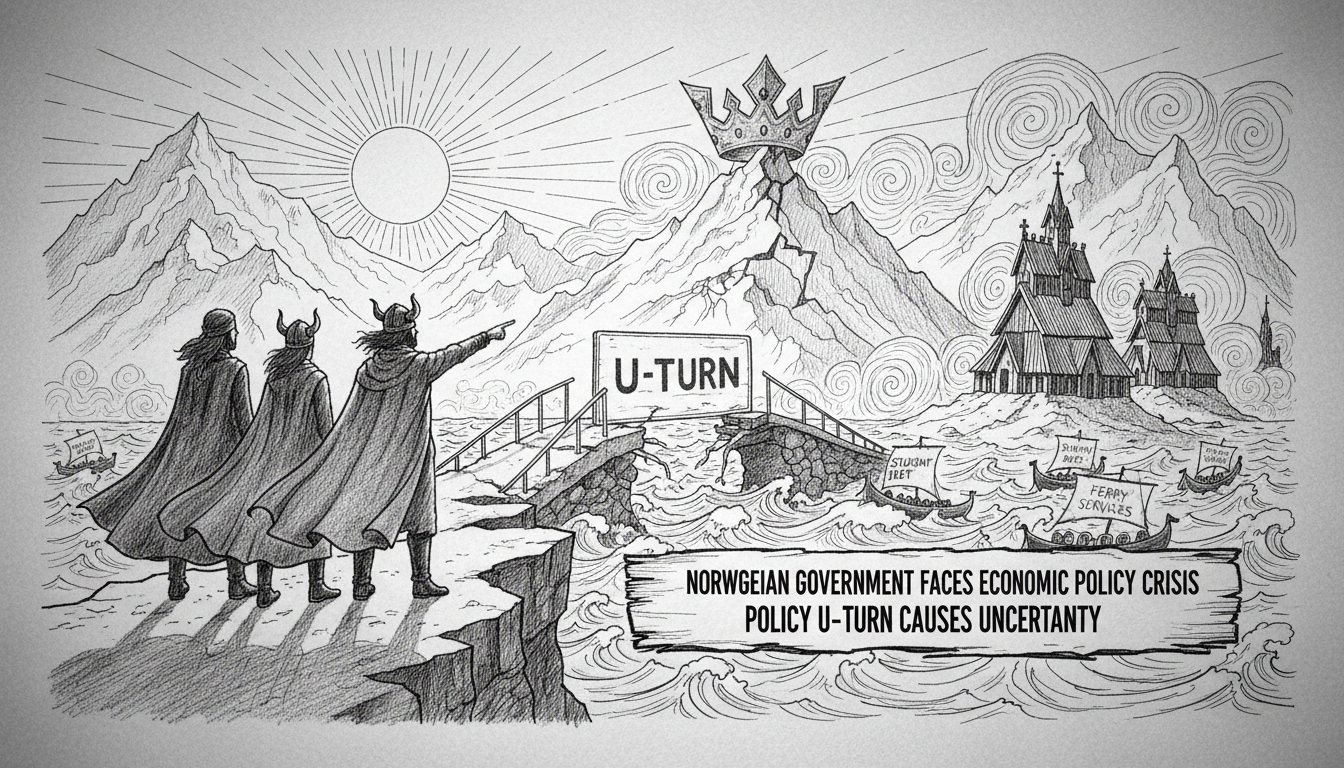
Norway's ruling Labor Party faces political turmoil after abruptly reversing key economic policies. The government hastily called a press conference Tuesday evening to announce it would abandon planned cuts to student debt programs and free ferry services.
Conservative Party finance spokesperson Nikolai Astrup described the situation as economic chaos playing out in public. He said the Labor Party promised stable governance but delivered disorder instead.
The proposed cuts had sparked anger among Labor Party mayors and drawn sharp criticism from both the opposition and the Center Party, which supports Prime Minister Jonas Går Støre's minority government.
Labor's own finance spokesperson Tuva Moflag acknowledged the seriousness of breaking campaign promises. She made the comments to reporters outside the parliamentary chamber.
This policy reversal comes as Norway's minority government struggles to maintain support from its coalition partners. The Center Party has traditionally represented rural communities that rely heavily on ferry services.
Why did the Norwegian government reverse its economic plans? The proposed cuts proved deeply unpopular with both political allies and local officials, creating unsustainable political pressure.
The situation highlights the challenges facing minority governments in Norway's consensus-driven political system. When key supporters object to policies, even carefully planned measures can quickly unravel.