
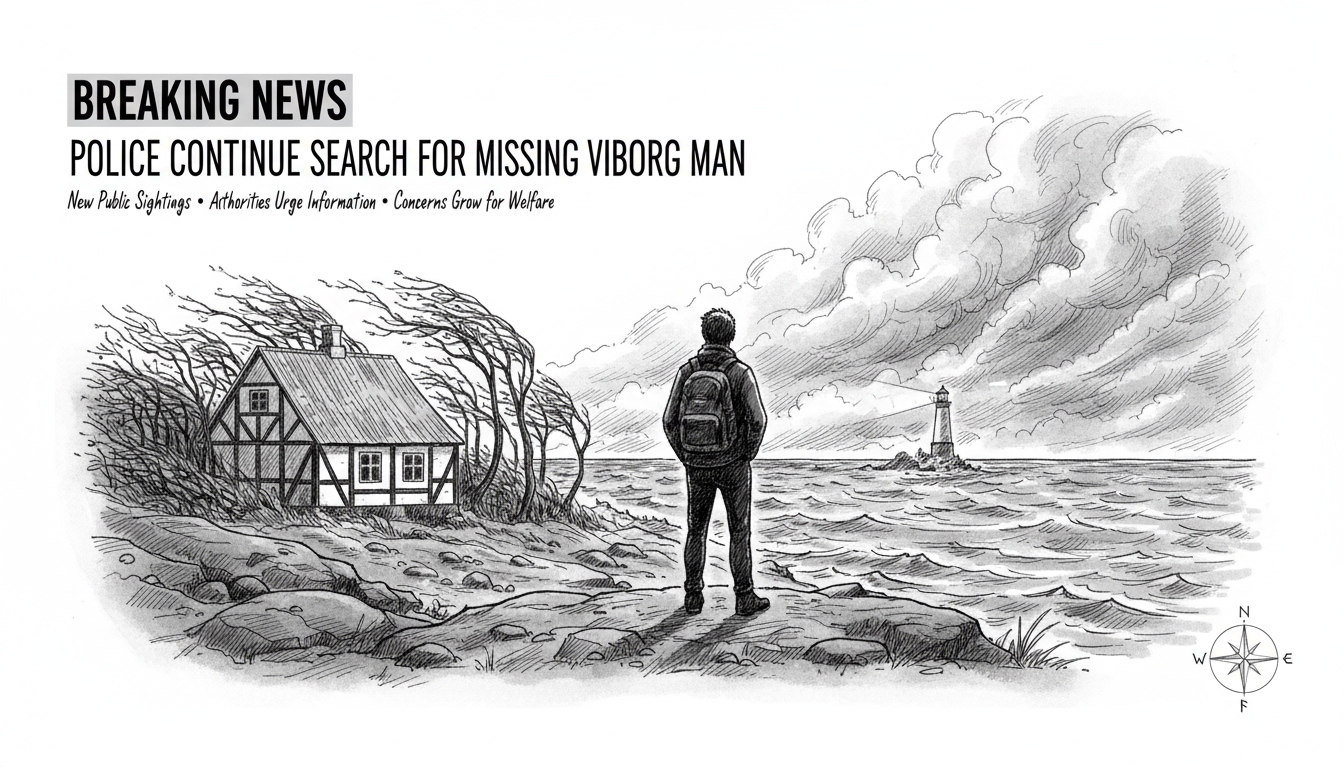
Danish authorities have entered the second day of searching for a 45-year-old man from Viborg. The man, identified only as Ole, left his home Sunday afternoon and has not been seen since. Police express serious concerns about his welfare.
Midt- and Vestjyllands Police launched their search operation on Monday. Initial efforts proved challenging due to limited information. Officers faced difficulties tracking Ole's movements because he left without his mobile phone. This prevented authorities from using digital location data in their search.
New hope emerged early Tuesday morning when police received multiple public sightings. Several residents reported seeing a man matching Ole's description in the Viborg area. The police department's watch commander expressed cautious optimism about these developments.
He stated that if these sightings are confirmed, there is strong reason to believe they will locate Ole safe and sound. The commander emphasized that public assistance remains crucial to the investigation. Police continue urging anyone with information to contact them immediately.
This situation highlights several important aspects of Danish society and emergency response. Denmark maintains one of Europe's most efficient missing persons response systems. The quick public engagement reflects the strong community awareness typical in Nordic countries. Local residents often actively participate in search efforts when someone disappears.
Viborg presents particular challenges for search operations. The central Jutland city combines urban areas with surrounding countryside and lakes. This diverse landscape requires comprehensive search strategies. Police typically deploy ground teams, canine units, and sometimes aerial support in such cases.
The case also demonstrates how Danish authorities balance privacy concerns with public safety. Police release sufficient information to aid identification while protecting the missing person's dignity. They typically withhold full names and specific addresses unless necessary for the search.
Missing persons cases in Denmark typically follow established protocols. Authorities activate search operations quickly when there are welfare concerns. The public response system relies heavily on community cooperation and media distribution of information.
Police stress that time remains critical in such investigations. Early public reports often prove decisive in locating missing individuals. The department maintains its appeal for anyone who might have seen Ole to come forward.
Danish missing persons statistics show most cases resolve positively within the first 48 hours. The continued search into the second day indicates particular concerns about this situation. Authorities have not specified what prompted their heightened worry about Ole's welfare.
The operation continues across Viborg and surrounding areas. Police are following all credible leads while maintaining hope for a positive outcome.