
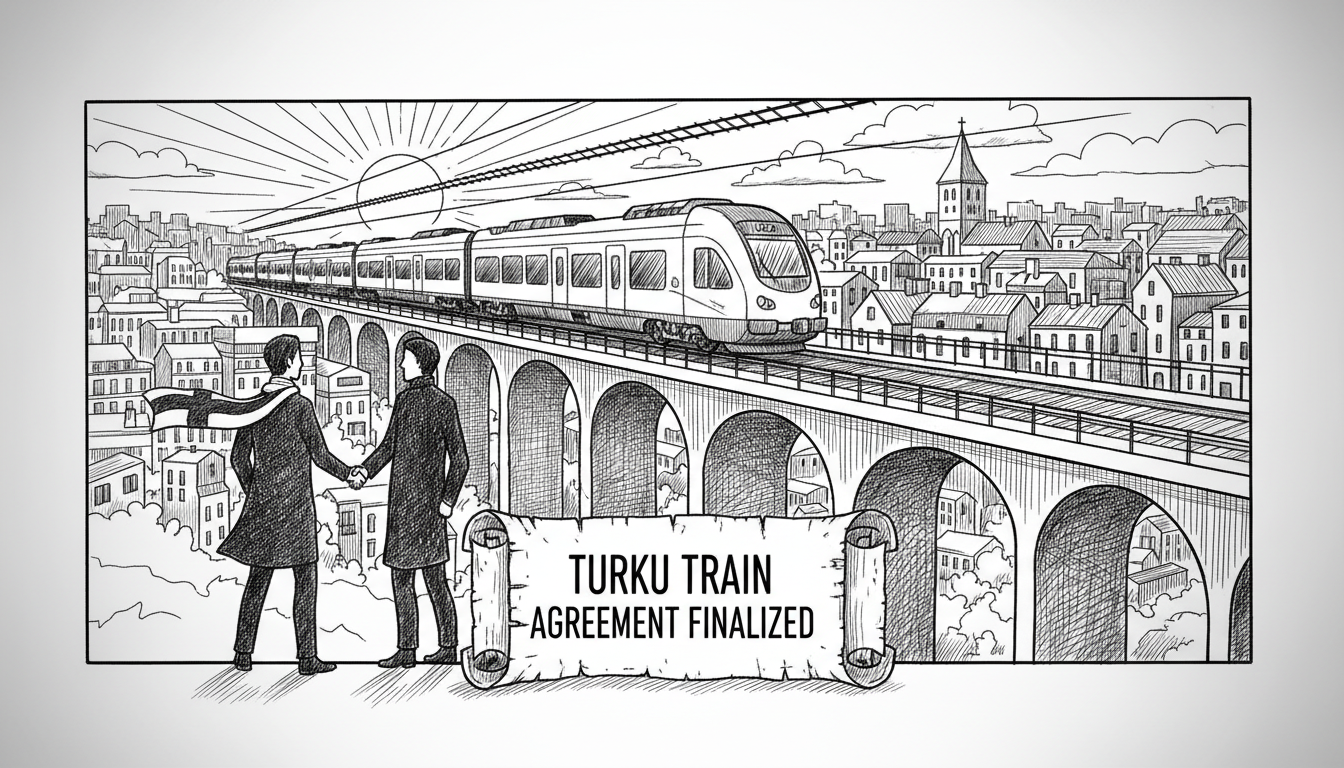
A shareholder agreement for the proposed hourly train service between Turku and Helsinki is close to completion. Negotiations have advanced significantly in recent days, with sources describing them as 'very far along'.
The agreement involves the Finnish government and six municipalities: Espoo, Turku, Salo, Lohja, Vihti, and Kirkkonummen. A decisive meeting is scheduled for Friday where parties hope to finalize the Western Rail Line project terms.
Why has this taken so long? The project faced internal government disagreements, particularly between the Coalition Party and Finns Party. Transport Minister Lulu Ranne has reportedly been reluctant to advance the rail initiative.
Financial questions also complicated negotiations. The first construction phase carries a 1.3 billion euro price tag. The state and municipalities would cover 800 million euros combined, with the remaining 500 million financed through loans.
Despite previous missed deadlines, officials now express confidence. One source noted only technical details remain unresolved.
The timeline remains tight. Municipal councils need to review and approve the agreement by November for the current schedule to hold. This target appears challenging but achievable according to insiders.
The project will proceed in two phases. Phase one connects Espoo-Vihti-Lohja, Salo-Hajala, and Nunna-Kupittaa sections. Phase two completes the Lohja-Salo and Hajala-Nunna links.
Though called the 'Turku hour train,' the fastest travel time after all construction would be 78 minutes. This represents a substantial improvement over current rail connections between Finland's former capital and its largest city.
The government coalition agreed on state funding in their program, but implementation has revealed persistent divisions. Municipalities reached consensus on financing arrangements earlier this autumn.
This rail project represents one of Finland's largest infrastructure investments in recent years. Its completion would significantly improve connectivity between major urban centers in southern Finland.