
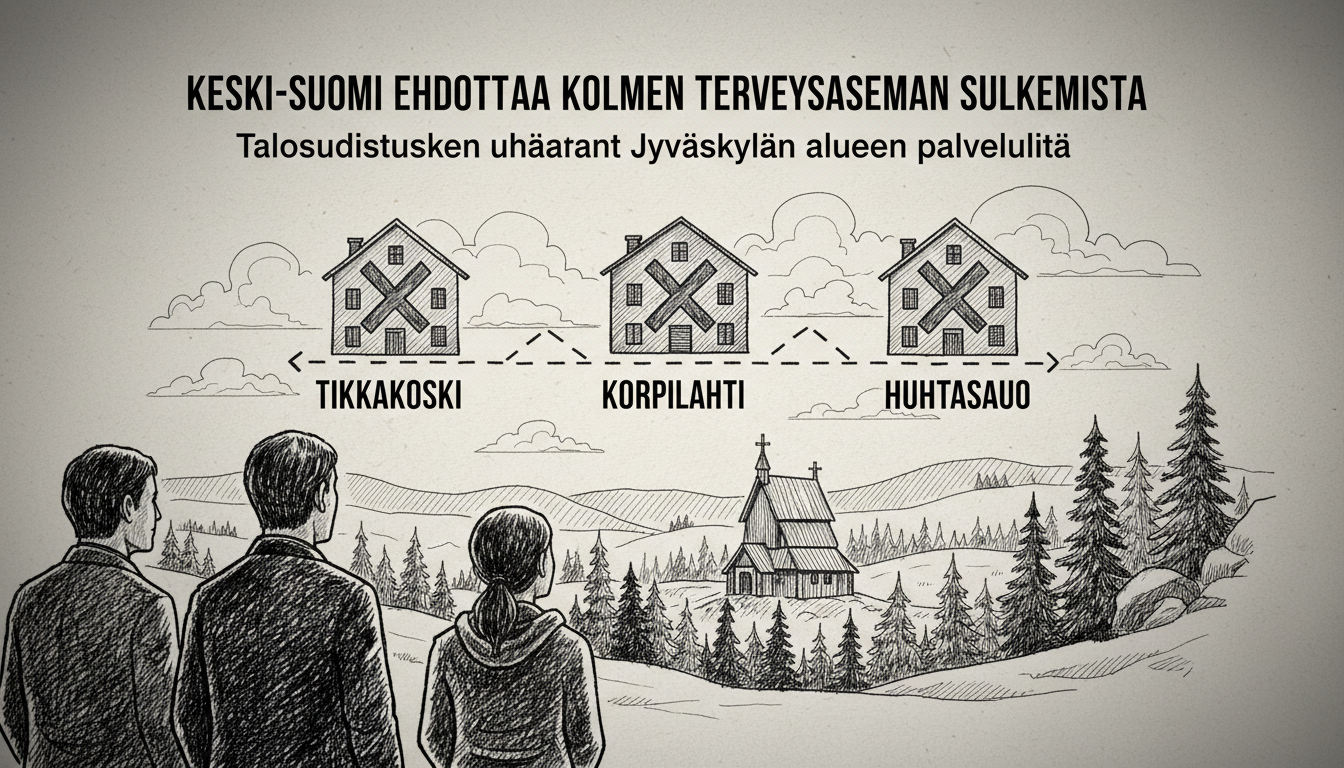
The Central Finland regional government has submitted its budget proposal for the upcoming fiscal year alongside a comprehensive service strategy and network plan. This proposal includes the controversial closure of three healthcare stations across the Jyväskylä area. The affected facilities include Tikkakoski, Korpilahti, and Huhtasuo health stations, with additional service points in Multia and Luhanka also facing elimination.
The regional council presented these decisions on November 26, following earlier recommendations from welfare area leadership. These closures represent the latest development in Finland's ongoing healthcare region reform, which began implementation earlier this decade. The reform transferred healthcare responsibilities from municipalities to larger welfare regions, aiming to streamline services and control costs.
Central Finland's healthcare system faces particular challenges due to its dispersed population and aging demographic profile. Regional officials argue that consolidating services into fewer locations will improve efficiency and maintain quality standards. They point to changing patient patterns and the increasing role of digital healthcare services as factors reducing the need for physical locations.
The proposed closures have sparked concern among local residents, especially elderly populations and those without reliable transportation. Rural communities often depend on local health stations for basic medical services and preventive care. Municipal leaders in affected areas have expressed worries about reduced access to healthcare and longer travel times for residents.
Finland's welfare region model represents one of Europe's most ambitious healthcare restructuring efforts. The system aims to address regional disparities in healthcare access while controlling rising costs. Similar service consolidations have occurred in other Finnish regions, including Northern Ostrobothnia and Southwest Finland, though each region implements changes according to local needs.
The European Union's healthcare accessibility standards influence Finnish regional planning, though member states maintain primary responsibility for healthcare organization. Finland's approach combines centralized planning with regional implementation, creating a hybrid model that other EU nations watch closely. The country faces the same demographic pressures affecting healthcare systems across Northern Europe.
Local politicians must now balance budgetary constraints against constituent needs during upcoming council debates. The final decision rests with the regional council, which will vote on the proposal in the coming weeks. Previous healthcare station closures in Finland have typically proceeded despite local opposition, though sometimes with modified implementation timelines.
These changes reflect broader trends in Nordic healthcare, where countries struggle to maintain comprehensive services amid rising costs and workforce challenges. Finland's approach emphasizes regional coordination and digital solutions, similar to developments in Sweden and Norway. The long-term success of these reforms will depend on whether they actually improve healthcare outcomes while maintaining accessibility.
Healthcare professionals' unions have expressed concern about the impact on both patients and staff. They question whether the system has adequate resources to handle increased patient loads at remaining facilities. The Finnish Medical Association has repeatedly warned about physician shortages in many regions, complicating service reorganizations.
International observers should watch these developments as indicators of how Nordic welfare states adapt to twenty-first century challenges. The balance between efficiency and accessibility remains delicate, particularly in countries with significant rural populations. Finland's experiment with regional healthcare governance offers lessons for other nations considering similar reforms.