
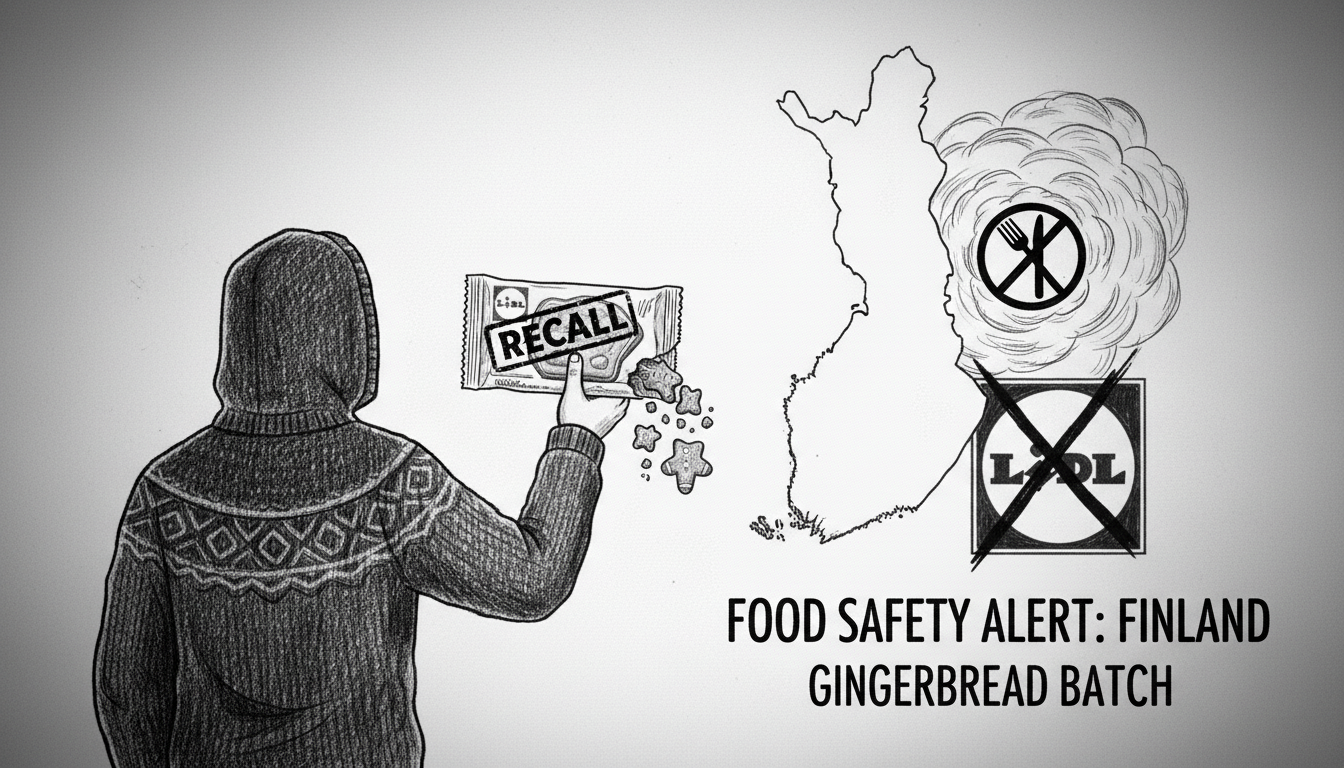
Finland's Lidl stores have issued a product recall for a specific batch of Jouluaitan Ohut Piparkakku (thin gingerbread) due to potential contamination. The recall, announced by the discount supermarket chain, affects packages with a 'best before' date of 14.10.2026. The company stated the batch may contain small pieces of red plastic, prompting the voluntary removal from shelves.
Customers who have purchased the 300-gram packages with the specified date are advised not to consume the product. Lidl Finland is offering a full refund upon return of the gingerbread to any of its stores nationwide. The retailer emphasized that products with other best-before dates are safe for consumption and remain on sale.
This incident highlights the constant vigilance required in modern food supply chains. While recalls are a standard safety procedure, each one triggers a review of production and quality control protocols.
A Standard Procedure with Serious Intent
Product recalls in the food sector, while disruptive, are a critical component of consumer protection. They are typically initiated by the retailer or manufacturer, often in consultation with national food safety authorities. In Finland, the Finnish Food Authority (Ruokavirasto) oversees food safety and can mandate recalls, though many are voluntary actions by companies aiming to mitigate risk swiftly.
"The primary goal is always to prevent any potential harm to the consumer," explains a food safety consultant familiar with Nordic retail operations. "A swift, transparent recall, even for a potential issue, is a sign of a responsible supply chain. It's far better to err on the side of caution."
The recall notice for the gingerbread was clear and direct, identifying the exact product, batch date, and the nature of the hazard—foreign material contamination. This specificity allows consumers to check their purchases easily without causing unnecessary alarm about the entire product line.
Tracing the Source and Ensuring Compliance
The discovery of foreign material, like red plastic, usually points to a breakdown in the manufacturing or packaging process. Potential sources range from a piece of machinery casing to packaging material or a component from a production line. Identifying the exact point of failure requires a traceability investigation, tracking the affected batch back through the production and ingredient supply chain.
For a retailer like Lidl, which operates with a vast network of suppliers across Europe and beyond, this traceability is paramount. The company's own quality assurance teams will work with the gingerbread manufacturer to conduct a root cause analysis. This process involves examining production records, equipment maintenance logs, and supplier certificates.
Finnish food safety regulations align with stringent European Union standards. Companies must have Hazard Analysis and Critical Control Point (HACCP) plans in place. These plans are designed to identify, evaluate, and control food safety hazards. An incident like this triggers a review of those controls at the manufacturer's facility.
Consumer Response and Retailer Responsibility
The effectiveness of any recall hinges on consumer awareness and action. Notices are published on company websites, through press releases, and often via in-store signage. However, reaching every purchaser of a low-cost, seasonal item like gingerbread is challenging.
"Consumers should make a habit of checking recall notices, especially for products they buy in bulk or have stored," advises the food safety expert. "Returning the product is important not just for the refund, but to help the company and authorities quantify the issue and remove all affected items from circulation."
For Lidl, managing the recall efficiently is both a legal obligation and a reputational necessity. The cost of refunding customers and pulling stock is minor compared to the damage a food safety scandal could inflict on a retailer's brand. A transparent and customer-friendly recall process can, paradoxically, build trust by demonstrating a commitment to safety over short-term profit.
The process at the store level is straightforward: customers return the product, and staff process a refund. The returned goods are then securely segregated and logged for return to the distributor or destruction, ensuring they cannot re-enter the market.
The Bigger Picture of Food Safety in Finland
Isolated recalls are not indicative of systemic failure. In fact, Finland consistently ranks high in global food security and safety indexes. The Finnish Food Authority operates a robust monitoring system, and Finnish consumers generally have high confidence in the safety of their food.
These incidents serve as real-world tests of the system's responsiveness. The gingerbread recall appears to follow the standard protocol: identification, public communication, consumer redress, and investigation. There is no current indication of widespread illness or injury, which suggests the precautionary measure was caught early in the distribution cycle.
Seasonal products, often produced in high volumes under tight deadlines, can sometimes face heightened risk. This does not excuse contamination but provides context for where extra vigilance is needed in production scheduling and quality checks.
Looking Ahead: Prevention and Transparency
The final step for Lidl and its supplier will be corrective action. Once the source of the plastic is identified, the manufacturer must implement measures to prevent recurrence. This could involve repairing equipment, changing a supplier of packaging components, or modifying a step in the production process. These corrective actions will be subject to verification by the company's own auditors and potentially by food safety inspectors.
Transparency about the outcome, while not always legally required, is good practice. Some companies choose to publicly share the root cause of a recall once the investigation is complete, which can close the loop for concerned consumers.
For now, the message to Finnish consumers is clear. Check your pantry for the specific Jouluaitan gingerbread with the October 2026 date. If you have it, return it. For the food industry, it's another case study in the non-negotiable priority of safety, where vigilance is the price of consumer trust in every packet on every shelf. Will this incident lead to broader changes in quality control for imported seasonal baked goods, or is it simply a reminder that no system is ever perfectly foolproof?