
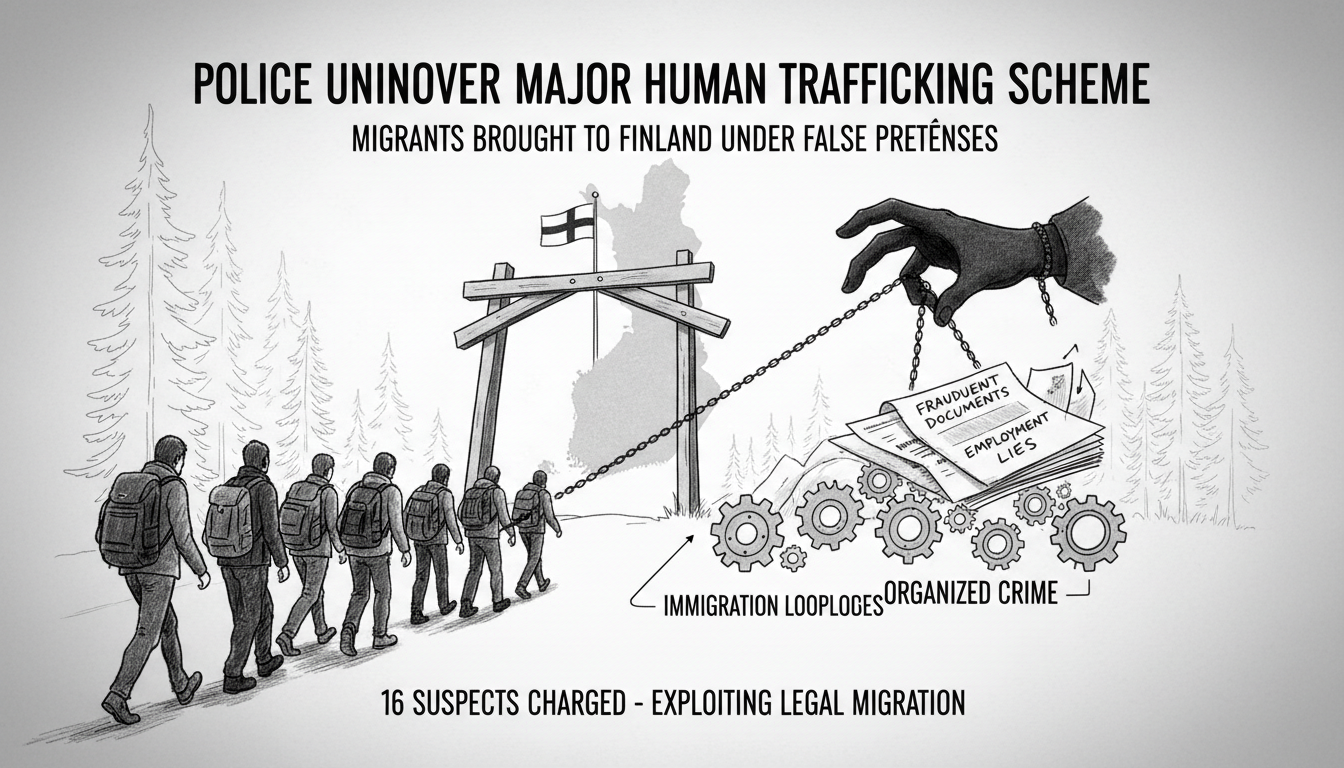
Finnish authorities have exposed a sophisticated human trafficking operation that brought migrants to Finland using fraudulent employment documents. Helsinki police revealed they have identified a widespread scheme involving illegal immigration facilitation.
Sixteen individuals now face suspicions of aggravated arrangement of illegal immigration and related crimes. The suspects include Estonian and Bangladeshi nationals who allegedly brought 20 people to Finland under false pretenses.
Police investigators describe a coordinated operation where suspects used Estonian-managed Finnish companies to sponsor migrants. The scheme operated from 2022 until police made arrests in June 2025.
The criminal network submitted applications for nearly 50 individuals, but authorities rejected most requests. Only 20 people successfully entered Finland through this arrangement.
Each migrant paid thousands of euros to the organizers, according to police suspicions. Investigators found that none of the individuals actually worked for the companies that sponsored their residence permits.
This case highlights ongoing challenges in European immigration systems. Criminal networks increasingly exploit legal loopholes to facilitate illegal entry. The involvement of multiple nationalities demonstrates how trafficking operations span borders.
Finland's National Trafficking in Human Beings Investigation Unit completed the extensive investigation. The case primarily affected Bangladeshi nationals seeking entry to Finland.
Police conducted nine arrests during the operation, with five suspects held in pretrial detention. Authorities questioned some suspects with assistance from Estonian police.
Many suspects operating in countries of origin remain at large. Investigators could not locate them during the preliminary investigation.
The suspects used six different companies in their scheme. Four companies were directly controlled by suspects or their associates.
All suspects face allegations of posing falsely as employers for residence permit applicants. Additional charges include document forgery and providing false information to the Finnish Immigration Service.
This case represents a growing trend across Nordic countries. Criminal networks target vulnerable migrants seeking better opportunities. They exploit legal immigration channels for substantial profit.
Finnish authorities continue strengthening border controls and verification processes. Recent years have seen increased coordination between Nordic law enforcement agencies to combat human trafficking.
The investigation now moves to prosecutors who will determine formal charges. If convicted, suspects could face substantial prison sentences under Finnish law.
Immigration officials have tightened verification procedures for employer-sponsored applications. They now conduct more thorough background checks on companies seeking to hire foreign workers.