
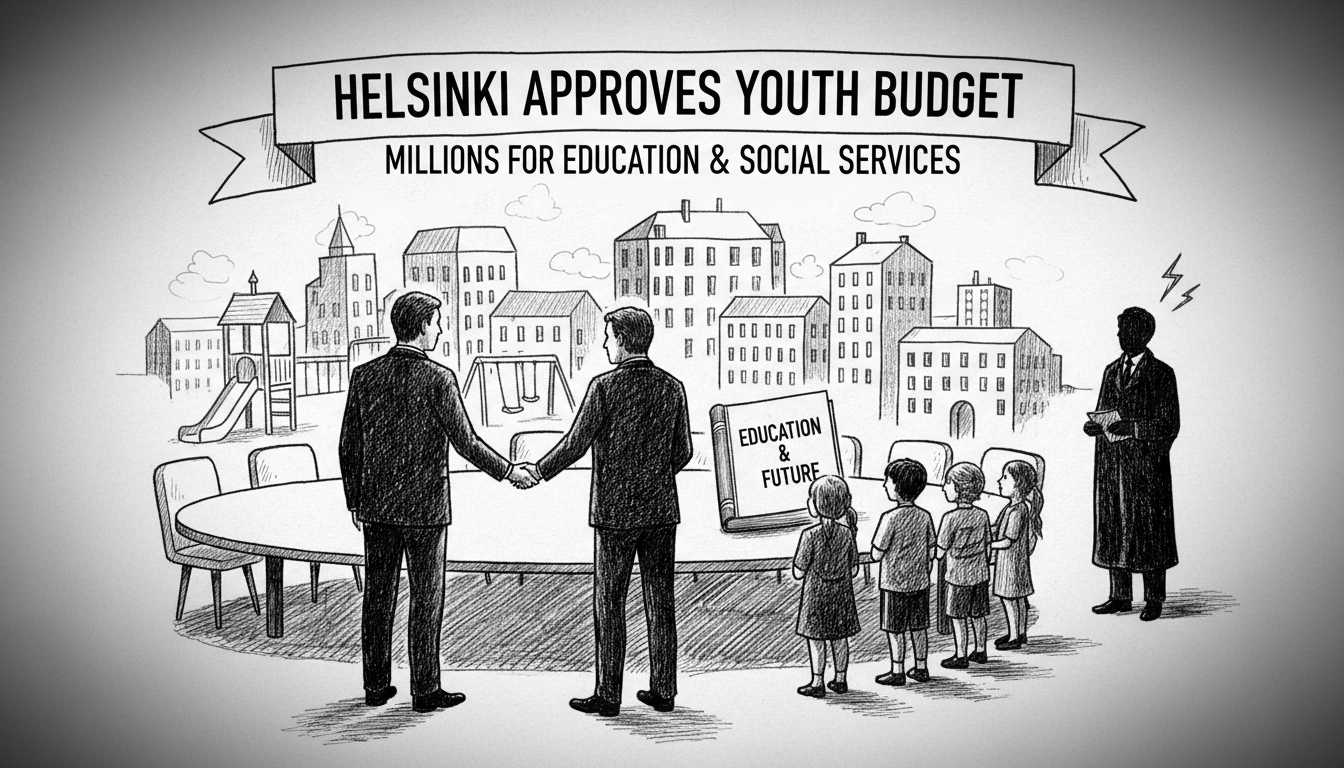
Helsinki City Council finalized its Third Quarter budget with near-unanimous support after extensive deliberations. The comprehensive spending plan directs substantial resources toward education, youth services, and drug crisis intervention. Mayor Daniel Sazonov of the National Coalition Party emphasized that children and young people received top priority in this budget cycle.
The council allocated two million euros specifically for addressing the synthetic drug crisis involving alpha-PVP. This funding will enhance addiction treatment services and prevention programs throughout the city. Additional resources were approved for reducing elementary school class sizes and strengthening early childhood education substitute resources.
Swimming instruction expansion and summer job vouchers for young people also received budget increases. The education and culture sectors were notably exempted from productivity targets that tightened for other municipal operations. Elderly residents will benefit from new anti-slip devices for shoes through dedicated funding.
Several popular initiatives gained approval without requiring extra funding, including a new dog park in Kaisaniemi Park. However, many council member proposals failed to secure support, such as traffic calming measures for Puistokatu street and sports facility fee reductions. The repeated request for city-funded outdoor clothing for early childhood educators remained unfulfilled.
Helsinki's external operational expenditures will reach 3.46 billion euros next year. Following national healthcare reform, social and health services funding primarily comes from state sources, totaling 3.28 billion euros. The city plans 1.06 billion euros in investments while covering a 620 million euro deficit through municipal reserves and additional borrowing.
The budget's annual surplus for investments and loan repayments stands at 460 million euros. Only the Finns Party opposed the final budget, with council member Mika Merano criticizing what he called ideological excess in the spending plan. Their alternative budget proposal received no support from other political groups.
This budget reflects Helsinki's ongoing commitment to social welfare amid economic constraints. The city maintains robust investment in future infrastructure while addressing immediate social challenges. The emphasis on youth services aligns with broader Nordic priorities in municipal governance.
Political observers note the budget's passage demonstrates continued consensus in Helsinki politics despite national-level tensions. The city's financial planning maintains Helsinki's position as a well-funded capital with comprehensive public services. Future budgets will need to balance these social priorities with evolving economic realities.