
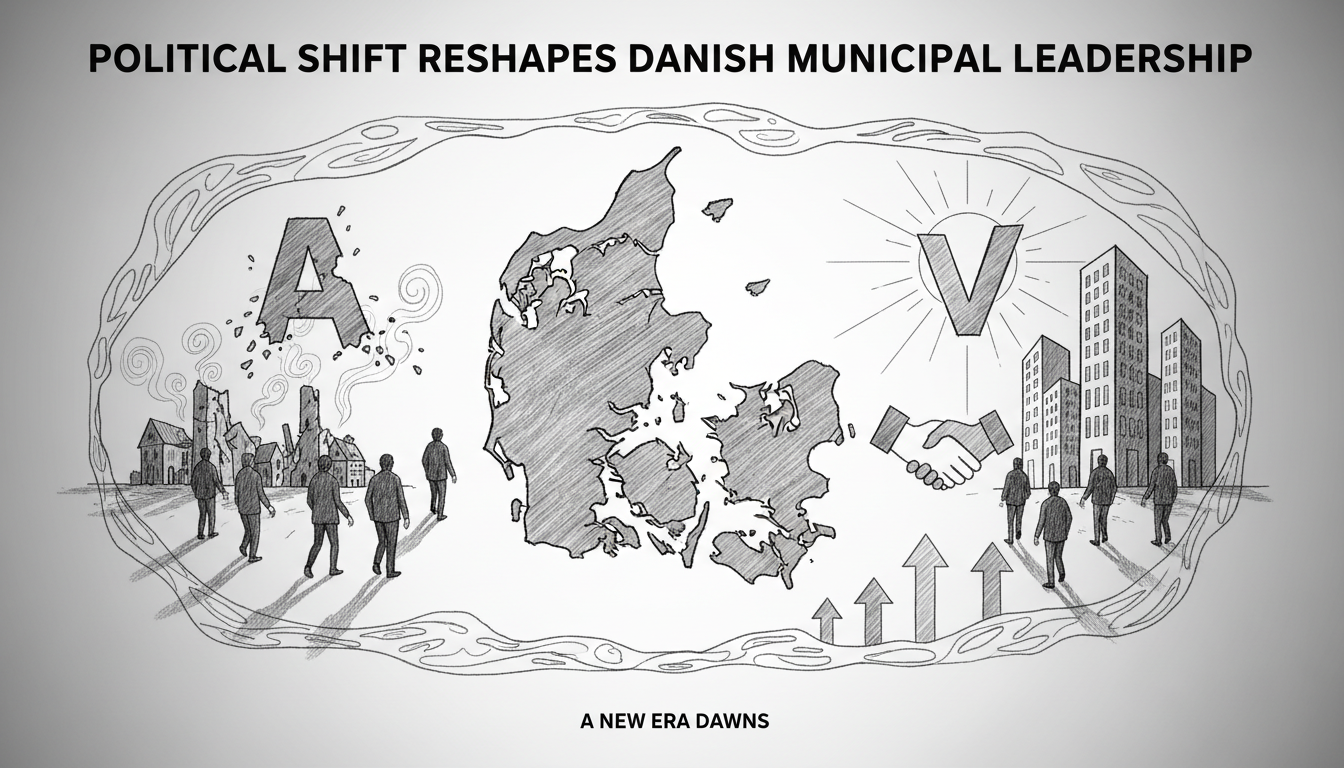
Denmark has reached political agreements for all 98 municipal mayor positions following recent local elections. The negotiations concluded with a final agreement in Slagelse, where Henrik Brodersen from the Danish People's Party secured the mayor position.
These agreements remain non-binding until formal confirmation during constitutional meetings scheduled for December. Political parties have historically abandoned preliminary agreements to support different candidates.
A dramatic power shift occurred in Aalborg, where Social Democrats lost the mayor position after a century of control. Despite initial post-election agreements supporting incumbent Lasse Frimand Jensen, a new majority coalition formed around the Radical Party's Jes Lunde.
Copenhagen witnessed similar historic changes as Social Democrats lost power after more than 100 years. A broad coalition selected SF's Sisse Marie Welling as the new mayor.
The political transformation extends beyond major cities. Social Democrats lost control in Næstved, Gladsaxe, Frederikshavn, Køge, and Lolland Municipality.
Election results reveal a dramatic reversal from the 2021 municipal elections. Social Democrats previously held 44 mayor positions compared to Venstre's 34. Following Tuesday's vote, Social Democrats will lead only 25 municipalities while Venstre secured 40 mayor positions.
This redistribution of power appears particularly striking because Social Democrats remain the largest party nationally. They secured 23.2 percent of votes and elected the most council members nationwide. Venstre received 17.9 percent of votes.
Both governing parties lost support compared to the previous municipal election. The Moderates, the third government party, participated in municipal elections for the first time. They gained 1.3 percent of votes and will have six council members.
The Conservative Party exceeded expectations by securing 21 mayor positions, surpassing their goal of maintaining 14 positions.
The Danish People's Party gained their first mayor position in this election cycle in Slagelse. Liberal Alliance and the Radical Party each secured two mayor positions. The Socialist People's Party will lead five municipalities.
On Lolland, the mayor position went to Marie-Louise Brehm Nielsen from the local list Din Stemme.
This political realignment represents one of the most substantial shifts in Danish local governance in recent decades. The changes suggest voters sought alternative leadership approaches at the municipal level despite maintaining Social Democratic preferences in national representation. The new political landscape will likely influence local service delivery and policy priorities across Danish communities.