
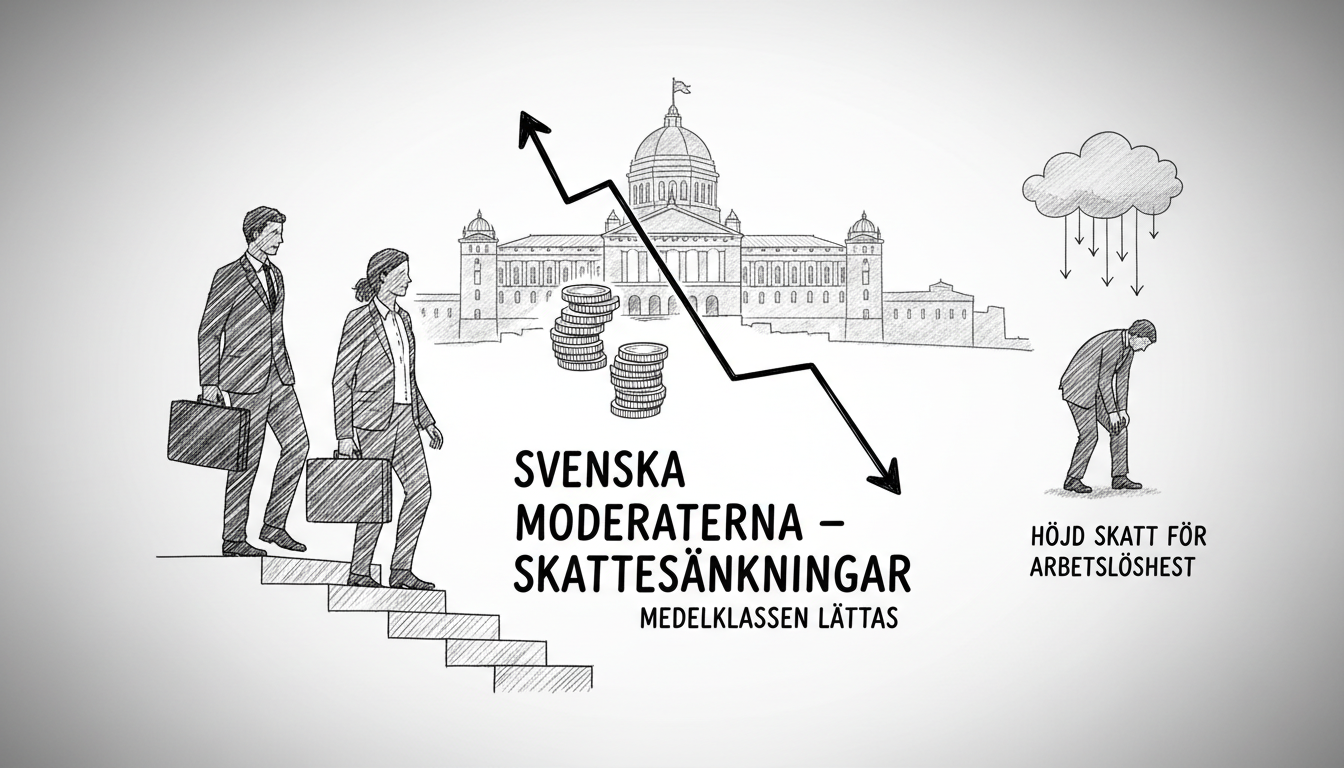
Sweden's Moderate Party wants to change how national income tax works. They propose replacing the current system with gradual tax brackets.
Currently, Swedes earning over 53,600 SEK monthly pay a 20% national tax on income above that threshold. The Moderates call this a "tax wall" that discourages career advancement.
Financial Markets Minister Niklas Wykman explained the reasoning. "Many people hesitate to take that management position or extra weekend shift when they know much will disappear in taxes," he said in a statement.
Wykman said it's too early to specify exact percentages for different income levels. But he confirmed broad professional groups would see tax reductions.
"This could affect civil engineers, specialist nurses and many other common salary groups," he noted.
The 20% national income tax would remain for those with particularly high incomes.
This change forms part of what the party calls a "job deduction" initiative. It's a key proposal at their party conference in Västerås.
Wykman described the reform as the biggest tax system change since the 1990s. It builds on the party's existing job tax deduction policies.
MP Oliver Rosengren also worked on the proposal. He emphasized the new system would be simpler and clearer while increasing work incentives.
"We have a complicated tax system," Rosengren said. "Our party always stands on hard-working people's side, so taxes on work need to come down further."
The new model also means those currently receiving unemployment benefits would face higher taxes than today.
"It's true that the difference between working and not working will increase with this reform," Rosengren confirmed.
He explained this would happen through both lower work taxes and the removal of basic deductions from unemployment benefits.
Rosengsen acknowledged he would personally benefit from the tax cut as an MP, though the exact reduction remains unclear.
"I think it's good when they lower taxes on work," he said. "Both when they do it for me and when they do it for everyone else."
The proposal represents a classic center-right approach to economic policy, betting that tax cuts will stimulate work participation despite potentially increasing inequality between employed and unemployed Swedes.