
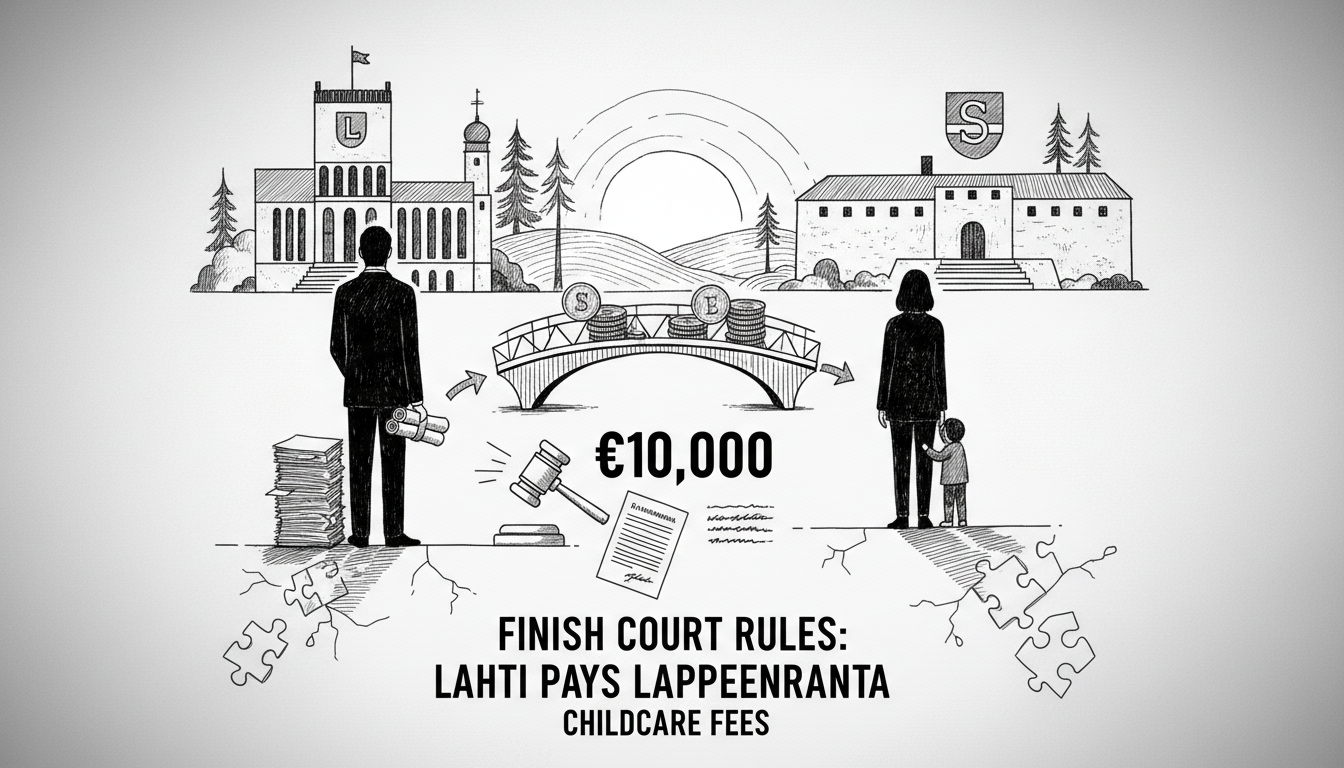
A recent administrative court ruling has clarified municipal financial responsibilities for childcare costs across Finnish regions. The decision forces the city of Lahti to pay nearly €10,000 in outstanding early childhood education fees to Lappeenranta municipality. This case highlights legal gaps in Finland's welfare area system that emerged during the social and healthcare reform implementation.
The dispute centered on childcare costs for children from Lahti who received temporary care placements in Lappeenranta during the previous year. Under Finland's revised Early Childhood Education Act, the home municipality bears responsibility for these expenses. However, the specific legal clause establishing this financial obligation only took effect this year, creating confusion between municipalities.
The Itä-Suomen hallinto-oikeus (Eastern Finland Administrative Court) resolved the disagreement between Päijät-Häme welfare district and Lahti city authorities. Their ruling establishes important precedent for similar inter-municipal financial disputes across Finland's welfare areas. This decision comes as Finland continues implementing its massive social and healthcare reform that created 21 new welfare regions.
Municipal finance directors across Finland will closely study this ruling's implications. The case exposes transitional challenges in Finland's decentralized welfare model where municipalities and welfare areas share responsibilities. Many local governments face similar ambiguities about financial obligations for residents receiving services outside their home municipalities.
Finnish Parliament Eduskunta members have debated these jurisdictional gaps extensively. The legislative timing mismatch between welfare reform implementation and supporting regulations created this specific situation. Government officials now face pressure to clarify overlapping responsibilities between municipalities and welfare districts.
This ruling directly impacts Finnish families with children in temporary care arrangements. The decision provides certainty that home municipalities must cover early education costs regardless of where children receive temporary placement. The case also demonstrates how Finnish courts are resolving practical implementation issues emerging from the country's ongoing social services restructuring.
What does this mean for Finland's welfare system development? The judgment reinforces municipal financial responsibility principles while exposing legislative coordination problems. Finnish policymakers must address these transitional gaps as the country continues refining its welfare area operations. Similar disputes will likely emerge until all legislation aligns properly with the reformed system architecture.
International observers can learn from Finland's approach to decentralizing social services. The country maintains strong municipal autonomy while building regional welfare capacity. This case shows how legal systems provide necessary corrections during major policy transitions. The ruling strengthens financial predictability for families and municipalities navigating Finland's evolving welfare landscape.