
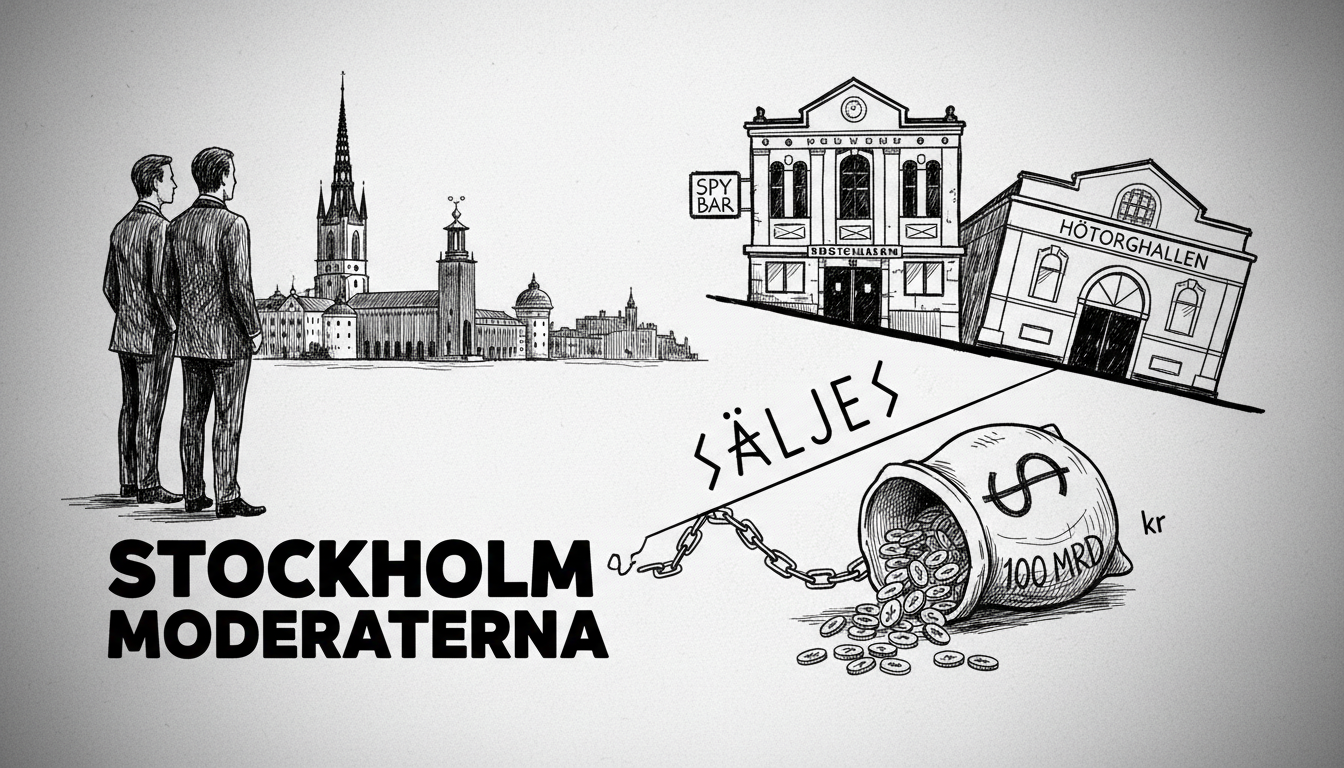
Stockholm's political opposition wants the city to sell valuable properties to address growing debt. The Moderate Party specifically targets Spy Bar and Hötorgshallen market hall as non-essential assets.
Opposition councilor Christofer Fjellner from the Moderates argues the city should not operate a nightclub. He questions why municipal government needs to run such establishments when facing financial pressure.
Stockholm's municipal debt approaches 100 billion kronor. This substantial financial burden prompts calls for asset sales. The Moderate Party identifies several properties they consider non-strategic for city operations.
Properties under discussion include the Älvsjö exhibition center hotel, Hötorgshallen market hall, and the building housing Spy Bar. All represent prime real estate in central Stockholm locations.
Fjellner states the obvious financial reality. When debt nears 100 billion kronor, cities must consider selling assets. He emphasizes that a municipal nightclub falls outside core city services.
Spy Bar occupies a beautiful building in Stockholm's upscale Östermalm district. The Moderate Party argues the property could serve better purposes under private ownership. They see no compelling reason for city government to maintain ownership.
Hötorgshallen represents another controversial target. This historic market hall in central Stockholm has served residents for decades. Its potential sale would mark a significant shift in municipal property strategy.
The political debate reflects broader tensions in Swedish municipal governance. Center-right parties typically advocate for reduced public sector involvement in commercial activities. Left-green coalitions often prioritize public ownership of strategic assets.
Stockholm's real estate portfolio has become a political battleground. The Moderate Party criticizes the current left-green administration for allowing debt to grow. They propose property sales as a straightforward solution.
Municipal ownership of entertainment venues raises legitimate questions about government's proper role. Should cities operate bars and nightclubs, or focus on traditional services like schools and infrastructure?
The proposed sales would generate immediate revenue but reduce long-term municipal assets. This trade-off requires careful consideration of both short-term budget needs and long-term city planning.
International readers might find municipal nightclub ownership unusual. In Sweden, however, municipal companies often operate across various sectors. This approach reflects the country's tradition of strong local government involvement in community life.
The debate goes beyond simple budget arithmetic. It touches on fundamental questions about what services cities should provide and what assets they should maintain for public benefit.
What happens next depends on political negotiations and public reaction. The current left-green coalition would need to support any major asset sales, making these proposals unlikely to proceed without broader political agreement.