
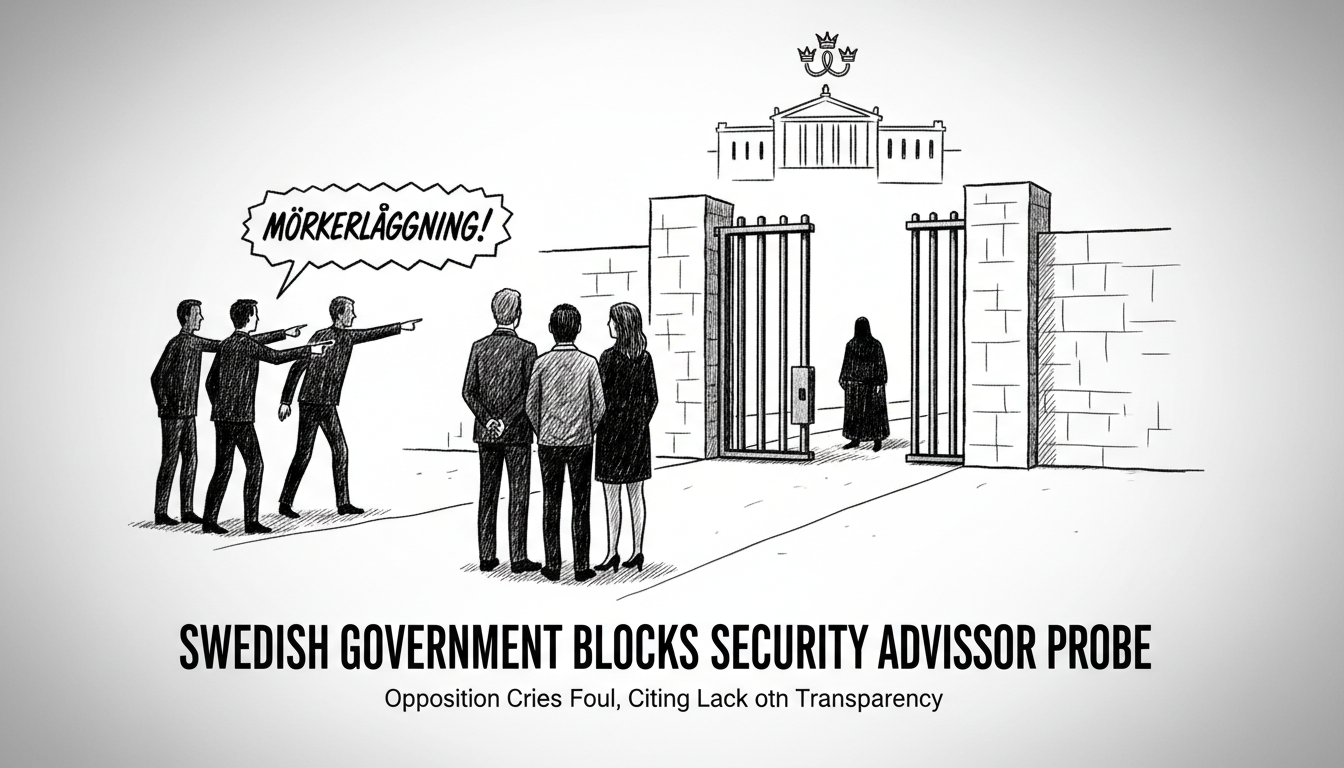
Sweden's parliament faces a political battle over investigating the Landerholm affair. The opposition Social Democrats want to resume the probe into former national security advisor Henrik Landerholm. The ruling coalition parties refuse to allow the investigation to continue. They cite an ongoing legal process as their reason for blocking the inquiry.
The Constitutional Committee previously examined the case last spring. The investigation paused when prosecutors charged Landerholm with negligent handling of classified information. A district court acquitted Landerholm, but the case has been appealed. The court of appeal will likely not hear the case until after next year's election.
Social Democratic member Jennie Nilsson called the government's position remarkable. She suggested the ruling coalition wants to protect Prime Minister Ulf Kristersson from scrutiny. The Social Democrats want parliamentary officials to gather materials for the investigation. They believe the Constitutional Committee should examine the prime minister's actions in the matter.
The Constitutional Committee holds ministers accountable for their official conduct. This parliamentary body investigates how government members perform their duties. The current dispute centers on whether this oversight should continue during legal proceedings.
Henrik Landerholm served as Sweden's national security advisor until 2022. The position involves coordinating security policy across government agencies. National security advisors work closely with the prime minister's office on classified matters.
The case raises questions about political accountability in Sweden's parliamentary system. Sweden maintains strong traditions of government transparency and ministerial responsibility. The current conflict tests these principles during a sensitive legal process.
Political observers note the timing creates challenges for all parties. The ruling coalition faces accusations of protecting their leader from legitimate oversight. The opposition risks appearing overly aggressive in pursuing a case before courts complete their work.
The appeal court's schedule means the legal process will extend beyond the next election. This timing creates a substantial gap in parliamentary oversight if the investigation remains paused. Voters may never learn what the Constitutional Committee might discover before they cast ballots.
Sweden's political system relies on strong parliamentary committees to check executive power. The Constitutional Committee traditionally operates with cross-party cooperation. The current partisan divide suggests deteriorating consensus on oversight matters.
The case involves handling of classified information, which always draws public concern. Citizens expect careful treatment of state secrets by their highest officials. Any suggestion of negligence at senior levels naturally attracts scrutiny.
This situation presents a genuine dilemma about balancing legal processes and political accountability. Both sides can claim legitimate concerns about proper procedure. The resolution may set important precedents for future cases involving simultaneous legal and parliamentary processes.
The coming weeks will show whether parties can find compromise or if the investigation remains stalled. The outcome will reveal much about the health of Sweden's democratic oversight mechanisms.